
Blooming
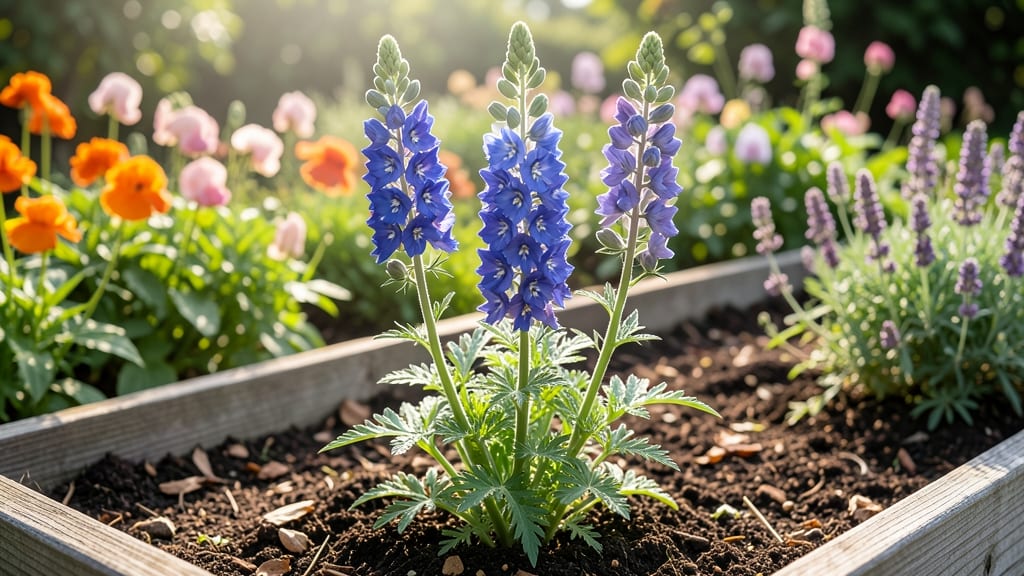
Larkspur does not bloom all summer: its peak flowering occurs in late spring to early summer (May–June), though some varieties may rebloom briefly in fall. Cooler climates naturally extend the bloom period, while hotter regions often see shorter displays. Pruning faded blooms can trigger a second flush in mild areas.
Larkspur's seasonal bloom pattern ties directly to its natural growing cycle. 🌸 These cool-season annuals and biennials typically thrive when temperatures hover between 50°F and 70°F, which explains why they shine brightest in spring and early summer.
In regions with mild autumns—like coastal California or the Pacific Northwest—some varieties may surprise you with a late-season rebloom, but don't expect the same vibrant display as spring.
The key to maximizing your larkspur's performance lies in understanding its botanical triggers: longer daylight hours in spring stimulate flowering, while summer's heat often triggers dormancy. This is why gardeners in hotter climates (USDA zones 8+) often treat larkspur as a spring ephemeral rather than a long-term summer bloomer.
What many gardeners don't realize is that larkspur's bloom duration varies significantly by variety. Annual types like 'Blue Bonnet' tend to have a single, dramatic spring display, while biennial varieties such as 'Pink Pearl' may produce a modest second flush in fall if given proper care.
The secret to coaxing extra blooms? Consistent deadheading—removing spent flowers before they set seed redirects the plant's energy toward new growth. Pair that with well-draining soil (larkspur hates soggy roots) and partial afternoon shade in hot climates, and you'll give your plants their best shot at a prolonged show.
💡 In This Article
- Larkspur Bloom Cycle: When and Why It Peaks in Spring
- Extending Larkspur Blooms: Deadheading, Soil Care, and Variety Choices
Larkspur bloom cycle: when and why it peaks in spring
Larkspur's spring bloom explosion happens because these plants are genetically programmed to flower in response to specific environmental cues. The primary trigger is cool temperatures between 50°F and 70°F, which aligns perfectly with late spring conditions in most temperate climates.
This temperature range activates the plant's floral meristems—the clusters of cells that develop into buds—while warmer summer heat actually inhibits further blooming.
Day length also plays a crucial role: larkspur requires 14-16 hours of daylight to initiate flowering, which explains why spring's lengthening days stimulate their growth while summer's long days don't trigger new blooms.
The plant's life cycle further explains this pattern. Annual varieties complete their entire growth cycle in one season, while biennials focus their energy on leaf growth during their first year, then flower and set seed in their second.
This means biennials like 'Pink Pearl' may produce a modest second flush in fall if they've stored enough energy, but it will never match spring's abundance.
In hotter USDA zones (8+), summer temperatures often exceed 85°F, which causes larkspur to go dormant—its leaves may yellow and drop as the plant conserves energy. Coastal regions stay cooler longer, which is why gardeners in places like Oregon or Northern California sometimes see extended blooming into early summer.
What's fascinating is how larkspur's native habitat influences its behavior. These plants originally thrived in the mountainous regions of Europe and Asia, where spring comes late and summers are short. This evolutionary adaptation explains why they bloom aggressively in spring but struggle in prolonged summer heat.
The same principle applies to garden varieties: when you plant larkspur in USDA zones 3-7, you'll typically see 6-8 weeks of peak blooming, while zones 8+ may only get 3-4 weeks before heat sets in.
This is why professional gardeners in Southern states often treat larkspur as a spring ephemeral—planted for its dramatic early-season display rather than summer-long color.
There's also a physiological reason why you rarely see larkspur blooming in mid-summer. Once the plant sets seed, it enters a reproductive phase that prioritizes seed production over new flower growth.
This is particularly noticeable in biennial varieties, which may produce 20-30% more flowers in their second year—but only if they've stored sufficient nutrients. The trade-off is that by late summer, most larkspur plants are directing their energy toward seed development rather than maintaining vibrant blooms.
This biological focus explains why even well-cared-for plants rarely produce significant summer flowers.
Regional microclimates create additional variations in bloom timing. Inland areas often experience more dramatic temperature swings, which can cause larkspur to bolt (flower prematurely) in early spring, then quickly fade as summer heat arrives.
Coastal areas, with their moderating ocean influence, provide more consistent temperatures that can extend the bloom period by 2-3 weeks.
Even within the same region, elevation matters: mountain gardeners in USDA zone 6 might see larkspur blooming until early July, while valley gardens at the same latitude could see flowers by early June.
This geographic sensitivity is why larkspur thrives in cut flower production in cooler maritime climates like the Netherlands.
The most surprising factor affecting bloom duration is actually the plant's own internal clock. Larkspur contains a type of biological timer called a vernalization requirement—a period of cold exposure that must occur before flowering can begin. Most varieties need 30-60 days of temperatures below 45°F during their growth phase.
Without this cold period (common in warm-winter climates), larkspur may produce fewer flowers or bloom later in the season. This is why gardeners in Southern California often struggle with larkspur—even when summer temperatures are perfect, the lack of winter chill disrupts the plant's natural flowering cycle.