
Blooming
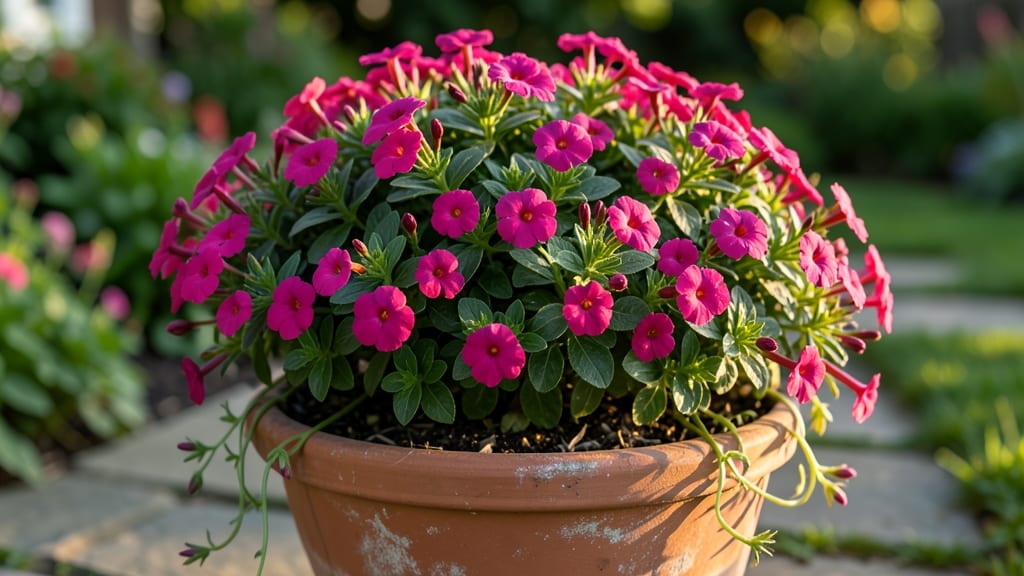
Calibrachoa blooms continuously all summer when planted in USDA zones 9-11 or treated as annuals in cooler areas, provided you deadhead regularly and maintain proper care. In colder climates, they flourish from late spring until frost with minimal effort.
Calibrachoa earns its nickname "million bells" because of its nonstop flowering habit—when given the right conditions. 🌸 The key to this performance lies in its native tropical tendencies: in warmer zones (9-11), these plants naturally extend their blooming season without breaks.
Even in cooler regions, treating them as annuals lets you enjoy their vibrant displays from planting until frost. What sets calibrachoa apart is how responsive they are to simple care routines, particularly deadheading, which redirects their energy from seed production back to flower generation.
Here's the science behind it: when you remove spent blooms, you're essentially telling the plant "keep producing flowers, not seeds." This triggers a hormonal response that stimulates new buds to form along the stems. The result?
A plant that looks like it's covered in tiny, colorful confetti for months on end. The trade-off is that without deadheading, calibrachoa will eventually shift its focus to seed production, leading to fewer flowers and leggier growth.
💡 In This Article
- Why Calibrachoa Needs Deadheading for Continuous Blooms
- Best Deadheading Techniques for Year-Round Calibrachoa Flowers
Why calibrachoa needs deadheading for continuous blooms
Calibrachoa's nonstop blooming magic happens because of its natural growth cycle. When a flower fades and forms seeds, the plant shifts energy from producing more blooms to seed development. This hormonal shift is triggered by ethylene gas released from dying flowers, signaling the plant to stop flowering.
By removing spent blooms—deadheading—you interrupt this cycle, allowing the plant to redirect its resources toward new flower production instead of seed formation. 🌸
The science gets even more interesting when you consider light exposure. Calibrachoa, being a short-day plant, naturally responds to day length changes. In summer's long days, it would normally slow flower production if left unchecked.
However, deadheading effectively tricks the plant into thinking it's still in peak blooming conditions by removing the visual cues of spent flowers. Studies show that plants with regular deadheading can produce 30-50% more flowers than those left to seed naturally.
This process works best when you remove blooms just as they begin to fade—typically when the petals start curling or changing color. The key is to cut back to the first set of healthy leaves below the bloom, encouraging branching that leads to more flower stems.
In warmer climates (USDA zones 9-11), this can mean deadheading every 2-3 days during peak bloom seasons, while cooler regions may only need weekly maintenance.
What most gardeners don't realize is how temperature plays a role in this process. Calibrachoa grows best between 65-75°F, and cooler nights (55°F) can slow flower production. When combined with deadheading, maintaining optimal temperatures helps maximize blooming potential.
The plant's native tropical origins mean it's adapted to warm conditions, so providing afternoon shade in hot climates can prevent stress that might reduce flowering.
There's also a visual component to consider. The tiny, bell-shaped flowers grow in clusters, and removing just one spent bloom can stimulate the growth of 3-5 new buds from that same node.
This is why calibrachoa often looks like it's covered in flowers—each deadheaded bloom creates a mini explosion of new growth. The more consistently you maintain this practice, the more the plant establishes itself as a continuous flowering machine. 💫
For those growing calibrachoa in containers, this becomes even more critical. Potted plants have limited space, so every spent bloom removed means more energy goes toward visible flowers rather than unseen seed pods.
The result is a plant that looks fuller and more vibrant, with flowers reaching all the way to the edges of the container rather than just the top.
The payoff comes when you see your calibrachoa covered in blooms from early summer until frost. This isn't just luck—it's the result of understanding and working with the plant's natural growth patterns.
By removing those spent flowers, you're essentially giving your calibrachoa a constant signal to "keep blooming!" which is why this simple technique makes such a dramatic difference in their appearance. ✨