
Blooming
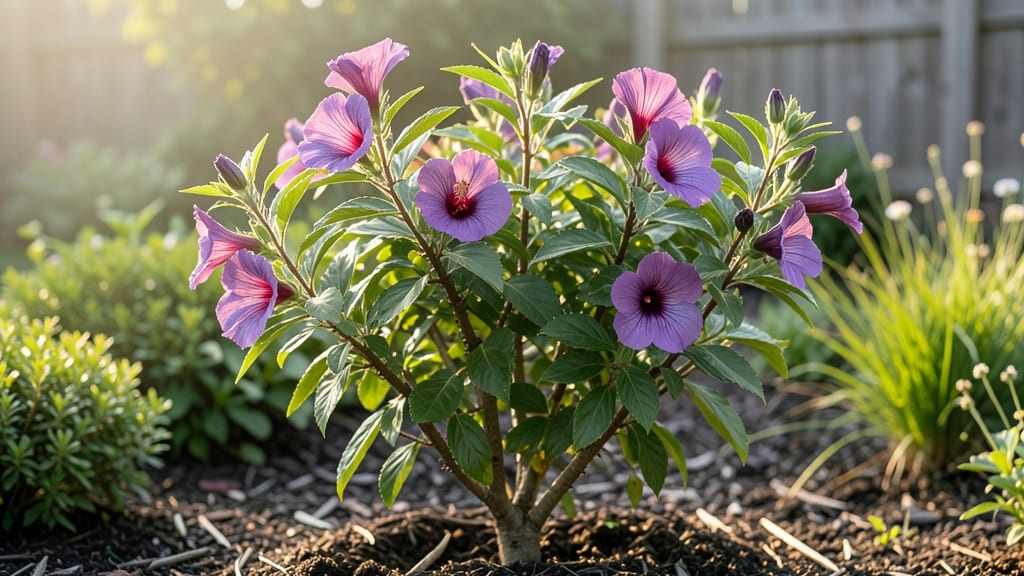
The Rose of Sharon blooms in late summer to fall 🌸, but the exact timing depends on heat waves and cold snaps that trigger—or cut short—its flowering cycle.
If you’ve ever wondered why your Rose of Sharon blooms in waves—sometimes bursting into color and other times fading early—understanding its bloom triggers could mean the difference between a showstopping summer display and a disappointing one.
This hardy shrub thrives when temperatures hit 85°F+, but a sudden dip below 40°F can end the show early. Varieties like 'Avalanche' bloom earlier, while 'Pink Perfection' stretches into autumn, so knowing your plant’s preferences is key.
Below, I’ll break down the science behind bloom timing, how to extend your shrub’s flowering season, and the best care tips to keep those stunning blooms coming all the way until frost.
How heat waves trigger Rose of Sharon blooms: the science behind the timing
When summer temperatures climb above 85°F, your Rose of Sharon (Hibiscus syriacus) reacts like a heat-seeking missile—its buds burst into bloom with surprising speed.
This isn't just luck; it's a physiological response to temperature shifts, day length, and humidity that gardeners can harness to extend their shrub's flowering season. Understanding these triggers lets you predict—and even encourage—longer, more vibrant displays.
The key lies in how heat waves kickstart bud formation. Most varieties need consistent warmth (75°F+) for 3-5 days to break dormancy and trigger flower buds. Once temperatures hit 90°F+, the shrub shifts into overdrive, producing larger, more abundant blooms as a stress response.
Think of it as nature's way of saying, "Let's make hay while the sun shines!"
Day length also plays a crucial role. Rose of Sharon is a short-day plant, meaning it blooms in response to decreasing daylight hours—typically after the summer solstice. However, heat waves disrupt this pattern, causing buds to form earlier than expected. This explains why some years your shrub blooms in late July while other years it waits until August or September.
Humidity adds another layer to the equation. In high-humidity regions (like the Southeast U.S.), heat waves often trigger more compact blooms with shorter vase life. Meanwhile, in drier climates (like the Southwest), the same heat wave might produce larger, longer-lasting flowers.
This is why your neighbor's Rose of Sharon might look completely different from yours, even with the same variety!
Here’s how different Rose of Sharon varieties respond to heat waves, from early bloomers to late-season performers:
| Variety | Heat Wave Trigger (°F) | Peak Bloom Time | Bloom Duration | Notes |
|---|---|---|---|---|
| 'Avalanche' | 80-85°F | Late July | 4-6 weeks | Early bloomer; white flowers |
| 'Blue Moon' | 85-90°F | Mid-August | 5-7 weeks | Cold-hardy; deep purple blooms |
| 'Pink Perfection' | 90°F+ | Late August | 6-8 weeks | Late-season; prolific pink blooms |
| 'Katherine Havemeyer' | 82-87°F | Early August | 3-5 weeks | Classic red; frost-sensitive |
| 'Lavender Chiffon' | 85-90°F | Mid-August | 4-6 weeks | Soft lavender; repeat bloomer |
The 'Avalanche' variety, for example, is a heat-sensitive early bloomer that often kicks off the season in late July when temperatures hit 80-85°F. Its white blooms are a signal that summer’s heat is finally coaxing your shrub into action.
Meanwhile, 'Pink Perfection' waits for 90°F+ heat waves, delivering a late-August spectacle that can stretch into September if conditions are right.
If you live in a hotter climate (Zones 8-9), you might notice your Rose of Sharon blooming earlier and more aggressively than neighbors in cooler regions. This is because consistent high temperatures accelerate the shrub’s internal clock, pushing it to flower faster.
In contrast, cooler summers (Zones 5-6) may delay blooms until August or September, with shorter durations.
To maximize blooms, monitor your local heat wave patterns. If your area typically hits 90°F+ in mid-July, expect buds to form within 10-14 days. If heat arrives later, blooms will follow suit.
Pro tip: Mulch around the base of your shrub to retain soil moisture during heat waves, which helps sustain flower production even as temperatures climb.
Humidity also influences bloom quality and longevity. In humid climates, blooms may appear softer and shorter-lived due to fungal pressure. To combat this, prune for airflow by removing overcrowded branches
Cold snap cutoffs by variety: when to expect early bloom termination
When those crisp autumn breezes arrive and temperatures dip below 40°F, your Rose of Sharon may start dropping buds prematurely—unless you know which varieties can handle the chill.
Cold snaps terminate blooms faster in frost-sensitive types like 'Katherine Havemeyer', while cold-tolerant hybrids like 'Blue Moon' often push through with minimal damage. Understanding these cold snap cutoffs helps you plan for late-season care and protect your shrub's flowering display.
Most Rose of Sharon varieties bloom from mid-summer to early fall, but sudden temperature drops can cut blooms short. The 40°F threshold is critical—below this, many varieties will drop 50-80% of open buds within 24-48 hours.
However, some hybrids like 'Blue Moon' and 'Annabelle' can tolerate brief dips to 32°F without severe damage, making them ideal for USDA Zones 5-7.
For Zones 5-6, prioritize cold-hardy varieties like 'Blue Moon' or 'Annabelle', which can extend blooms into early October with proper care. In Zones 8-9, even frost-sensitive types like 'Katherine Havemeyer' may bloom later into fall, but a single night below 45°F can cause bud drop.
Always monitor your local frost date—most Rose of Sharon varieties will start dropping buds 2-3 weeks before the first expected frost.
To delay bloom termination, apply a 3-4 inch layer of mulch around the base of your shrub in late summer. This insulates roots and helps maintain soil warmth, giving blooms a few extra days.
For varieties like 'Pink Perfection', which are particularly sensitive, consider wrapping the shrub in burlap during forecasted cold snaps. Even a 10°F difference can mean the difference between a full bloom season and a disappointing early cutoff.
If you're in Zone 7 or warmer, you might still see a second flush of blooms after a cold snap, especially if you deadhead spent flowers and provide consistent watering.
However, varieties like 'Diana' or 'Minerva' are less likely to rebound, so focus on protecting them during early fall chills. Always prune back damaged branches in late winter to encourage new growth and a stronger bloom cycle the following season.
Protecting your Rose of Sharon from cold snaps isn’t just about saving blooms—it’s about ensuring the shrub stays healthy for years to come. With the right variety selection and care, you can enjoy vibrant blooms well into October, even in cooler climates.
Start by choosing cold-tolerant hybrids and monitor your local temperature forecasts to act quickly when chilly weather arrives. 🌿