
Blooming
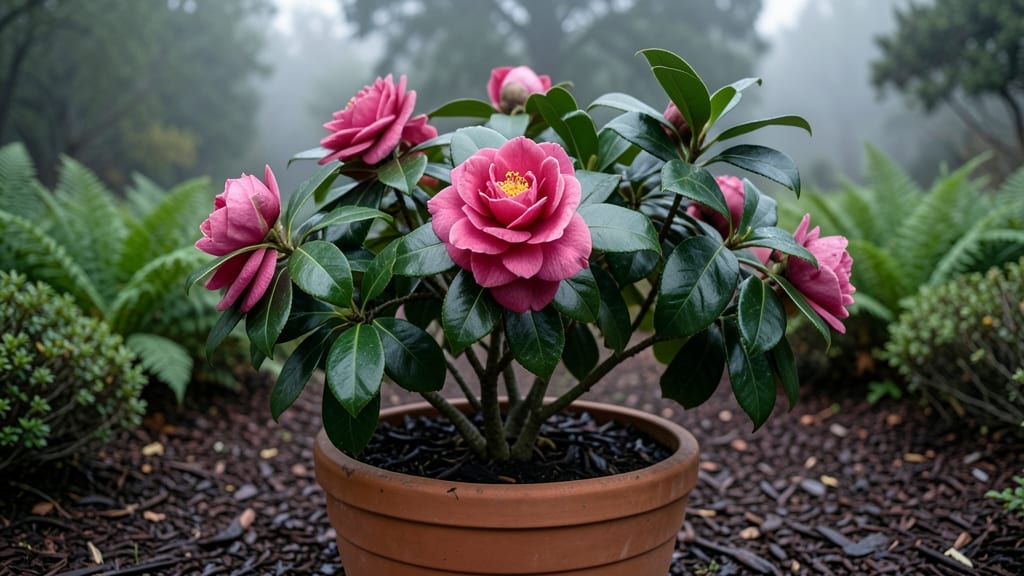
Winter's quiet beauty gets a bold upgrade when your camellia bush bursts into bloom. 🌸 These frost-defying stars thrive where most plants sleep, turning gray days into fragrant displays.
The secret lies in their natural cycle: while spring flowers wait for warmth, camellias bloom when temperatures dip to 40-60°F, making them winter's unsung heroes.
Native to East Asia, camellias evolved to handle cool climates, but they still need your help to shine. Plant in USDA zones 7-10 where they get morning sun and afternoon shade—this protects blooms from harsh winter rays.
Well-draining, acidic soil (pH 5.5-6.5) keeps roots happy, while mulch acts like a cozy blanket against frost. Prune right after blooming to encourage next year's flowers.
Your reward? Clusters of rosy, creamy, or deep red blooms that last weeks, filling the air with a sweet, spicy fragrance. Unlike spring bloomers, winter camellias don't compete with summer's heat—they're made for crisp mornings and gentle rains.
Just watch for late frosts: a breathable frost cloth saves delicate buds when temps dip below 25°F.
Bonus: These bushes grow 6-12 feet tall, making them perfect for focal points, privacy screens, or container gardens. With proper care, they'll reward you for years—some varieties even rebloom in spring!
The key is patience: winter blooms take 2-3 years to reach their full glory, but once they do, your garden becomes the envy of the neighborhood.
📚 In This Guide
- What you need
- Instructions
- Tips and common mistakes
- Wrapping up and next steps
What you need
- ● Camellia plants: Choose between Camellia japonica (hardy to Zone 7) or Camellia sasanqua (hardier, down to Zone 7-8). Select 3-5 gallon containers for mature plants or 1-gallon pots for younger specimens.
- ● Well-draining soil: Mix 50% acidic potting soil (pH 5.0–6.0) with 50% organic matter (e.g., peat moss, pine bark fines, or compost). Avoid clay-heavy soils!
- ● Mulch: 2–3 inches of pine straw or wood chips to protect roots from winter temp swings.
- ● Fertilizer: Acid-loving plant fertilizer (e.g., 10-10-10 or 8-3-9 with micronutrients). Apply 2–3 times/year (spring, summer, early fall).
- ○ Slow-release granules (optional for convenience).
- ● Pruning tools: Bypass pruners (for clean cuts on stems ¼" thick).
- ● Loppers (for thicker branches).
- ● Sterilizing solution (e.g., rubbing alcohol or bleach-water mix) to prevent disease.
- ○ Support structures: Stakes or cages (optional for young plants in windy areas).
- ● Burlap or frost cloth: Wrap young or tender plants in late fall to shield from 20°F or colder temps.
- ● Anti-desiccant spray: (e.g., Wilt-Pruf) to protect leaves from winter burn in dry climates.
- ● Drip irrigation or soaker hose: For occasional winter watering (if rainfall is less than 1 inch/week).
- ● 🔍 Test your soil pH before planting—camellias hate alkaline soil! Adjust with sulfur or peat moss if needed.
- ● ✂️ Prune after blooming (late winter/early spring) to encourage next year’s flowers.
- ● 🌿 Avoid heavy pruning—camellias bloom on old wood, so trim sparingly!
How to encourage winter blooms on your camellia bush
Winter-blooming camellias thrive with the right care—here’s how to coax their fragrant flowers year after year.
🌿 Step 1: Select the Right Camellia Variety for Winter Bloom
Not all camellias bloom in winter—focus on Camellia sasanqua or Camellia japonica winter-blooming varieties like 'Yuletide,' 'Winter’s Star,' or 'Kramer’s Supreme.' These types flower on new growth, so they’re more forgiving than spring-bloomers that rely on old wood. Check your plant’s tags or ask your nursery for cold-hardy, winter-flowering types if you’re unsure.
Here’s the thing—if your camellia blooms in spring, it’s likely a Camellia japonica that needs summer pruning to encourage next year’s flowers. Winter bloomers, on the other hand, need minimal pruning after flowering to avoid cutting off next year’s buds. I always double-check my plant’s label before pruning season to avoid mistakes.
☀️ Step 2: Position for Partial Shade and Shelter from Wind
Camellias need morning sun and afternoon shade to prevent leaf scorch, especially in winter when sunlight is intense. A spot with 4-6 hours of filtered light daily works best—think dappled shade under tall trees or an east-facing wall. Avoid full sun, which can cause buds to drop before opening.
Wind is the silent enemy of winter blooms. A gusty day can knock off delicate flowers before they even open. Plant your camellia near a fence, hedge, or building to create a windbreak. I’ve seen entire clusters of buds shaken loose in one storm—so much potential wasted. If you can’t relocate the plant, add a temporary burlap screen during high-wind seasons.
💧 Step 3: Water Deeply and Consistently Through Winter
Camellias have shallow roots, so they need 1-2 inches of water weekly during winter, even when it’s cold. Let the top 2 inches of soil dry slightly between waterings—this prevents root rot but keeps the plant hydrated enough to push through buds. Use a rain gauge or your finger to check moisture; soil should feel damp but not soggy.
Mulch heavily with 3-4 inches of organic mulch (like pine bark or shredded leaves) to insulate roots and retain moisture. I top-dress mine in late fall with a fresh layer—this also suppresses weeds and keeps the soil temperature stable. Avoid synthetic mulches, which can suffocate roots and disrupt the soil’s natural balance.
✂️ Step 4: Prune After Blooming to Encourage Next Year’s Flowers
Wait until late spring or early summer, after your camellia finishes blooming, to prune. Remove only dead, crossing, or diseased branches—never cut into old wood, as this removes next year’s flower buds. Winter bloomers produce buds on new growth, so light shaping is all you need. Use clean, sharp pruners to make cuts just above a leaf node.
Real talk: I’ve made the mistake of pruning too aggressively after a heavy bloom, and my plant took two years to recover. Winter-blooming camellias are delicate in this regard—think of pruning as a gentle trim, not a haircut. If you’re unsure, skip pruning entirely and just remove dead branches; the plant will thank you with more flowers.
🌱 Step 5: Fertilize Strategically for Winter Bloom Potential
Feed your camellia in early spring and late summer with an acid-loving plant fertilizer (like 8-3-9 or 10-10-10 with micronutrients). Avoid high-nitrogen fertilizers in fall—they encourage leafy growth at the expense of flower buds. I use a slow-release granular fertilizer in early spring, then switch to a liquid feed in late summer for a gentle boost.
Camellias thrive in acidic soil (pH 5.5-6.5). Test your soil in fall and amend with sulfur or peat moss if needed. Yellowing leaves or poor blooms often signal soil pH issues. I’ve seen camellias with lush foliage but no flowers—turns out, the soil was too alkaline. A simple pH test kit solves this before it becomes a bigger problem.
Tips & tricks for perfect winter camellia blooms
Winter-blooming camellias reward patience with stunning, fragrant flowers—here's how to maximize their potential without common pitfalls.
Variety Verification: Before investing in care, confirm your camellia's type. Winter bloomers like 'Yuletide' or 'Winter's Star' thrive on new growth, while spring-bloomers need summer pruning. I always check plant tags at nurseries—this single step prevents years of frustration with non-blooming plants. The key difference? Winter types produce buds on current season's growth, making them far more forgiving for gardeners.
Lighting Strategy: The 4-6 hours of filtered light in Step 2 is non-negotiable for winter blooms. If your yard lacks natural shade, create it with sheer curtains or lattice screens during peak afternoon sun (typically 1-4 PM). I've seen buds drop prematurely when exposed to full winter sun—even brief periods of intense light can stress the plant. For container camellias, rotate pots weekly to ensure even light exposure on all sides.
Watering Technique: That 1-2 inch weekly watering guideline assumes consistent winter temperatures. In colder climates, reduce to 1 inch weekly and check soil moisture more frequently—shallow roots can dry out faster in freezing ground. I use a moisture meter in winter to avoid overwatering, which causes root rot. The top 2 inches should dry slightly between waterings, but never let the plant wilt. A layer of mulch acts like a blanket, helping maintain soil temperature and moisture levels.
Pruning Precision: The late spring/early summer pruning window in Step 4 is critical for winter bloomers. I mark my calendar with a reminder to prune after the last flower falls—this ensures I don't accidentally cut off next year's buds. Use clean pruners and make cuts just above a leaf node at a 45-degree angle. For heavy bloomers, I limit myself to removing only dead or crossing branches, never more than 20% of the plant's volume in one session.
Pro Tips for Camellia Bush Bloom In Winter
- Winter-blooming camellias reward patience with stunning, fragrant flowers—here's how to maximize their potential without common pitfalls.
- Variety Verification: Before investing in care, confirm your camellia's type.
- Lighting Strategy: The 4-6 hours of filtered light in Step 2 is non-negotiable for winter blooms.
Frequently asked questions
Got questions about keeping your camellia bush blooming beautifully in winter? Here are some of the most common ones—and their answers!
When do camellias typically bloom in winter?
Camellias usually bloom between late fall and early spring, depending on the variety. Winter-blooming types (like Camellia sasanqua) often flower from November to January, while spring varieties (such as Camellia japonica) bloom from January to March. Chilly weather actually triggers their flowers!
How cold can camellias handle before their blooms suffer?
Most camellias tolerate light freezes (20–25°F) without damage, but prolonged exposure to below 10°F can harm buds. For extra protection, mulch heavily around the base and use burlap wraps on young plants. Evergreen varieties are hardier than hybrid types.
Why aren’t my camellia blooms opening this winter?
Bloom delays often stem from lack of sunlight (they need 6+ hours of light daily), over-fertilizing with nitrogen (which promotes leaves over flowers), or drought stress. Prune lightly after blooming, ensure well-draining soil, and fertilize with low-nitrogen, high-phosphorus blends in early fall.
Can I force camellias to bloom earlier or later?
While you can’t force blooms, you can influence timing slightly. For earlier blooms, avoid heavy pruning until after flowering. For later blooms, prune in early spring (but never in fall). Temperature fluctuations (like a warm spell in winter) can also trigger buds to open sooner.
What’s a good winter-blooming alternative if camellias are tricky?
If camellias seem high-maintenance, try these low-maintenance winter bloomers:
- Daphne – Fragrant, compact, and thrives in shade.
- Winter Jasmine – Hardy, fast-growing, and bright yellow.
- Pieris japonica – Evergreen with pink spring blooms and red new growth.
- Hellebore (Lenten Rose) – Shade-loving with early spring flowers.
Wrapping up and next steps
Watching your camellia bush bloom in winter is like having a fragrant, frost-defying masterpiece gracing your garden year-round! 🌸 These stunning shrubs bring color, texture, and life to chilly seasons—proving that winter doesn’t have to be dull.
Whether you’re a seasoned gardener or just starting out, planting and caring for camellias is a rewarding journey that adds beauty and tranquility to your outdoor space.
Ready to bring this winter wonder into your garden? Start by choosing the perfect variety for your climate, then gather your supplies and follow the steps outlined above. With a little patience and love, you’ll soon be enjoying the lush, blooming magic of camellias in your own backyard! 🌿✨