
Blooming
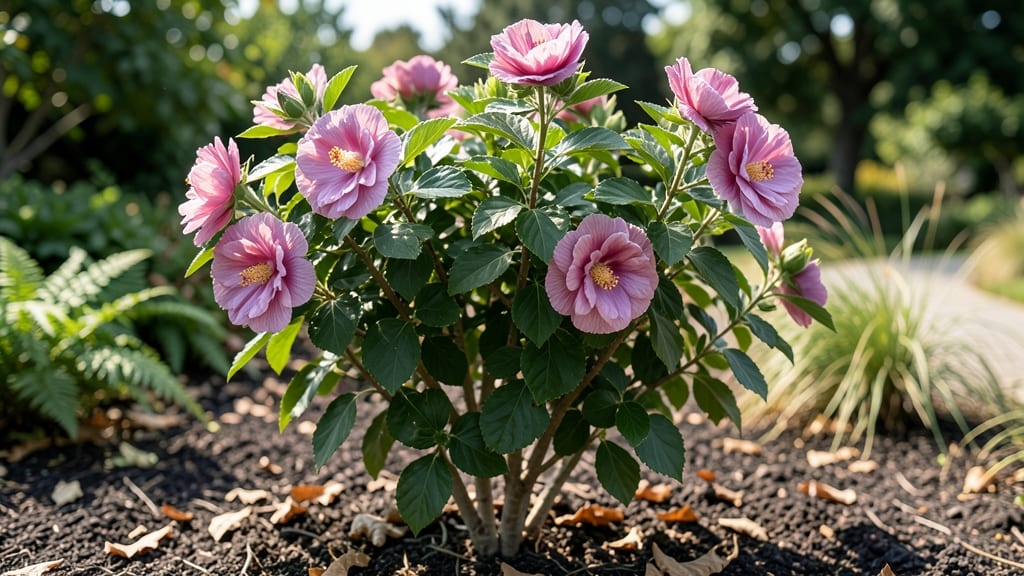
Double bloom Rose of Sharon transforms your yard into a fragrant cloud of color—without the fuss of constant pruning. 🌸 I’ve grown these for years, and the secret to their lush, repeat blooms lies in the right planting spot, a little winter care, and knowing exactly when to prune (and when not to).
The plant thrives in full sun but tolerates partial shade, making it perfect for smaller yards or urban gardens. Well-draining soil is key—amend heavy clay with compost to keep roots happy, and water deeply once a week unless it rains.
The real magic happens in late winter when you prune back old wood to encourage fresh growth and double the blooms.
By midsummer, you’ll have clusters of fragrant flowers that last for weeks, with minimal effort. The dark green foliage stays healthy year-round, and deer and rabbits usually leave it alone. It’s the kind of plant that makes neighbors ask, “What’s your secret?”
Works beautifully as a standalone shrub or paired with lavender, Russian sage, or ornamental grasses for a layered, textured border. Let’s get yours growing strong!
📚 In This Guide
- What you need
- Instructions
- Tips and common mistakes
- Wrapping up and next steps
What you need
- ● Double Bloom Rose of Sharon Plant: 1–3 bare-root or container-grown plants (choose Hibiscus syriacus cultivars like 'Diana' or 'Blue Bird' for double blooms)
- ● Well-Draining Soil: 5–10 bags of garden loam or compost (for amending heavy clay or sandy soil)
- ○ Optional: Perlite or coarse sand (1–2 gallons) to improve drainage
- ● Fertilizer: 1–2 lbs of balanced granular fertilizer (10-10-10 or 5-10-10 NPK ratio) or slow-release organic fertilizer
- ● Mulch: 3–5 cubic feet of wood chips, straw, or shredded bark (to retain moisture and suppress weeds)
- ● Basic Gardening Tools: 1 garden trowel
- ● 1 shovel or spade
- ● 1 pruning shears (sterilized with rubbing alcohol)
- ● 1 gloves (gardening or work gloves)
- ○ Optional (But Helpful): 1 soil pH test kit (ideal pH: 6.5–7.5)
- ● 1 drip irrigation system or hose with adjustable nozzle
- ● 1 stake or trellis (for young plants in windy areas)
- ● Sunlight: A full-sun location (6+ hours of direct sunlight daily)
- ● Climate: USDA Hardiness Zones 4–9 (adjust planting time based on your zone)
- ● Space: At least 6–10 feet of width and height (these shrubs grow large!)
- ● Water Source: Access to water for deep watering 1–2 times per week (more in extreme heat)
Step-by-Step instructions for planting and caring for double Bloom Rose of Sharon
Here's how to establish these fragrant shrubs for years of low-maintenance beauty.
🌱 Step 1: Choose the Perfect Planting Location
Pick a spot that gets full sun to partial shade—at least 6 hours of sunlight daily. Double Bloom Rose of Sharon thrives in areas with afternoon shade if you live in a hot climate. The shrub needs 3-4 feet of space in all directions for proper air circulation, which prevents fungal diseases like black spot.
Test your soil's drainage by digging a hole and filling it with water. If it doesn't drain within 1-2 hours, amend the area with 2-3 inches of compost or plant in a raised bed. These shrubs hate soggy roots, so good drainage is non-negotiable. I always plant mine on a slight mound to improve water runoff.
🪴 Step 2: Plant at the Right Depth and Water Thoroughly
Dig a hole twice as wide as the root ball but only as deep as the container it came in. Loosen the roots gently if they're circling or bound. Position the shrub so the top of the root ball sits 1 inch above ground level—this prevents water from pooling around the stem and causing rot.
Backfill with native soil mixed with 1/3 compost to improve fertility. Water immediately after planting to settle the soil and remove air pockets. You'll know it's right when the soil surface looks slightly damp but not muddy. Mulch around the base with 2-3 inches of organic mulch, keeping it 6 inches away from the stem to prevent moisture buildup.
☀️ Step 3: Provide Consistent Watering and Light
Water deeply once a week during the first growing season, providing 1-2 inches of water per week. Let the top 2-3 inches of soil dry out between waterings—this encourages deep root growth. Double Bloom varieties are drought-tolerant once established, but young plants need consistent moisture to establish roots.
After the first year, reduce watering to every 10-14 days unless your area experiences extreme heat or drought. Overwatering is the biggest mistake gardeners make—it leads to weak stems and fungal issues. You'll see healthy growth when new leaves emerge bright green and firm, not yellow or wilted.
✂️ Step 4: Prune for Shape and Encourage Blooms
Prune in late winter or early spring before new growth begins. Remove any dead, diseased, or crossing branches first. Then, cut back last year's growth by 1/3 to 1/2 to encourage bushier growth and more blooms. This is the only pruning you'll need—Double Bloom varieties are famous for their low-maintenance nature.
After flowering, trim back spent blooms to the first set of healthy leaves. This encourages a second flush of flowers in many climates. Avoid heavy pruning in fall—it stimulates tender new growth that won't survive winter. You'll know your pruning is right when the shrub maintains an open, vase-like shape with good air circulation.
🌿 Step 5: Fertilize and Protect for Long-Term Health
Apply a balanced, slow-release fertilizer in early spring and again after the first bloom. I use a 10-10-10 formula at half strength to avoid burning the roots. Water thoroughly after applying to help distribute the nutrients. Double Bloom varieties respond well to organic options like composted manure or fish emulsion too.
Watch for pests like aphids or spider mites, which love the tender new growth. Spray with neem oil if you see sticky residue on leaves or tiny webs. These shrubs are generally pest-resistant, but early intervention prevents infestations from spreading. You'll know your plant is thriving when it produces vibrant blooms from summer through fall with minimal effort.
Tips & tricks for perfect double Bloom Rose of Sharon
These simple strategies will help you establish your shrub for years of fragrant blooms with minimal effort.
Location Insight: When testing drainage in Step 1, pour water into the hole and time how long it takes to fully absorb. If water pools after 1-2 hours, you'll need to amend the soil—this is especially critical in clay-heavy soils. I've found that adding a mix of 50% compost and 50% perlite creates ideal drainage while retaining moisture. The slight mound I mentioned helps prevent water from pooling against the stem during heavy rains.
Planting Precision: In Step 2, don't just eyeball the planting depth. Use a level to ensure the root ball sits exactly 1 inch above ground level. I like to make a small stake mark at the 1-inch level before planting—this prevents the classic mistake of burying the stem too deep, which causes rot. After backfilling, gently press the soil to eliminate air pockets, then water thoroughly until you see moisture reach the bottom of the hole.
Watering Wisdom: The 1-2 inches of water per week in Step 3 is a guideline, but timing matters more than quantity. Water in the morning so leaves have all day to dry—this prevents fungal diseases. I use a rain gauge or tuna can (marked with measurement lines) to track exactly how much water your shrub receives. In containers, check soil moisture by sticking your finger 2 inches down—if it's dry, water until it runs out the drainage holes.
Pruning Pro Tip: When you cut back last year's growth by 1/3 to 1/2 in Step 4, make your cuts just above a leaf node or outward-facing bud. This encourages new growth in the right direction. I like to use sharp bypass pruners and sterilize them with rubbing alcohol between cuts to prevent spreading disease. After pruning, give your shrub a light application of composted manure to replenish nutrients lost during the process.
Pro Tips for Double Bloom Rose Of Sharon
- These simple strategies will help you establish your shrub for years of fragrant blooms with minimal effort.
- Location Insight: When testing drainage in Step 1, pour water into the hole and time how long it takes to fully absor...
- Planting Precision: In Step 2, don't just eyeball the planting depth. Use a level to ensure the root ball sits exactl...
Frequently asked questions
What makes the Double Bloom Rose of Sharon different from regular varieties?
The Double Bloom Rose of Sharon (Hibiscus syriacus) produces two flushes of flowers per season—once in early summer and again in late summer/fall—unlike standard varieties that bloom just once. Its petals are denser and fuller, creating a lush, layered appearance that lasts longer. Plus, many double-bloom cultivars have enhanced fragrance!
How long does it take for a Double Bloom Rose of Sharon to establish and flower?
With proper care, expect 2–3 years for a newly planted shrub to mature and bloom reliably. Young plants focus on root growth first, so patience pays off! Mulch well, water deeply (1–1.5 inches per week), and avoid heavy pruning in the first year to encourage faster establishment.
Can I prune a Double Bloom Rose of Sharon at any time of year?
No—prune only in late winter or early spring (before new growth starts) to avoid cutting off next year’s blooms. Never prune after summer blooms unless deadheading spent flowers lightly. For shaping, use clean shears to remove 1/3 of the oldest stems at the base. Skip fall pruning unless removing damaged wood.
What’s the best alternative if I want double blooms but hate Hibiscus maintenance?
Consider Butterfly Bush (Buddleia) for low-maintenance double blooms, or Dwarf Gardenia (Gardenia jasminoides) for fragrant, repeat-flowering shrubs. For zero-pruning options, try Abelia (Abelia x grandiflora)—it blooms spring to fall with minimal fuss!
Why are my Double Bloom Rose of Sharon leaves yellowing or dropping?
Yellow leaves often signal overwatering, poor drainage, or nutrient deficiencies. Check soil moisture (it should be damp but not soggy) and ensure pots/drainage beds have holes. Iron deficiency (chlorosis) is common in alkaline soils—apply chelated iron or compost. If pests like aphids are present, spray with neem oil or insecticidal soap.
Does Double Bloom Rose of Sharon survive harsh winters?
Yes! This shrub is hardy to USDA Zones 5–9 and thrives in cold climates. For extra protection in Zone 5, mulch heavily (3–4 inches) with straw or shredded leaves and avoid winter pruning. Young plants may benefit from a burlap wrap in extreme winds. No fuss needed—it’s a tough cookie!
Wrapping up and next steps
The Double Bloom Rose of Sharon is a stunning, low-maintenance shrub that rewards you with months of fragrant blooms and vibrant color—all while thriving in tough conditions. Whether you're a seasoned gardener or just starting out, its resilience and beauty make it a perfect addition to any landscape.
Ready to transform your garden? Start by choosing a sunny spot, planting in well-draining soil, and giving it space to grow—then sit back and enjoy the show!
Next step: Grab your gloves, pick a sunny weekend, and plant your Double Bloom Rose of Sharon—your garden will thank you! 🌸