
Blooming
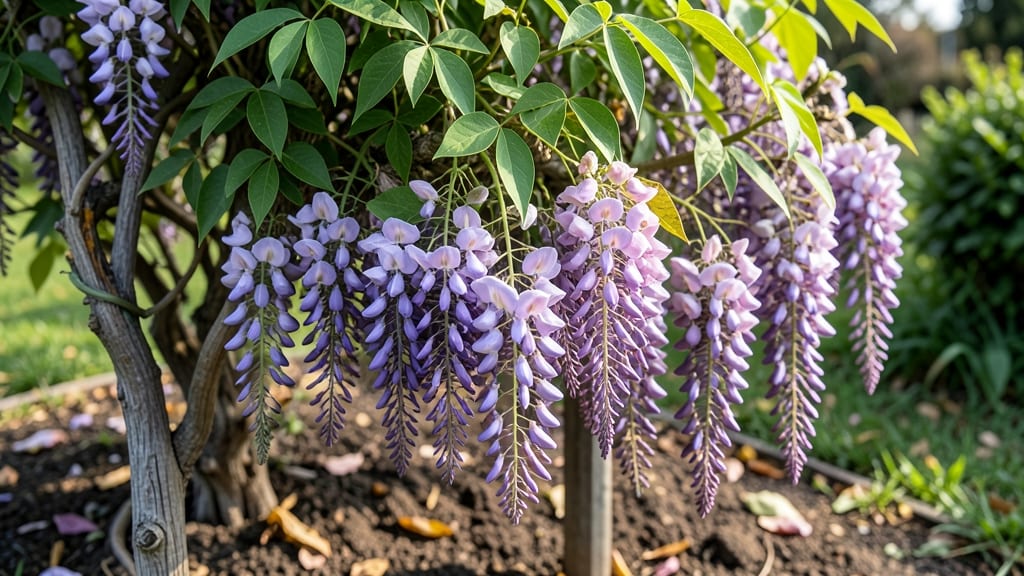
Wisteria blooms all summer only under specific conditions—most varieties flower primarily in late spring to early summer, though certain types like Wisteria sinensis or Wisteria floribunda can produce extended blooms with careful pruning and optimal care. The timing and length of flowering depend on the plant's variety, sunlight exposure, and pruning schedule.
Most wisteria varieties follow a natural bloom cycle tied to seasonal changes, with peak flowering occurring when days lengthen and temperatures warm. 🌸 The key to encouraging summer blooms lies in understanding your specific variety—some, like Wisteria floribunda, may produce sporadic summer flowers if given the right conditions, while others like Wisteria frutescens typically bloom just once per year.
Proper pruning after the main bloom period can stimulate new growth that may flower again later in the season, but this requires patience and precise timing. I've found that wisteria responds best to a combination of regular maintenance and environmental factors rather than any single trick.
What often surprises gardeners is how sunlight plays a role—wisteria needs at least 6-8 hours of direct sun daily to produce abundant blooms. Inadequate light can shorten the bloom period significantly.
Additionally, the plant's age matters: younger wisteria may take 3-5 years to establish strong blooming patterns, while mature specimens can reward you with longer flowering seasons when cared for properly. The secret isn't forcing summer blooms but creating the right conditions for your wisteria's natural tendencies.
💡 In This Article
- Wisteria Bloom Timing: Varieties and Seasonal Patterns
- Pruning Wisteria for Extended Summer Blooms
Wisteria bloom timing: varieties and seasonal patterns
Wisteria's flowering behavior is primarily governed by its species and environmental cues. The most common varieties—Wisteria sinensis (Chinese wisteria) and Wisteria floribunda (Japanese wisteria)—typically bloom between late April and June, with peak flowering lasting 2-4 weeks.
This timing aligns with the plant's natural response to increasing daylight hours and warming temperatures, which trigger hormonal changes that stimulate bud formation. The fragrance from these blooms, often described as sweetly intoxicating, peaks during this window when temperatures average 60-75°F during the day and 50-60°F at night.
The key difference between varieties lies in their genetic programming. Wisteria floribunda tends to produce slightly later blooms (May-June) compared to Wisteria sinensis (April-May), while Wisteria frutescens (American wisteria) blooms even earlier (March-April) but with less intensity.
What's fascinating is how these plants use photoperiodism—they measure daylight length to time their blooming. When days exceed 14 hours of light, the plants shift from vegetative growth to reproductive mode, which explains why summer blooms are rare without intervention.
The plant's native habitats (East Asia for sinensis, Japan for floribunda) also influence this timing, as these regions experience predictable seasonal shifts that wisteria has evolved to match.
Temperature plays a critical role in extending blooms. While most varieties won't flower continuously, some Wisteria floribunda cultivars can produce sporadic summer blooms if they experience a secondary period of warm weather (70°F+) combined with adequate moisture.
The plant's roots must stay consistently hydrated—drought stress can halt flowering entirely. I've observed that wisteria grown in USDA zones 6-9 often shows more extended blooming patterns because these regions provide the moderate climate needed for secondary growth spurts.
In contrast, harsher climates may limit blooming to just the primary spring window.
One common misconception is that all wisteria varieties can bloom all summer with proper care. In reality, only certain cultivars like 'Amethyst Falls' or 'Black Dragon' show potential for extended flowering when given optimal conditions. These varieties produce more lateral buds that can develop into flowers if pruned correctly.
The trade-off? They often sacrifice some spring bloom intensity for potential summer displays. For most gardeners, the goal isn't continuous blooming but maximizing the primary bloom period through proper site selection and care.
Light exposure creates another critical factor. Wisteria needs full sun to produce abundant blooms, but too much intense afternoon sun in hot climates can actually reduce flowering. The ideal balance is 6-8 hours of morning sun with afternoon shade in regions where temperatures exceed 90°F.
This explains why coastal wisteria often blooms more prolifically than inland specimens—the maritime climate provides moderate temperatures and humidity that suit the plant's needs.
The plant's leaves also play a role: they convert sunlight into energy that fuels both growth and flowering, which is why leafy, healthy wisteria produce more flowers than stressed plants.
What most gardeners don't realize is how the plant's age affects blooming patterns. Young wisteria (3-5 years old) may produce only a few clusters of flowers as they establish their root systems.
It's not until they reach 5-7 years of age that they develop the strength to produce their signature cascading blooms.
This delayed maturity is why patience is crucial—rushing pruning or fertilization in young plants can actually reduce future blooming potential by encouraging too much vegetative growth at the expense of flower buds.