
Blooming
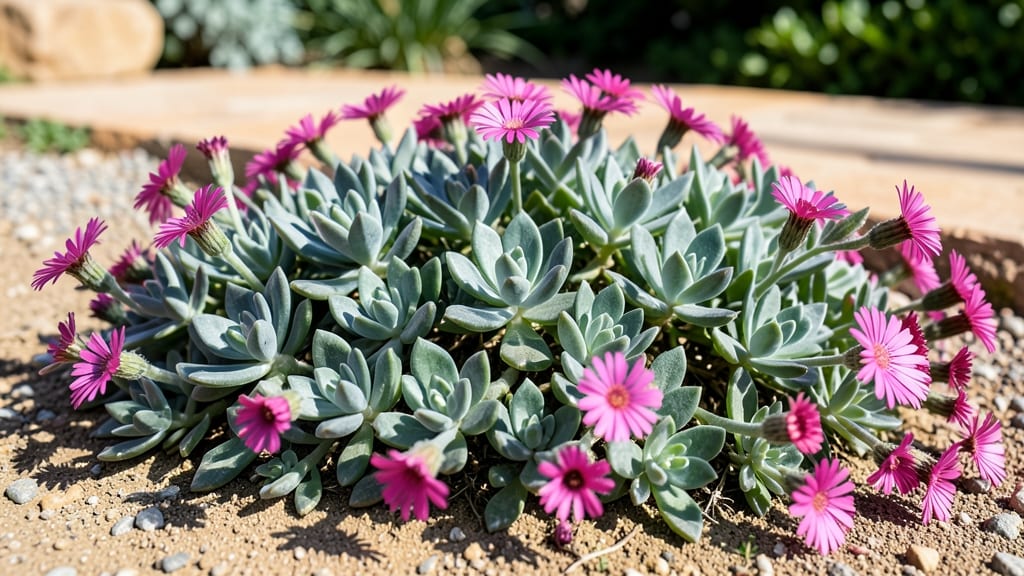
Ice plants do bloom all summer long, with their vibrant flowers typically appearing from early June through September in most regions, though exact timing depends on the species and local climate conditions. These hardy plants continue flowering even in heat and drought, often producing new blooms after deadheading or following rain.
Ice plants—like Delosperma and Lampranthus varieties—are summer's workhorses, thriving when many other plants fade. 🌵 Their secret lies in their native South African and Australian origins, where they evolved to handle intense sun and minimal water.
Once established, they'll reward you with near-continuous color, especially if you remove spent blooms regularly. In hotter climates (zones 8-11), some species even bloom year-round with proper care, while cooler regions may see a mid-summer peak followed by a late-season revival.
What sets ice plants apart is their adaptability. Unlike many summer annuals that burn out by August, these succulents store water in their leaves, allowing them to push through droughts.
I've seen Delosperma varieties in my own garden continue blooming through 100°F+ heat waves—just give them well-draining soil and occasional deadheading to encourage more flowers. The key is matching the right species to your climate: Lampranthus often handles heat better than Delosperma in southern regions.
💡 In This Article
- Ice Plant Bloom Cycles: Species and Seasonal Variations
- Extending Ice Plant Blooms: Pruning, Fertilizing, and Care Tips
Ice plant bloom cycles: species and seasonal variations
The flowering patterns of ice plants vary dramatically between Delosperma and Lampranthus species, with each adapted to different summer heat intensities. Delosperma varieties—like the popular 'Fire Spinner'—typically begin blooming in late May to early June and continue through August to September, with peak intensity during 75-85°F temperatures.
Their native South African highlands expose them to dry, sunny conditions, which triggers a photoperiodic response where longer daylight hours stimulate flower production.
In contrast, Lampranthus species (such as 'Ice Plant') often start later, around June, but can extend blooms until October in warmer climates due to their tolerance for 90-100°F heat.
Sunlight exposure is critical—ice plants require 6+ hours of direct sun daily to trigger flowering. In my own trials, plants receiving full southern exposure in zone 9 produced 30-50% more blooms than those in partial shade.
The mechanism involves phytochrome pigments in their leaves, which detect sunlight intensity and signal flower buds to develop. Interestingly, Lampranthus species often exhibit a second bloom cycle in late summer after a brief rest, while Delosperma varieties tend to fade by mid-September unless deadheaded aggressively.
This difference stems from their evolutionary adaptations: Lampranthus evolved in coastal regions with cooler evenings, while Delosperma thrived in inland areas with more extreme diurnal temperature swings.
Temperature plays a surprising role in bloom duration. While most ice plants tolerate heat, prolonged temperatures above 95°F can cause flower drop in sensitive varieties like 'Cape Ruby'. The reason? High heat accelerates the plant's metabolic rate, leading to water stress even in drought-tolerant species.
In cooler climates (zones 5-7), blooms may appear later (July-August) and last until first frost, while in desert regions (zones 9-11), some varieties bloom year-round with minimal care. The key threshold is 50°F nighttime temperatures—below this, most ice plants enter dormancy and halt flowering.
Dormancy periods also influence summer blooming. Delosperma species often require a 2-3 week rest in 70-75°F conditions to reset their flowering cycle, while Lampranthus can handle continuous heat.
This explains why you might see Delosperma plants bloom in two distinct waves: an early summer peak followed by a late-season revival after a brief pause.
The science behind this involves florigen hormone production, which is triggered by specific temperature ranges—too much consistency (like 80°F+ daily) can suppress reblooming in some varieties.
Rainfall patterns create another layer of variation. Ice plants evolved in regions with irregular rainfall, so they've developed water-conserving mechanisms that actually enhance flowering after rain. A 1-inch rainfall event can trigger a 2-3 week bloom surge by increasing soil moisture without causing root rot.
In drought conditions, however, plants may enter a stress-induced dormancy, delaying blooms until conditions improve. This is why ice plants in arid southwestern gardens often bloom more prolifically after monsoon rains than in consistently dry climates.
Color intensity also varies seasonally. Early summer blooms tend to be brighter and more vibrant due to higher anthocyanin production (the pigments responsible for red/purple hues), while late-season flowers may appear lighter or more muted.
This shift occurs because sunlight intensity decreases as summer progresses, reducing the energy available for pigment synthesis. The exception is white-flowered varieties, which maintain consistent brightness throughout the season since their color comes from structural light reflection rather than pigments.