
Blooming
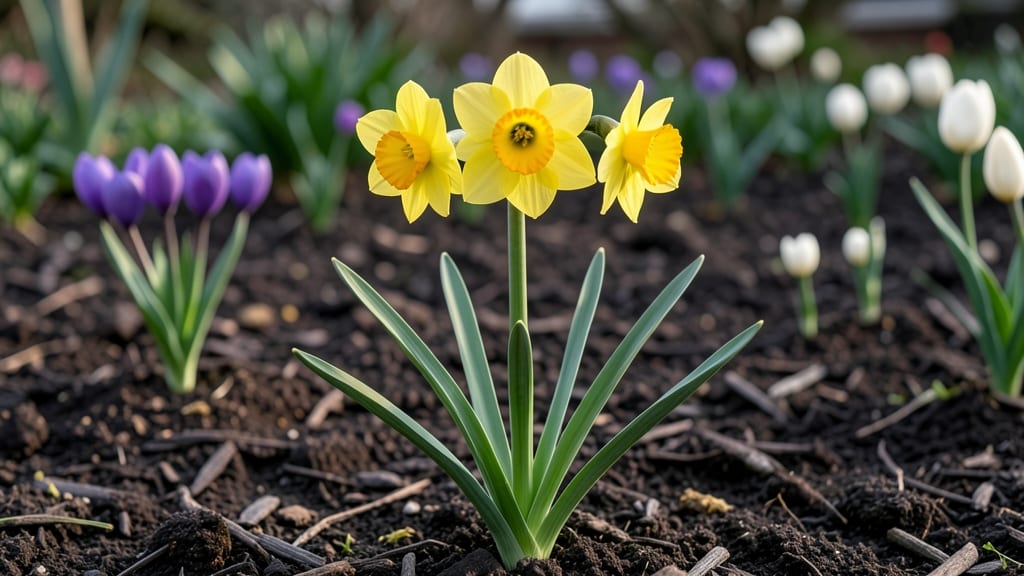
Daffodils do not bloom all summer; they primarily flower in early spring, with most varieties opening between February and April. Some late-season cultivars may extend blooms into early summer, but intense summer heat typically stops flowering until fall planting for next year’s flowers.
Daffodils are what gardeners call "spring ephemerals"—their blooming cycle is tightly linked to seasonal temperature shifts. 🌸 The flowers need a period of cold dormancy (vernalization) to trigger blooming, which is why they peak in spring and struggle in summer’s heat.
Even late-blooming varieties like Jonquil or Ice Follies often fade by June, though some heirloom types may surprise you with sporadic reblooms in fall if given ideal conditions.
What makes this fascinating is how different varieties respond to climate. For example, Narcissus poeticus (poet's daffodil) sometimes produces a second flush of flowers in autumn, while modern hybrids prioritize spring displays.
The key to extending their season lies in proper bulb care—planting depth, soil drainage, and strategic deadheading can encourage staggered blooms across multiple weeks.
💡 In This Article
- Daffodil Bloom Seasons by Variety Type
- Extending Daffodil Bloom Periods in Your Garden
Daffodil bloom seasons by variety type
The bloom timing of daffodils is governed by their need for vernalization—a biological process where bulbs require exposure to cold temperatures (typically 40-50°F for 12-16 weeks) to trigger flowering.
This explains why they bloom in spring rather than summer: their internal clocks reset with winter's chill. 🌱 Most common varieties like Tête-à-Tête or Minnow bloom between late February and early April, while late-season types such as Jonquil may extend into May.
Photoperiodism also plays a role—daffodils respond to increasing daylight hours in late winter. However, once temperatures rise above 75°F for prolonged periods, their metabolic processes shift from flowering to bulb development, halting blooms. This is why you rarely see daffodils flowering in midsummer: the heat disrupts their natural cycle.
The exception is Narcissus poeticus (poet's daffodil), which sometimes produces a second bloom in fall if given consistent moisture and partial shade during summer.
Gardeners can categorize daffodils into three bloom groups: early (February-March), mid (March-April), and late (April-May). Early bloomers like Soleil d'Or often emerge through snow, while late bloomers such as Tête-à-Tête may last until early summer.
The key difference lies in their bulb's dormancy requirements—early varieties need shorter cold periods, while late types require more extended chilling.
Color also influences bloom timing. White and yellow varieties tend to bloom earlier (February-March), while orange and red-toned daffodils often appear in mid-to-late spring. This variation occurs because pigment production and temperature sensitivity differ among cultivars. For example, Ice Follies (white) typically blooms 2-3 weeks earlier than Emperor (orange).
One fascinating exception is the Narcissus jonquilla, which sometimes produces a second, smaller bloom in late summer or fall. This "rebloom" phenomenon occurs when bulbs receive consistent moisture and partial shade during the heat of summer, allowing them to store enough energy for a second flowering cycle.
However, this is rare and requires precise growing conditions.
For gardeners in warmer climates, selecting varieties with heat tolerance (like Hill Poet) can extend the bloom window by 2-4 weeks. These cultivars have adapted to handle brief summer heat spells better than traditional spring-only types.
The trade-off? They may produce fewer blooms per stem and require more frequent watering during peak summer months.