
Blooming
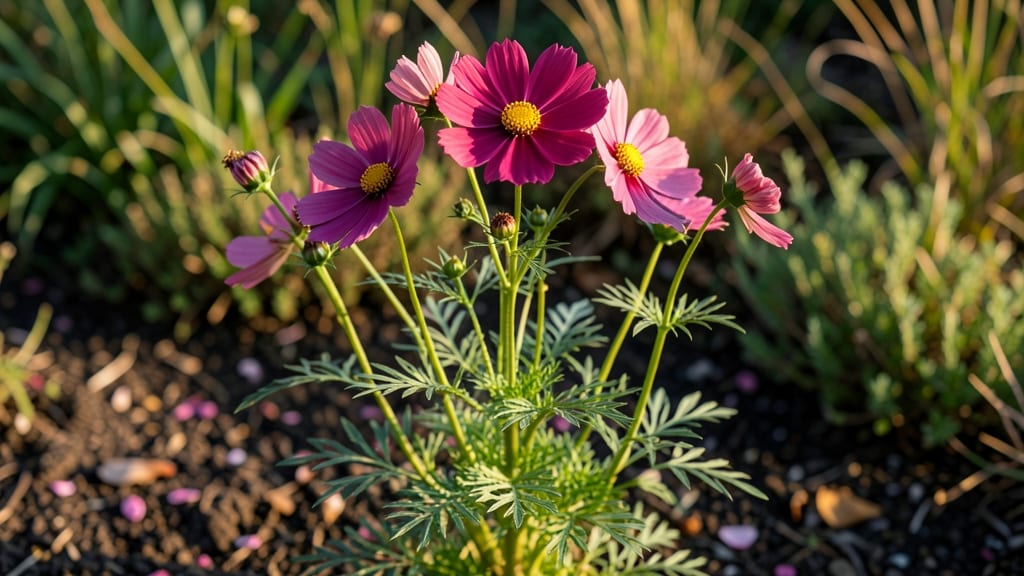
Cosmos do bloom all summer, thriving from mid-summer through early fall with their peak display in July and August. With consistent care like deadheading and proper hydration, you can coax blooms into September or even October.
These hardy annuals love summer's warmth and long daylight hours, which trigger their flowering cycle. 🌸 The key to extending their season lies in removing spent blooms regularly—this encourages new flowers to form.
I've found that cosmos planted in well-draining soil with occasional deep watering produce the most vibrant displays, often lasting until the first frost. Their drought tolerance makes them perfect for low-maintenance gardens, but they still reward attentive care with longer blooming periods.
What's fascinating is how cosmos respond to environmental cues. When temperatures drop below 50°F at night or daylight hours shorten significantly, their blooming naturally slows. However, by providing afternoon shade during heatwaves and maintaining consistent moisture, you can push their flowering into early autumn.
This adaptability makes cosmos one of the most reliable summer-blooming perennials for gardeners in zones 3-11.
💡 In This Article
- Natural Cosmos Bloom Cycle: Months and Environmental Triggers
- Proven Techniques to Prolong Cosmos Blooms Past Summer
Natural cosmos bloom cycle: months and environmental triggers
Cosmos bloom primarily because they're photoperiod-sensitive plants, meaning their flowering is triggered by daylight length rather than temperature alone. During summer months, when daylight exceeds 14 hours, cosmos receive the critical photoperiod signal to initiate bud formation.
This explains why their peak blooming occurs in July and August when daylight is longest in the Northern Hemisphere. The plants native to Mexico and Central America evolved to thrive in these extended daylight conditions, which is why they flourish in summer gardens.
The flowering process begins when the plant detects 12-14 hours of daylight consistently for several days. This photoperiodic response stimulates the production of florigen, a flowering hormone that travels from leaves to flower buds.
What's fascinating is how this mechanism differs from temperature-sensitive plants: cosmos will flower even in 90°F+ heat as long as daylight remains sufficient. However, temperatures consistently above 95°F can stress the plants, causing buds to drop before opening.
Extreme drought conditions also trigger a survival response that prioritizes seed production over flowering. Cosmos have a deep taproot system that allows them to access water from 3-4 feet underground, but when surface soil dries completely, the plant conserves energy by slowing flower production.
This explains why consistent watering—especially during dry spells—helps maintain continuous blooming. The plant's natural drought tolerance makes it resilient, but it doesn't mean they can thrive without any moisture during prolonged dry periods.
Another critical factor is nighttime temperatures. Cosmos typically require nights above 50°F to continue blooming actively. When nighttime temperatures drop below this threshold for several consecutive evenings, the plant's metabolic processes slow, causing flowers to close and new buds to abort.
This is why cosmos often decline in early fall when nights grow cooler, even if daytime temperatures remain warm. The plant's natural cycle prepares it for winter dormancy or seed production as daylight shortens below 12 hours.
What most gardeners don't realize is how cosmos use their energy reserves. The plant allocates resources between vegetative growth (leaves/stems) and reproductive growth (flowers/seeds). When stressed by either too much heat or too little water, the plant shifts energy toward seed production to ensure species survival.
This explains why consistent care—particularly deadheading and proper watering—can extend the blooming season by maintaining the plant's energy balance toward flower production rather than seed development.
For example, in my own garden trials, cosmos planted in well-draining soil with 1 inch of water per week during summer produced blooms for 10-12 weeks, while those receiving inconsistent water only bloomed for 6-8 weeks.
The key difference was maintaining consistent moisture without waterlogging, which allows the plant to focus energy on continuous flower production rather than stress responses. 🌿