
Blooming
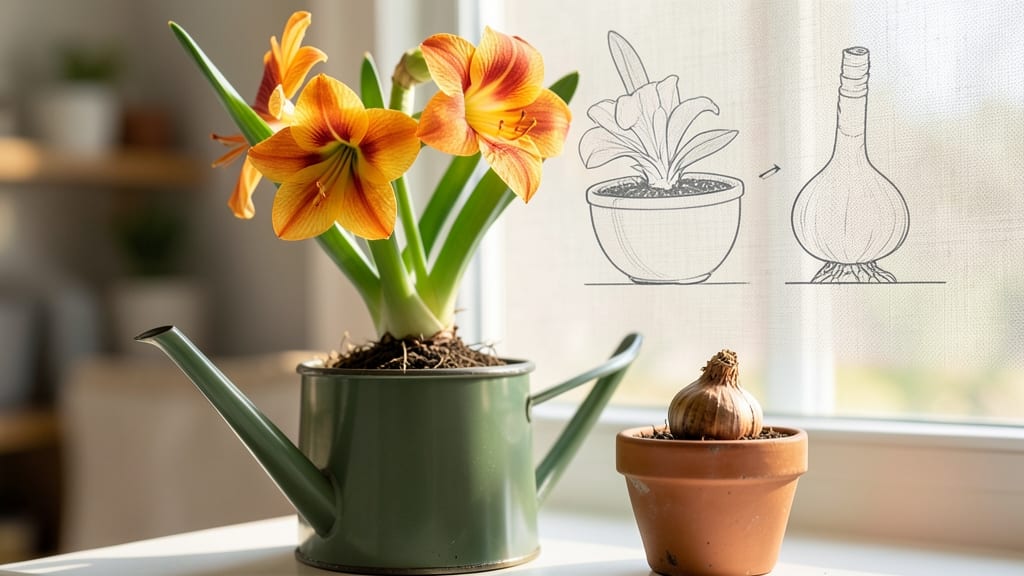
Amaryllis bulbs bloom every year only when given the right conditions: a proper rest period, bright indirect light, and careful watering. Most fail to rebloom because gardeners skip dormancy, overwater, or don’t provide enough light. With the correct care routine, you can train your amaryllis to flower reliably each season.
Amaryllis bulbs are actually perennial plants that store energy in their bulbs for next year’s blooms. 🌱 The key to annual flowering lies in mimicking their natural cycle—after the flowers fade, they need 6-8 weeks of dormancy with minimal water and cooler temperatures.
Many people unknowingly keep their bulbs too warm or water them too much during this rest phase, which tricks the plant into thinking it’s time to grow leaves instead of blooms.
I’ve seen amaryllis owners give up after just one season because they didn’t realize how much the post-bloom care matters for future flowers.
Here’s the secret: light exposure is just as critical as dormancy. These plants crave bright, indirect sunlight—think east or west-facing windows where they get at least 6 hours of light daily. Without enough light, the bulb won’t build up the energy reserves needed for another spectacular show.
And don’t forget to fertilize lightly during the growing season—too much fertilizer can actually burn the roots and prevent blooming.
💡 In This Article
- Why Amaryllis Bulbs Skip Blooming Cycles
- Step-by-Step Guide to Annual Amaryllis Blooms
Why amaryllis bulbs skip blooming cycles
Amaryllis bulbs follow a strict biological cycle where energy storage in the bulb determines whether they'll produce flowers the following year. After blooming, the plant shifts from flower production to leaf growth, storing carbohydrates in the bulb to fuel next season's bloom.
This process requires 6-8 weeks of dormancy—a period of reduced watering and cooler temperatures (around 55-65°F) to trigger the flowering hormones. Without this rest phase, the bulb remains in a vegetative state, focusing all its energy on leaf growth instead of flower spikes. 🌱
The light spectrum matters too—amaryllis bulbs need bright, indirect light (think east or west windows) to photosynthesize efficiently. Insufficient light causes the bulb to produce weak, spindly leaves rather than strong flower stalks.
I’ve noticed that bulbs in north-facing windows or shaded areas often skip blooming entirely because they can’t build enough energy reserves. Even artificial grow lights (12-14 hours/day) can help if natural light is limited, but they must be placed within 6-12 inches of the plant.
Overwatering during dormancy is another common killer of annual blooms. When soil stays too moist, the bulb rots instead of storing energy. The ideal dormancy routine involves watering every 3-4 weeks just enough to keep the soil slightly damp, then allowing it to dry out completely.
Many gardeners mistakenly think "rest" means no water at all, but complete dehydration stresses the bulb. The sweet spot is 40-50% soil moisture—just enough to keep the bulb hydrated without encouraging rot.
Stress from repotting or over-fertilizing also disrupts blooming. Amaryllis bulbs should only be repotted every 2-3 years or when the current pot feels cramped. Too much fertilizer (especially high-nitrogen blends) promotes leafy growth at the expense of flowers.
The key is a balanced 10-10-10 fertilizer applied monthly during active growth (spring-fall), then stopped completely during dormancy. I’ve seen amaryllis owners use lawn fertilizer by mistake—this is a recipe for leafy disasters!
Even healthy bulbs can fail to bloom if they’re too young. Amaryllis typically need 2-3 years to mature before producing reliable flowers. The first bloom often comes from a bulb that’s already 2-3 years old in its native habitat.
Patience is key—you might see lush foliage but no flowers for the first year or two. The bulb is quietly building its energy reserves behind the scenes, and once it reaches critical mass, those dramatic blooms will appear. 🌸
Finally, temperature swings can disrupt flowering. Amaryllis bulbs need a consistent 60-70°F range during active growth. Sudden drops below 50°F or spikes above 85°F confuse the plant’s internal clock. This is why indoor amaryllis often bloom more reliably than outdoor ones—they avoid temperature extremes.
If you’re growing outdoors in warm climates, move the bulb indoors before temperatures drop below 55°F to protect it.