
Blooming
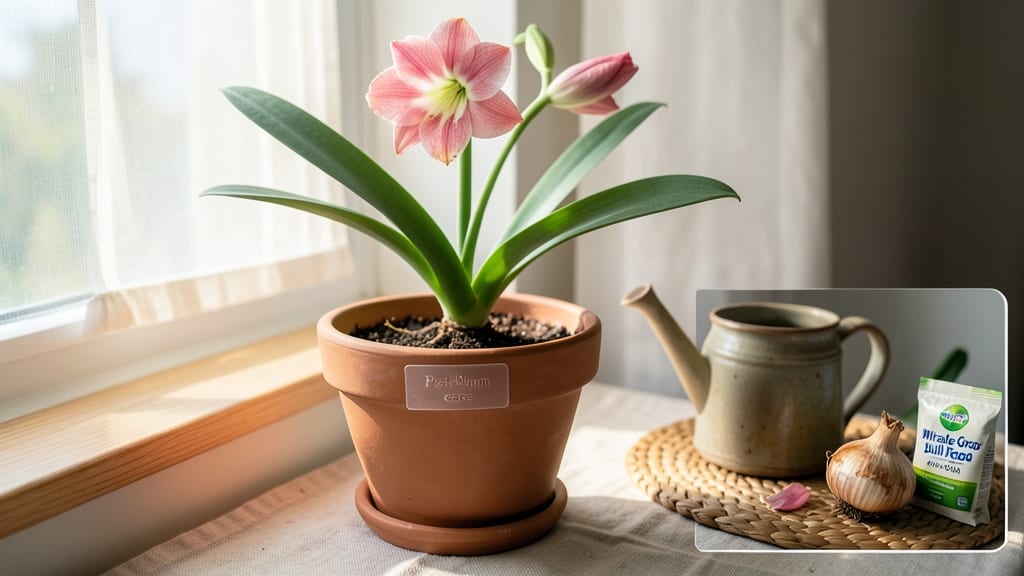
Yes, amaryllis will bloom again after their first flowering with proper care: provide bright indirect light, reduce watering after blooming, and fertilize lightly during dormancy. Patience and consistent conditions encourage repeat blooms in 6-12 months.
Amaryllis bulbs are perennials, meaning they're designed to rebloom—but only when given the right conditions. 🌱 The key lies in mimicking their natural seasonal cycle: after the flowers fade, let the foliage die back naturally while cutting back water.
This signals the bulb to store energy for next year's bloom. I've seen bulbs rewarded with stunning second (or even third!) blooms when treated this way, though it often takes a full year of careful maintenance.
What many gardeners overlook is the importance of dormancy. During the bulb's resting phase (typically late fall to winter), keep it in a cool, dry spot with minimal water. This mimics the dry season in their native habitats, which triggers the biological switch for reblooming.
Think of it like putting a plant to sleep—it might seem counterintuitive, but this break is what recharges their energy reserves.
💡 In This Article
- Why Amaryllis Bulbs Stop Blooming After First Flower
- Step-by-Step Guide to Encourage Amaryllis Reblooming
Why amaryllis bulbs stop blooming after first flower
The amaryllis bulb's decision to bloom again hinges on a biological process called florigen production, triggered by light exposure and temperature cycles. When your amaryllis first flowers, it's using stored energy from the bulb—think of it as burning through its "gas tank."
After blooming, the bulb needs 6-8 weeks of dormancy to rebuild energy reserves through photosynthesis in its leaves. Without this rest period, the bulb remains in a stressed state and won't allocate resources for new flower buds. 🌱
Light plays a crucial role here: amaryllis bulbs require 12-14 hours of bright indirect light daily during active growth. Too little light (like a dim corner) causes weak foliage that can't photosynthesize enough to support blooming.
Conversely, direct midday sun can scorch leaves, creating stress that diverts energy away from flower development. The ideal spot mimics their native South American habitat—bright but diffused light, like near an east-facing window with sheer curtains.
Temperature swings also disrupt reblooming. Amaryllis bulbs need consistent 65-75°F during growth, but for dormancy, they require cooler conditions (50-60°F) to simulate their natural dry season. Many gardeners accidentally keep bulbs too warm during dormancy, preventing the metabolic shift needed to restart flowering.
This is why you'll often see amaryllis failing to rebloom in heated homes—even with proper light, the bulb stays in an "active" but energy-depleted state. 🌡️
Overwatering is the silent killer of repeat blooms. When bulbs remain soggy during dormancy, they develop rot or fungal infections that weaken the root system. Healthy roots are essential for transporting nutrients to the developing flower buds.
I've seen bulbs with perfect light and temperature fail to rebloom simply because they were watered every week during dormancy—when they should have gone completely dry between waterings. The key is letting the soil dry out completely between waterings, even during the growing season.
Another critical factor is bulb health. Amaryllis bulbs should be at least 3 inches in diameter to have enough energy reserves for reblooming. Smaller bulbs may produce flowers once but lack the energy for subsequent blooms.
Even mature bulbs can fail if they're pot-bound—roots need space to grow and store nutrients. This is why repotting every 2-3 years with fresh potting mix gives bulbs the room they need to rebuild their energy reserves for next season's flowers. 🌿
Finally, stress from sudden changes—like moving the plant frequently or drastic temperature shifts—can trigger the bulb to prioritize survival over flowering. Amaryllis bulbs are sensitive to being moved during their active growing phase (spring to summer), as this disrupts their internal clock.
The solution? Keep your amaryllis in a stable location with consistent conditions, and it will reward you with repeat blooms when the timing is right. ✨