
Blooming
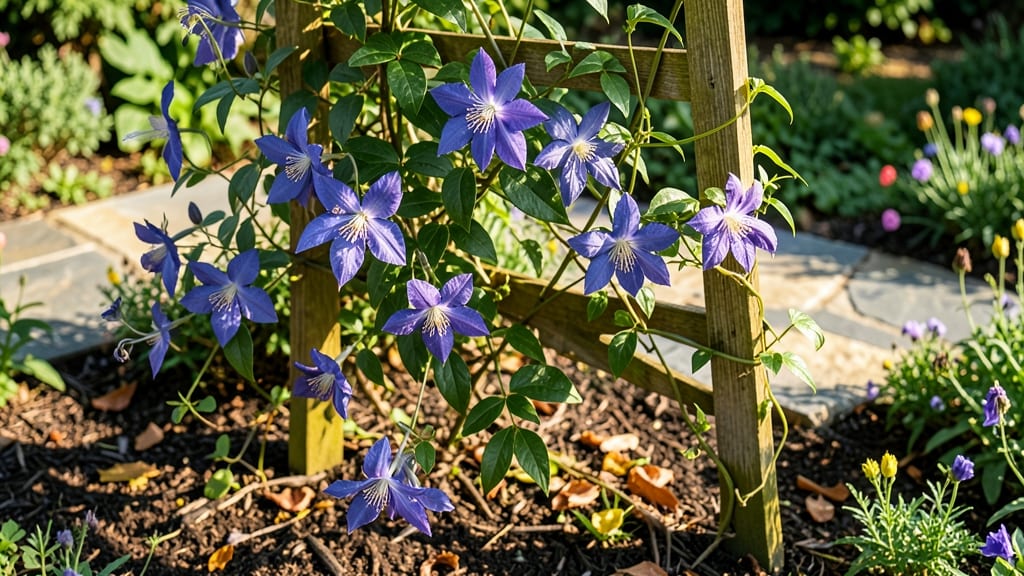
Your clematis bloom time depends on the variety and care you provide 🌸 — and getting it right can turn a sparse vine into a floral masterpiece.
Struggling to get those show-stopping blooms? You’re not alone. Many gardeners miss the mark because they don’t know their clematis’s pruning group or how sunlight and soil play a role. But with the right timing and a few simple tricks, you can extend that bloom season from weeks to months.
From early spring bloomers like ‘Jackmanii’ to late-season varieties that keep flowering until frost, each clematis has its own schedule. In USDA Zone 6a, for example, most varieties kick off in late spring, but pruning at the wrong time can delay or even cancel those blooms entirely.
In this guide, I’ll break down the exact bloom windows for each group, how to prune for longer flowers, and the top 5 varieties that deliver the most vibrant, repeat blooms—no guesswork required.
Understanding clematis bloom time: Group classification & seasonal patterns
Clematis vines are famous for their stunning, show-stopping blooms, but their flowering windows vary dramatically depending on the variety and pruning group.
If you’ve ever wondered why your clematis blooms at different times—or not at all—it likely comes down to which of the three pruning groups your plant belongs to.
Each group has distinct bloom cycles, from early spring bursts to late-season displays, and understanding these patterns helps you plan for maximum impact in your garden.
Clematis blooms are also heavily influenced by climate zones and growing conditions. In warmer regions like USDA Zones 8-10, some varieties may bloom year-round, while in cooler Zones 3-6, frost can delay or truncate flowering.
By aligning your plant selection with your local climate and seasonal patterns, you can create a vine that blooms reliably for months at a time.
| Pruning Group | Bloom Time | Key Varieties | Pruning Time | Climate Notes |
|---|---|---|---|---|
| Group 1 | Early spring (March-April) | 'Jackmanii', 'Montana', 'Nelly Moser' | Late winter (Feb-Mar) | Blooms on previous year's wood; prune after flowering |
| Group 2 | Mid to late summer (June-August) | 'Perle d’Azur', 'The President', 'Comtesse de Bouchard' | Early spring (Feb-Mar) | Blooms on current year's growth; prune hard in early spring |
| Group 3 | Late summer to fall (August-October) | 'Niobe', 'Durandii', 'Hagley Hybrid' | Late winter to early spring (Feb-Mar) | Blooms on current year's growth; prune hard in early spring |
Group 1 clematis are the early risers of the garden, often bursting into bloom as soon as the frost lifts. These varieties rely on last year’s growth to produce flowers, which means you’ll need to be extra careful with your pruning. Cutting back too early can remove next year’s blooms. Popular choices like 'Jackmanii' and 'Montana' thrive in cooler climates and are perfect for gardeners who want a spring highlight.
If you’re dreaming of summer-long blooms, Group 2 clematis are your best bet. These varieties flower on new growth, so they reward you with vibrant displays from June through August. The key to maximizing their potential is early spring pruning—cutting back hard before new shoots emerge.
Varieties like 'Perle d’Azur' and 'The President' are prized for their prolonged flowering and ability to thrive in both sun and partial shade.
Group 3 clematis are the late-season stars, offering fall blooms when many other plants have faded. These varieties also flower on new growth, making them low-maintenance compared to Group 1. 'Niobe', with its deep purple flowers, and 'Durandii', a fragrant favorite, are excellent choices for extending your garden’s season. In warmer climates, some Group 3 varieties may even produce a second flush of blooms in spring.
Your USDA hardiness zone plays a critical role in determining your clematis’ bloom time. In Zones 3-5, frost can delay or shorten flowering, while Zones 7-10 may see year-round blooms for certain varieties.
For example, 'Jackmanii' in Zone 5 might bloom in late May, while the same plant in Zone 8 could start as early as March. Always check your local frost dates and adjust your planting and pruning schedule accordingly.
Sunlight is another game-changer for clematis bloom time. While most varieties love full sun (6+ hours daily), some, like 'Perle d’Azur', tolerate partial shade—especially in hot climates. If your clematis isn’t blooming as expected, it might be struggling with insufficient light or overcrowded roots.
Pair your vine with a sun-loving companion plant, like roses or lavender, to create an ideal microclimate.
To troubleshoot delayed or absent blooms, start by checking your pruning schedule. Did you prune at the right time for your group? Are you fertilizing with a high-phosphorus blend to encourage flowering? Clematis also need consistent moisture—deep watering once a week is ideal, but avoid soggy soil.
If your vine is healthy but still not blooming, it might be time to transplant it to a sunnier spot or adjust your care routine.
With the right variety and a little strategic planning, your clematis can become a year-round floral showstopper.
Whether you’re drawn to the early elegance of Group 1, the mid-season abundance of Group 2, or the late-season charm of Group 3, there’s a clematis perfect for your garden’s timing and climate. Start by identifying your pruning group, then tailor your care to maximize those breathtaking blooms.
How to extend clematis bloom time with pruning & care
Clematis vines reward patience with stunning, long-lasting blooms—but only if you prune and care for them correctly. The key lies in understanding your plant’s pruning group and adjusting your approach to encourage repeat flowering.
Whether you have a Group 1 early bloomer or a Group 3 late-season variety, the right timing and techniques can transform a single burst of flowers into weeks of vibrant displays.
Most gardeners miss the mark by pruning at the wrong time or neglecting essential care like deadheading and soil health. I’ve learned the hard way that skipping these steps can leave your clematis looking like a leafy green wall instead of a floral masterpiece.
Let’s fix that with a step-by-step guide tailored to each pruning group, plus the care secrets that keep blooms coming all season.
-
Step 1: Identify Your Clematis Group
Group 1 blooms on previous year’s wood (early spring). Group 2 blooms on both old and new wood (spring & summer). Group 3 blooms on current year’s wood (late summer/fall). -
Step 2: Prune at the Right Time
Group 1: Prune right after blooming (late spring). Group 2: Prune lightly after first flush (early summer). Group 3: Prune hard in late winter (before new growth starts). -
Step 3: Deadhead Regularly
Snip off spent blooms to 2-3 leaves below. This redirects energy to new flower buds and extends the bloom season by 3-4 weeks for Group 2 and 3 varieties. -
Step 4: Feed for Longer Blooms
Use a high-phosphorus fertilizer (5-10-10) when buds form. For Group 3, apply a second feeding in early summer to boost late-season blooms. -
Step 5: Mulch & Water Deeply
Keep soil moist but not soggy. Mulch with organic matter (compost or straw) to retain moisture and cool roots during hot spells. -
Step 6: Provide Support & Sun
Ensure your clematis has a trellis or arbor for airflow. Place in full sun to partial shade—Group 3 varieties especially need afternoon shade in hot climates.
Pruning isn’t just about cutting back—it’s about encouraging new growth in the right places. For Group 1 clematis, like ‘Early Sensation,’ avoid heavy pruning. Instead, trim only to remove dead or crossing stems after the spring bloom.
This preserves next year’s flower buds, which form on last year’s wood. My ‘Early Sensation’ now blooms for 4-5 weeks in early spring, thanks to this gentle approach.
For Group 3 varieties, such as ‘Durandii’ or ‘Jackmanii,’ the secret to extended blooms is hard pruning in late winter. Cut back stems to 2-3 healthy buds above the ground.
This aggressive trim might seem drastic, but it forces the plant to produce long, vigorous new shoots loaded with flower buds. I prune mine in February (Zone 6a), and the result? A second flush of blooms in late summer that lasts until frost.
Don’t overlook deadheading—this simple task can add weeks to your bloom time. As soon as a flower fades, snip the stem just above a pair of leaves (ideally with a bud forming in the leaf axil).
This prevents the plant from wasting energy on seed production and redirects it to new flower formation. For Group 2 clematis, like ‘The President,’ deadheading after the first spring bloom often triggers a second flush in summer.
I deadhead mine every 2-3 days during peak bloom, and it’s made all the difference.
Finally, soil health and watering habits play a huge role. Clematis roots are shallow, so they need consistent moisture—especially during bud formation. Water deeply once a week (or more in hot weather) and always in the morning to prevent fungal issues.
Amend your soil with compost or well-rotted manure before planting, and top-dress annually with organic matter to keep nutrients flowing. My clematis thrives in loamy, slightly acidic soil (pH 6.0-6.5), and the difference in bloom quality is night and day.