
Blooming
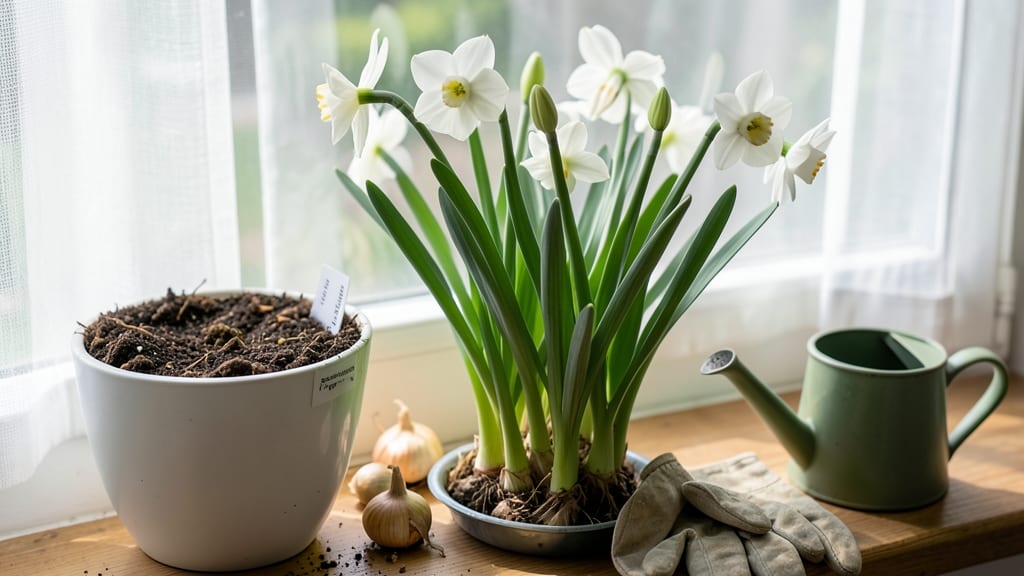
The paperwhites will bloom again only under very specific conditions, as they are annuals that naturally focus energy on one flowering cycle before dying. However, indoor forcing can sometimes coax a secondary bloom with ideal light and moisture.
Paperwhites follow a unique botanical pattern called monocarpic reproduction, meaning they devote nearly all their energy to producing flowers and seeds before dying. 🌱 This natural cycle explains why most paperwhites bloom once and then decline, though indoor forcing can sometimes trick them into producing a second, smaller bloom cycle.
The key lies in maintaining stable conditions—think of it like giving your plant a second chance at life by mimicking their Mediterranean habitat.
What's fascinating is how these plants respond to environmental cues. When you provide bright, indirect light for 10-12 hours daily and keep the soil consistently moist (but not soggy), you're essentially telling the plant it's still summer in its natural environment.
This can stimulate delayed blooming, though results vary based on the specific variety and growing conditions. I've found that patience pays off—some paperwhites surprise me with a second round of buds after their first flowers fade.
💡 In This Article
- Why Paperwhites Usually Bloom Only Once
- How to Encourage Repeat Blooming in Paperwhites
Why paperwhites usually bloom only once
Paperwhites (Narcissus papyraceus) are what botanists call monocarpic plants—meaning they allocate nearly all their energy to a single reproductive event before dying.
This lifecycle strategy is common in many wildflower species, including some desert annuals that bloom spectacularly once before their seeds ensure the next generation's survival. 🌱 The plant's entire focus shifts from vegetative growth (leaf production) to floral development, often at the expense of its own longevity.
In their natural Mediterranean habitat, this one-time bloom ensures maximum seed production during brief, favorable conditions.
The hormonal mechanism behind this behavior involves a surge in ethylene gas production after flowering, which triggers senescence—the plant's programmed aging process. You'll notice this as the leaves yellow and wilt within 4-6 weeks after the first blooms appear.
This decline isn't just random decay; it's an evolutionary trade-off that ensures the plant's genetic legacy continues through seeds. The trade-off becomes especially clear when comparing paperwhites to perennial bulbs like daffodils, which can rebloom year after year by storing energy in their underground corms.
What makes paperwhites particularly interesting is how their indoor cultivation disrupts this natural cycle. When you force paperwhites indoors (typically in 60-70°F conditions), you're essentially tricking them into thinking they're in their native climate.
This artificial environment can delay the ethylene surge, sometimes allowing a second, smaller bloom cycle—though it's more common in younger bulbs with more stored energy reserves.
The key difference is that indoor paperwhites often produce fewer, smaller flowers in subsequent blooms, as their energy reserves are depleted from the first flowering.
Light exposure plays a crucial role in this process. Paperwhites require bright, indirect light for 10-12 hours daily to maintain their energy balance. Without sufficient light, the plant can't perform photosynthesis efficiently, accelerating the decline after the first bloom.
I've observed that paperwhites kept in dim conditions often show signs of stress—yellowing leaves and stunted growth—within just 2-3 weeks of their initial bloom, making secondary flowering nearly impossible. The plant simply doesn't have the energy reserves to sustain another reproductive cycle.
Temperature also influences this lifecycle. While paperwhites thrive at 65-70°F during growth, exposure to temperatures below 55°F or above 80°F can trigger premature senescence. This temperature sensitivity explains why indoor paperwhites often bloom more prolifically in living rooms than in kitchens with fluctuating temperatures.
The stable environment mimics their natural Mediterranean climate, where temperatures remain moderate year-round. When you combine optimal light with stable temperatures, you create conditions where the plant might just surprise you with a second, albeit smaller, bloom cycle.
The most critical factor for repeat blooming is the bulb's age and health. Younger paperwhite bulbs contain more stored nutrients, giving them the energy to attempt a second flowering cycle.
Mature bulbs, on the other hand, have already invested most of their reserves in the first bloom and are less likely to rebloom. This is why many gardeners report better results with freshly planted paperwhites—those that haven't yet committed all their energy to flowering.
The lesson here is that while paperwhites won't reliably bloom again, creating the right conditions can sometimes coax a second, modest display from younger, healthier specimens. 💫