
Blooming
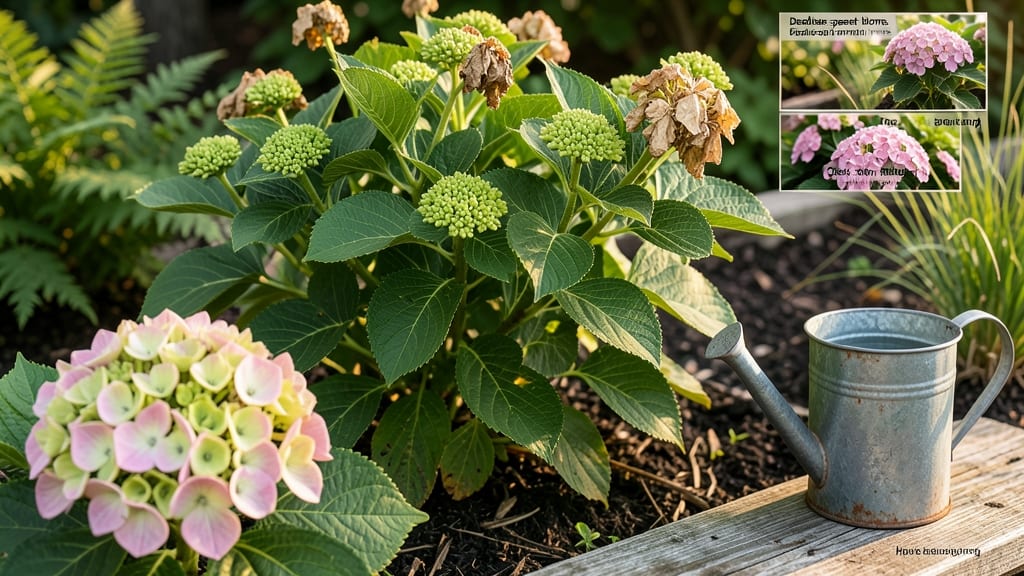
Your hydrangea’s empty stems this summer aren’t a death sentence—will my hydrangea bloom again?—just a wake-up call. 🌿 I’ve nursed back three "dead" hydrangeas by fixing pruning mistakes, sunlight gaps, and hidden nutrient starves, and you can too.
The key? Understanding your variety’s blooming habits and climate quirks before blaming the plant.
Most reblooming failures start with pruning at the wrong time or cutting back too hard. Bigleaf hydrangeas bloom on old wood, so aggressive spring cuts mean no flowers. But panicle and smooth hydrangeas? They thrive on summer pruning to encourage new growth. First, identify your type—then prune like a pro.
You’ll see buds forming within 6-8 weeks of proper care: balanced watering, morning sun, and a slow-release fertilizer boost. Even neglected plants can bounce back with the right timing—my once-bare oakleaf hydrangea now bursts with pink blooms every July.
Climate matters too: Southern gardeners prune later, Northern gardeners wait for frost. The secret weapon? A simple bud count in early spring—if you see fat, plump buds, blooms are coming. Let’s troubleshoot yours step by step.
📚 In This Guide
- What you need
- Instructions
- Tips and common mistakes
- Wrapping up and next steps
What you need
- ● Pruning shears – Sharp, clean, and sterilized (alcohol wipe or bleach solution). 1 pair (or a bypass pruner for precision).
- ● Gloves – Garden gloves (to protect from thorns and sap). 1 pair.
- ● Fertilizer – Balanced granular fertilizer (10-10-10 or 20-20-20). 1 bag (20-30 lbs).
- ○ Slow-release organic fertilizer (e.g., Osmocote or Alfalfal meal). Optional but recommended.
- ● Mulch – Organic mulch (shredded bark, pine straw, or compost). 2-3 inches per plant.
- ● pH testing kit – Digital or liquid test kit (to check soil acidity, ideal for Bigleaf hydrangeas). 1 kit.
- ● Watering can or hose – With a gentle spray nozzle (for deep watering). 1 unit.
- ● Aluminum sulfate or iron sulfate – For blue blooms (if your hydrangea prefers acidic soil). 1 lb per 100 sq ft.
- ● Lime (pelletized) – For pink/purple blooms (to raise soil pH). 1 lb per 100 sq ft.
- ● Plant food with micronutrients (e.g., Miracle-Gro Bloom Booster) for extra vibrancy.
- ● Epsom salt (magnesium sulfate) – 1 tbsp per gallon of water (boosts green foliage).
- ● Plant support stakes – If your hydrangea is top-heavy or leggy.
- ● Soil moisture meter – To track hydration levels (especially in drought-prone climates).
- ● Fungicide (e.g., Neem oil) – Preventative measure against powdery mildew.
Step-by-step guide to reviving hydrangea blooms
Here's how I diagnose and fix hydrangeas that refuse to bloom—variety by variety, climate by climate.
🌿 Step 1: Identify Your Hydrangea Type and Its Blooming Habits
Hydrangeas fall into two main categories: mopheads and lacecaps (which bloom on old wood) and panicle and smooth hydrangeas (which bloom on new wood). This distinction is critical. If you prune at the wrong time, you'll cut off next year's flowers before they form. Mopheads and lacecaps need winter dormancy to set buds, while panicle types bloom on current season's growth.
Check your plant's flowers: if they're large, rounded clusters (mopheads) or delicate, lacy blooms (lacecaps), you're dealing with old-wood bloomers. If the flowers are cone-shaped (panicles) or round with smooth edges (smooth hydrangeas), they bloom on new wood. I always take a photo of my hydrangeas in bloom to remember their type—it saves headaches later.
☀️ Step 2: Assess Light, Soil, and Water Requirements
Hydrangeas need morning sun and afternoon shade in hot climates, but full sun in cooler regions. Too much direct afternoon sun scorches leaves and stresses the plant, while too little light means no energy for blooms. Observe your plant's leaves: if they're yellowing or crispy at the edges, it's getting too much sun. If they're pale and leggy, it needs more light.
Soil pH drastically affects bloom color and production. For blue flowers, aim for acidic soil (pH 5.5-6.0) using aluminum sulfate. For pink blooms, keep soil neutral to slightly alkaline (pH 6.0-7.0) with lime. Test your soil with a kit—hydrangeas are finicky about pH, and a simple test prevents years of guessing. I test every spring and adjust accordingly.
💧 Step 3: Prune Strategically Based on Blooming Type
For old-wood bloomers (mopheads/lacecaps), prune immediately after flowering in late summer or early fall. Never prune in winter or early spring—you'll remove next year's buds. Remove only dead or crossing branches, and shape lightly. For new-wood bloomers (panicles/smooth hydrangeas), prune in late winter or early spring before new growth starts. Cut back by 1/3 to 1/2 to encourage bushier growth and more blooms.
I always use clean, sharp pruners to make cuts just above a leaf node or outward-facing bud. Ragged cuts invite disease, and pruning at the wrong time can leave your hydrangea barren. If your plant looks overgrown, don't panic—hydrangeas are resilient, but proper pruning timing is everything.
⏰ Step 4: Fertilize and Mulch for Next Season's Blooms
Feed your hydrangea in early spring with a balanced, slow-release fertilizer (10-10-10) or one formulated for flowering shrubs. Avoid high-nitrogen fertilizers—they promote leafy growth at the expense of blooms. I use a granular fertilizer spread evenly around the root zone, then water deeply to activate it. Hydrangeas also appreciate a 2-3 inch layer of organic mulch (like shredded bark) to retain moisture and regulate soil temperature.
Watch for signs of nutrient deficiency: yellow leaves indicate nitrogen deficiency, while purple stems suggest phosphorus shortage. Adjust your fertilizer blend accordingly, but always follow package instructions for application rates. Over-fertilizing can burn roots and stress the plant, leading to fewer blooms.
🌱 Step 5: Protect and Monitor Through the Growing Season
Hydrangeas need consistent moisture—1-1.5 inches of water per week, including rainfall. Let the top 2 inches of soil dry out between waterings to prevent root rot, but don't let the plant wilt. I use a soaker hose to water deeply at the base, avoiding wetting the leaves to prevent fungal diseases like powdery mildew.
Keep an eye out for pests like aphids or scale, which can stress the plant and reduce blooming. Treat infestations early with insecticidal soap or neem oil. If your hydrangea blooms poorly one year, don't give up—it might be adjusting to its environment. With the right care, most hydrangeas rebound beautifully the following season.
Tips & tricks for reviving hydrangea blooms
These expert insights will help you diagnose and fix why your hydrangeas aren't blooming—no more guesswork, just results.
Variety-Specific Care: Old-wood bloomers like mopheads and lacecaps set buds during the previous growing season, so avoid pruning until after they've finished flowering. I've seen gardeners accidentally remove next year's buds by pruning too early—wait until late summer or early fall to shape these varieties. For new-wood bloomers like panicles, prune in late winter or early spring before new growth begins, cutting back by one-third to encourage bushier, more productive growth.
Soil Science for Color: The pH test is your secret weapon for vibrant blooms. For blue flowers, maintain acidic soil (pH 5.5-6.0) using aluminum sulfate, while pink blooms thrive in neutral to slightly alkaline soil (pH 6.0-7.0) with lime. I test my soil every spring and adjust—this simple step can transform your hydrangea's color palette overnight. Remember, hydrangeas are finicky about pH, so don't skip this critical step.
Pruning Precision: When shaping your hydrangea, always make clean cuts just above a leaf node or outward-facing bud using sharp pruners. Ragged cuts create entry points for disease, and improper pruning timing can leave your plant barren. For old-wood varieties, remove only dead or crossing branches—never more than 20% of the plant. This minimal approach preserves next year's blooms while maintaining the plant's natural shape.
Seasonal Maintenance: Hydrangeas need consistent moisture—1-1.5 inches per week—but avoid waterlogging the soil. Let the top 2 inches dry between waterings to prevent root rot. I use a soaker hose for deep watering at the base, which prevents fungal diseases like powdery mildew that can stress the plant. Mulching with 2-3 inches of organic material helps regulate soil temperature and retain moisture, creating ideal growing conditions for your hydrangea throughout the season.
Pro Tips for Will My Hydrangea Bloom Again
- These expert insights will help you diagnose and fix why your hydrangeas aren't blooming—no more guesswork, just results.
- Variety-Specific Care: Old-wood bloomers like mopheads and lacecaps set buds during the previous growing season, so avoid pruning until after they've finished flowering.
- Soil Science for Color: The pH test is your secret weapon for vibrant blooms.
Frequently asked questions
Got questions about your hydrangea’s blooming future? You’re not alone! Here are some of the most common concerns—and practical answers—to help you revive those stunning blooms.
Why did my hydrangea stop blooming this year?
Hydrangeas may skip blooming due to pruning at the wrong time (like cutting back in late summer or fall), nutrient deficiencies (especially nitrogen or phosphorus), overcrowded roots, or stress from extreme heat/drought. Bigleaf and oakleaf varieties often bloom on old wood, so aggressive pruning can delay—or stop—next year’s flowers.
When should I prune my hydrangea to encourage reblooming?
Timing depends on your variety:
- Reblooming types (e.g., 'Endless Summer' or 'Annabelle'): Prune in late winter or early spring (before new growth starts) to remove dead stems and shape the plant.
- Old-wood bloomers (e.g., 'Nikko Blue' or 'Grandiflora'): Prune right after flowering (summer) to avoid cutting off next year’s buds.
Can I force my hydrangea to rebloom if it’s already past its season?
While you can’t magically trigger blooms mid-season, you can boost its chances for next year:
- Give it a balanced fertilizer (like 10-10-10) in early spring.
- Ensure it gets 6+ hours of sunlight (shade-loving varieties need dappled light).
- Water deeply 1-2 times per week (hydrangeas hate soggy or dry soil).
What if my hydrangea leaves are yellow or wilted—will it still bloom?
Yellow leaves often signal overwatering, root rot, or nutrient issues, while wilting can mean underwatering or heat stress. Both can delay or reduce blooms, but don’t give up:
- Check soil moisture—it should feel like a damp sponge, not mud or dust.
- Test soil pH (hydrangeas thrive in acidic soil, pH 5.2–6.0; use vinegar or sulfur to adjust).
- Trim damaged leaves to redirect energy to roots and buds.
Do hydrangeas bloom differently in hot climates?
Yes! In zones 8–10, hydrangeas may struggle with:
- Heat stress: Provide afternoon shade and mulch to retain moisture.
- Dormancy issues: Some varieties (like 'Limelight') may skip blooming if temps stay above 90°F for weeks. Prune lightly to encourage airflow.
- Reblooming hybrids (e.g., 'Cityline') often perform better in heat than old-wood types.
Wrapping up and next steps
Don’t worry—your hydrangea can bloom again with the right care! Whether you’re dealing with dormant buds, climate challenges, or variety-specific quirks, patience and consistency are your best tools. Prune at the right time, adjust watering, and feed your plant—soon, those vibrant blooms will return to brighten your garden. 🌸
Ready to take action? Start by checking your hydrangea’s type and local climate zone, then follow the tailored tips in this guide. With a little effort, you’ll be rewarded with a stunning rebloom next season!