
Pruning
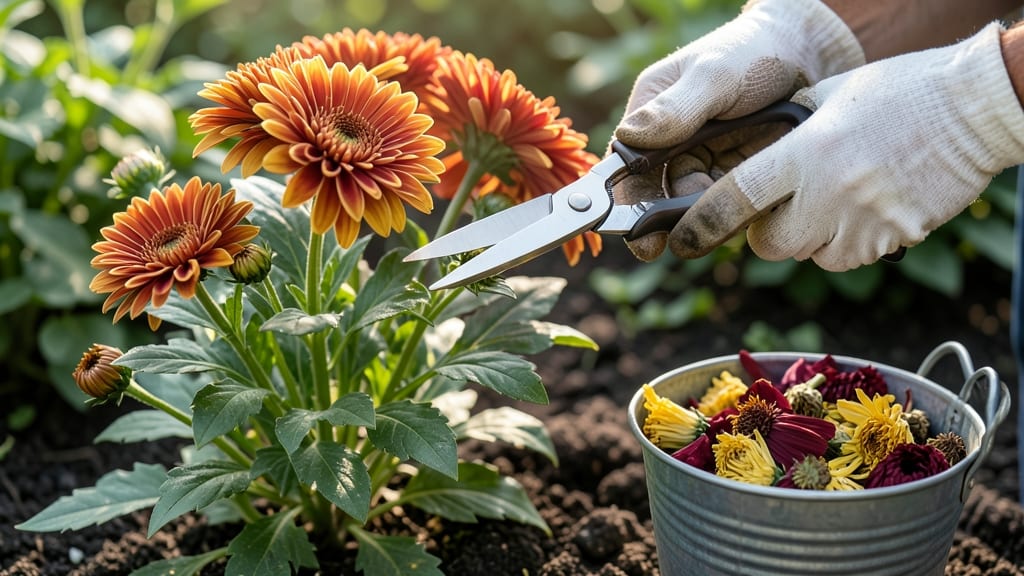
Mums (chrysanthemums) will rebloom after deadheading only if they are reblooming varieties, properly pruned in early fall, and maintained with consistent care. Non-reblooming types produce just one seasonal bloom and won’t regrow after flowering.
Whether your mums regrow after deadheading depends entirely on their variety and how you care for them. 🌸 Reblooming types like 'Dynasity' or 'Mathematica' respond to pruning by producing multiple flushes of flowers throughout the season, thanks to selective breeding that extends their blooming window.
The key is timing—deadhead these varieties in early fall to encourage new growth before winter dormancy sets in. Non-reblooming mums, on the other hand, focus all their energy on that single autumn display and won't regrow after flowering, no matter how much you prune.
For the best results, use clean, sharp pruners to cut stems just above a leaf node, and follow up with balanced fertilizer to support new growth. I've found that reblooming mums need about 6-8 hours of sunlight daily and consistent moisture to thrive after pruning.
The science behind this is fascinating—reblooming varieties have been bred to be less sensitive to daylight changes, allowing them to produce flowers even after their initial bloom cycle.
💡 In This Article
- Reblooming Mums vs. Non-Reblooming: Key Differences and Science
- Step-by-Step Deadheading Guide for Maximum Reblooms
Reblooming mums vs. non-reblooming: key differences and science
The secret to whether mums rebloom lies in their genetic makeup and how they respond to daylight. Reblooming varieties like 'Dynasity' or 'Mathematica' have been selectively bred to produce multiple flower cycles, while non-reblooming types focus all their energy on one autumn bloom.
This difference comes down to photoperiod sensitivity—rebloomers have been bred to be less affected by shorter daylight hours, allowing them to continue flowering beyond their initial cycle. 🌿
Here's what's happening botanically: Non-reblooming mums rely on natural daylight shortening in fall to trigger flowering, then exhaust their energy in that single bloom. Rebloomers, however, can be "tricked" into producing new flowers by removing spent blooms (deadheading) and providing consistent care.
The plant's growth hormones shift from producing seeds to generating new flower buds when you remove the old blooms, creating a feedback loop that encourages continuous blooming.
You can see this difference in their growth patterns. Reblooming mums typically have a more compact, bushier habit with multiple side shoots, while non-rebloomers often grow taller and leggier as they focus energy upward.
The key factor is their day-neutral characteristic—rebloomers don't rely solely on seasonal light changes but can produce flowers year-round with proper care and pruning.
Consider the timing: Non-reblooming mums begin flowering in late summer to early fall when daylight drops below 12-14 hours. Rebloomers can continue producing flowers even when daylight increases again in spring, provided you maintain proper care.
This is why gardeners often see reblooming mums flowering in both fall and spring, while non-rebloomers only shine once per season.
What most people don't realize is that reblooming varieties actually have two distinct growth phases: the initial summer growth and the fall rebloom cycle. The first phase builds the plant's structure, while the second phase produces flowers after deadheading.
This dual-phase growth is what makes them more labor-intensive but also more rewarding for gardeners who want continuous color.
For example, 'Mathematica' mums can produce three distinct bloom cycles in a single season with proper care: spring, summer, and fall. Each cycle requires careful deadheading and fertilization to maintain the plant's energy reserves.
The science behind this involves manipulating the plant's florigen hormone, which controls flowering—removing old blooms signals the plant to produce more of this hormone, triggering new flower buds.
This is why choosing the right variety matters so much. If you're looking for continuous blooms, invest in reblooming types and be prepared for more maintenance. Non-rebloomers are beautiful but require less upkeep—just enjoy their single spectacular display! 🌸