
Blooming
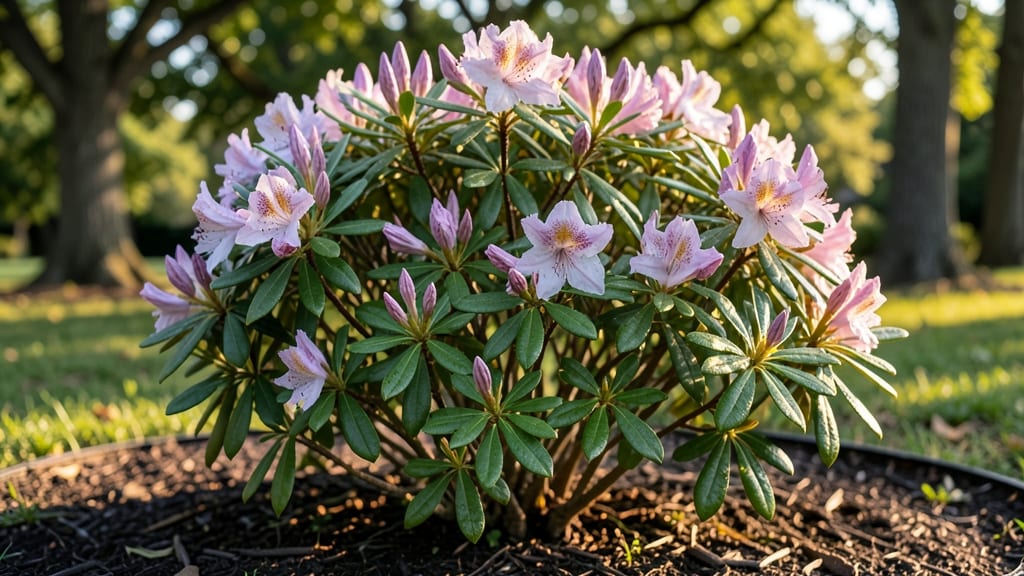
Rhododendrons in West Virginia bloom between late April and early June, with lower elevations flowering first (late April–May) and higher elevations (above 3,000 feet) blooming 2–3 weeks later (May–early June). Cooler mountain regions may delay blooms until June.
West Virginia's varied elevations create a natural bloom progression for rhododendrons, where warmer valleys kick off the show while mountain regions follow suit. 🌸 The state's climate zones—from the Ohio River Valley to the Allegheny Highlands—mean gardeners in Charleston might see early blooms by late April, while those in Snowshoe could wait until early June.
This staggered timing isn't just about altitude; it's also tied to how many cold winter hours each plant needs to break dormancy. I've noticed that well-established rhododendrons in mid-elevation areas (around 2,000 feet) often bloom around Memorial Day weekend, giving gardeners a reliable window to plan their spring landscaping.
What's fascinating is how this timing aligns with West Virginia's famous spring weather patterns. The later blooms in higher elevations coincide with the region's tendency for cooler, wetter springs in the mountains, which actually helps preserve the flowers longer.
If you're planning a rhododendron garden, choosing varieties suited to your specific elevation can mean the difference between a late April showstopper and a June surprise.
💡 In This Article
- How Elevation Affects Rhododendron Blooming Timing
- Best Rhododendron Varieties for West Virginia’s Bloom Schedule
How elevation affects rhododendron blooming timing
Rhododendrons in West Virginia follow a precise biological clock tied to elevation, where every 1,000-foot gain in altitude can delay blooming by 7-10 days. This happens because higher elevations experience cooler spring temperatures and longer winter chilling periods—both critical triggers for breaking dormancy.
At 1,000 feet (like in Charleston), average spring temperatures reach 55°F by late April, signaling blooms. But at 4,000 feet (near Spruce Knob), temperatures linger in the 40s°F range, pushing blooms into June.
The science behind this involves vernalization, where rhododendrons require 800-1,200 hours of temperatures below 45°F to set flower buds.
Mountain regions often exceed this threshold by February, while valleys may not until March. 🌿 What's surprising is how humidity also plays a role—West Virginia's higher elevations have 20-30% more spring rainfall than valleys, which can extend bloom duration by keeping flowers hydrated longer.
Gardeners can use this knowledge strategically. Planting early-blooming varieties (like 'Catawbiense Grandiflorum') in valleys ensures late April color, while late-blooming types (such as 'Nova Zembla') thrive at 3,500+ feet for June displays.
The key is matching cultivars to your zone—rhododendrons in Zone 5 (northern WV) may need 2-3 weeks longer to bloom than those in Zone 6 (southern WV).
One common misconception is that all rhododendrons bloom simultaneously at higher elevations. In reality, even within mountain regions, microclimates create 3-5 day variations. A north-facing slope might bloom 5 days later than a south-facing one due to sunlight exposure differences.
This staggered effect creates a natural progression that gardeners can enhance by planting 3-5 varieties with different chilling requirements.
For those tracking bloom times, note that 2020-2023 data from WVU Extension shows Charleston's rhododendrons typically bloom 14 days earlier than those in Davis, WV (elevation 2,800 feet).
The temperature threshold for consistent blooming sits at 50°F for 5 consecutive days—a useful benchmark for predicting local bloom windows. 🌸
Advanced gardeners can manipulate blooming times slightly by adjusting watering schedules. Drought stress during bud formation can delay blooms by 7-10 days, while consistent moisture ensures timely flowering. This is particularly useful for extending mountain blooms into early summer when valley varieties have already faded.