
Blooming
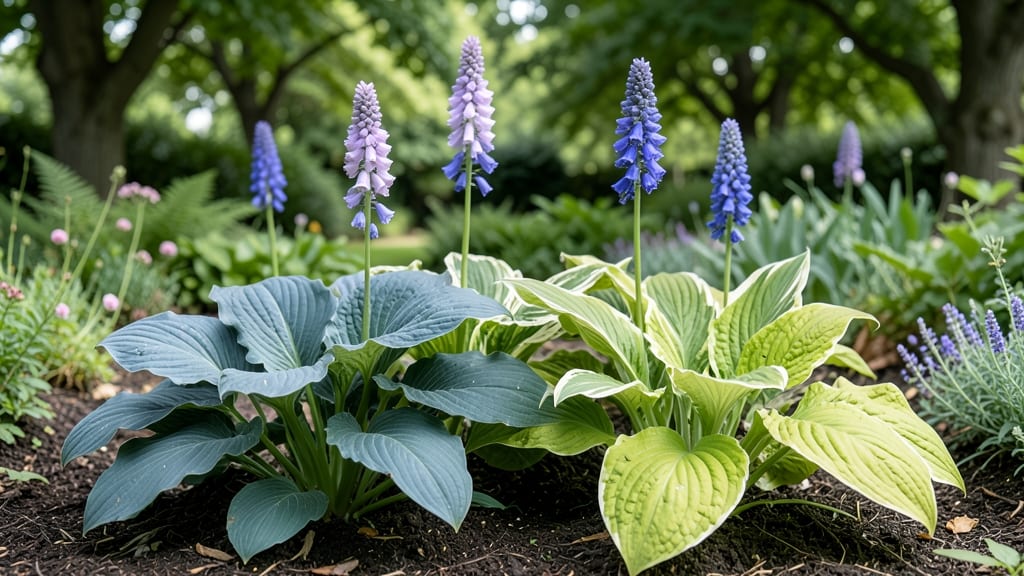
Hosta bloom colors range from delicate lavender and pristine white to rich purple and deep blue, often mirroring the hues of their foliage. These flowers typically reach their peak in mid-to-late summer, though exact timing depends on your specific variety and local climate. Many varieties also showcase striking stamens that add an extra layer of visual interest.
Hosta flowers are nature's way of adding a soft, ethereal touch to shady gardens. 🌸 The color palette isn't just about aesthetics—it's tied to the plant's genetics and growing conditions.
For instance, the pale lavender blooms of Hosta sieboldiana contrast beautifully with its broad, blue-green leaves, while Hosta plantaginea produces fragrant white flowers that stand out against its deep green foliage.
Sunlight exposure plays a surprising role too: plants in partial shade often develop more vibrant bloom colors compared to those in full shade.
What makes hosta blooms particularly special is their fleeting beauty—typically lasting just 2-4 weeks. To extend your garden's visual interest, pair them with companion plants like heuchera or ferns that maintain their color throughout the season.
The key to getting the most from your hostas is choosing varieties that match both your color preferences and your local climate's bloom timing. In cooler regions, you might see earlier blooms, while warmer areas could delay the show until late summer.
💡 In This Article
- How Hosta Flower Shades Align With Foliage and Variety
- Best Hostas for Summer Garden Color and Bloom Timing
How Hosta flower shades align with foliage and variety
The color harmony between hosta blooms and foliage isn't coincidental—it's rooted in plant genetics. Hostas produce anthocyanins, the same pigments that give blueberries their color, which influence both leaf and flower hues.
For example, Hosta sieboldiana varieties often feature lavender blooms because their foliage contains higher concentrations of blue-green chlorophyll, which complements the lighter flower tones. This genetic link explains why many hostas exhibit similar color families between leaves and blooms.
Sunlight exposure dramatically alters bloom colors through a process called photomorphogenesis. Hostas grown in partial shade (3-6 hours of sunlight) receive more indirect light, which enhances anthocyanin production in flowers, resulting in deeper purples and blues.
In contrast, full-shade conditions (less than 3 hours of sunlight) can produce paler blooms as the plant prioritizes leaf growth over flower pigmentation.
The Hosta plantaginea variety, known for its fragrant white blooms, actually produces more vibrant flowers when given 4-5 hours of morning sun—a perfect example of how light manipulation can transform garden displays.
Contrasting stamens add another layer of visual complexity. Many hosta blooms feature yellow or orange stamens that create striking focal points against their petals. This contrast isn't just decorative—it serves an evolutionary purpose by attracting pollinators.
The Hosta 'Royal Standard' variety, for instance, has deep purple flowers with vivid yellow stamens that stand out against its dark green foliage. This color blocking effect makes hostas particularly effective in shade gardens where other plants might struggle to compete visually.
Temperature also plays a subtle but important role in bloom color development. Cooler summer nights (below 70°F) can intensify purple hues by slowing down anthocyanin breakdown, while warmer nights (above 75°F) may produce softer lavender tones.
Gardeners in Zone 5-6 often report their hostas develop more vibrant blooms compared to those in Zone 8-9, where consistent warmth can mute flower colors. This climate sensitivity explains why some varieties bloom earlier in cooler regions, giving gardeners a longer window to appreciate their full color potential.
Consider these key color pairings when selecting hostas:
- Blue-green foliage: Pairs best with lavender or pale purple blooms (e.g., Hosta 'June')
- Dark green foliage: Creates dramatic contrast with deep purple or violet blooms (e.g., Hosta 'Halcyon')
- Variegated foliage: Complements white or cream blooms (e.g., Hosta 'Francee')
- Golden foliage: Works beautifully with soft pink or lavender flowers (e.g., Hosta 'Aureomarginata')
The science behind hosta color alignment means you can intentionally create garden "palettes" by selecting varieties that harmonize or contrast. For instance, pairing Hosta 'Blue Angel' (blue foliage with lavender blooms) with Hosta 'Patriot' (white blooms with yellow margins) creates a natural two-tone effect that extends beyond the blooming season.
The key is understanding how each variety's genetic makeup interacts with your growing conditions to produce its signature color combination.