
Blooming
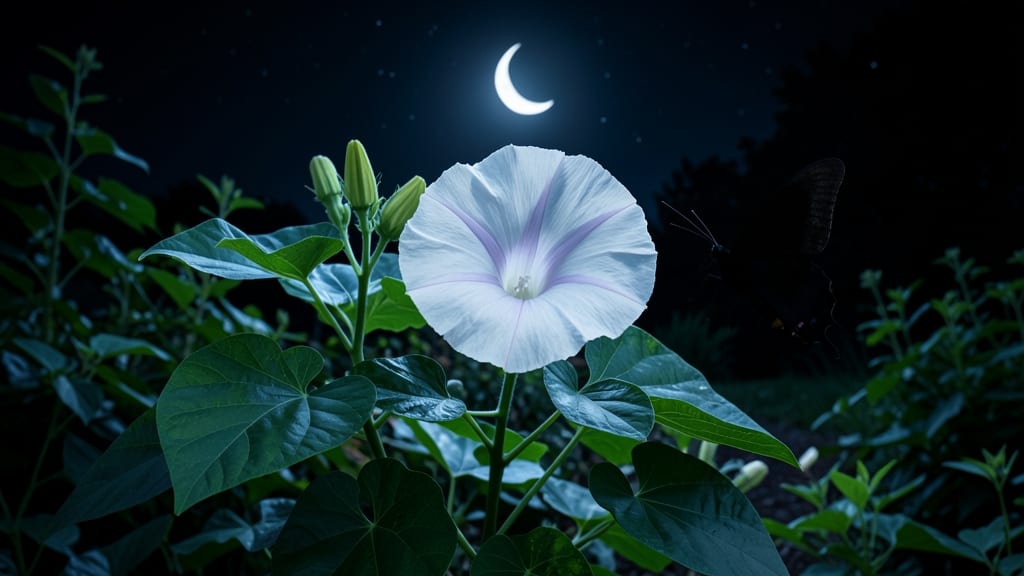
Moonlight-blooming flowers transform your garden into a magical twilight sanctuary. ✨ I still remember the first time I saw my moonflower unfurl under the porch light—it looked like a ghostly white lantern glowing in the dark.
These nocturnal beauties aren't just pretty; they create an entirely different experience after sunset, when most gardens go quiet.
The best part? Many thrive with minimal fuss—just well-draining soil and afternoon sun. Moonflowers, evening primroses, and night-blooming jasmine all reward you with fragrant blooms that only reveal themselves when the sky turns blue.
Their silvery petals and soft scents attract moths and hummingbirds that hunt at dusk, turning your garden into a living nighttime ecosystem.
You'll end up with a garden that feels alive even after dark, where every evening brings new surprises. The contrast of deep greens and luminous whites creates a dreamy atmosphere perfect for stargazing or quiet evenings on the porch.
Plus, these plants often have cultural meanings tied to mystery and transformation—ideal for adding depth to your outdoor space.
Works beautifully in containers, along pathways, or as focal points near seating areas. Whether you're designing a full moon garden or just adding a few dramatic accents, these plants deliver nighttime magic with surprisingly little effort. Let's bring the moon to your garden!
📚 In This Guide
- What you need
- Instructions
- Tips and common mistakes
- Wrapping up and next steps
What you need
- ● Moonlight-loving flower seeds or seedlings: Night-blooming jasmine (Jasminum polyanthum) – 3-5 plants
- ● Moonflower (Ipomoea alba) – 2-3 seeds or seedlings
- ● Evening primrose (Oenothera biennis) – 4-6 plants
- ● Queen of the Night (Selenicereus grandiflorus) – 1-2 cacti
- ● Night-scented stock (Matthiola longipetala) – 5-7 plants
- ● Growing containers or garden beds: Well-draining pots (10-12" diameter) – 3-5, depending on plants
- ● Garden soil or potting mix (sterilized) – 2-3 cubic feet
- ● Perlite or sand (for drainage) – 1 small bag
- ● Planting tools: Trowel or small hand shovel
- ○ Garden gloves (optional but recommended)
- ● Watering can with a fine rose nozzle
- ○ Lighting (optional for indoor setups): Moonlight-blue LED grow lights (for indoor gardens) – 1-2 units
- ● Solar-powered garden lights (for accent lighting) – 3-5
- ● 🌡️ Climate check: Ensure your hardiness zone matches the flowers’ needs (most thrive in zones 7-11).
- ● ✨ Moonlight preference: These flowers adore indirect light—place them where they’ll catch evening sunlight or artificial moonlight.
- ● 💧 Watering schedule: Keep soil consistently moist but not soggy (especially for seedlings).
- ○ 🌿 Support structures (optional): Trellises or stakes for climbing varieties like moonflower.
How to design a moonlight-blooming twilight garden
Here’s how to create a garden that glows under the stars—no black lights needed.
🌿 Step 1: Choose Nighttime-Blooming Flowers
Start with flowers naturally adapted to moonlight. My go-to list includes evening primrose (pale yellow blooms), four o’clocks (vibrant pinks and purples), moonflower (large white trumpets), and night-blooming jasmine (intoxicating fragrance). These varieties open their petals as daylight fades and stay open until dawn.
Check your local climate zone—some flowers, like moonflower, thrive in warmer regions, while evening primrose handles cooler nights. I always plant a mix of heights and textures to create visual layers under artificial moonlight. The key is to avoid anything that wilts by dusk; these flowers are built for twilight.
☀️ Step 2: Position for Maximum Moonlight
Place your moonlight garden where it receives indirect moonlight—avoid direct glare from streetlights or security lights, which can overwhelm natural blooms. A spot with dappled moonlight (like under a tree canopy) creates the most magical effect. If your garden lacks natural moonlight, supplement with warm white LED spotlights (2700K color temperature) positioned to illuminate the flowers from below.
I like to arrange plants in a semi-circle around a central feature, like a small fountain or bench, so moonlight reflects off the blooms as you walk through. The goal is to create a pathway of light—think of it like a garden that unfolds after dark.
💧 Step 3: Water and Fertilize for Nocturnal Blooms
Water your moonlight garden in the late afternoon (around 4 PM) so the soil is moist but not soggy by nightfall. Overwatering can dilute fragrance and weaken stems, while underwatering causes buds to drop before they open. I use a drip irrigation system on a timer to keep moisture consistent without disturbing the plants.
Feed with a low-nitrogen, high-phosphorus fertilizer (like a 5-10-10 blend) every 6 weeks to encourage blooming. Avoid nighttime fertilizing—it attracts pests and can burn tender petals. Instead, apply fertilizer in the early morning so the plants have time to absorb nutrients before the sun sets.
✂️ Step 4: Prune and Maintain for Long-Lasting Blooms
Deadhead spent blooms every 2-3 days to encourage new flowers. I use clean, sharp pruners and snip just above a leaf node to redirect energy into fresh buds. Avoid pruning after dark—it’s harder to see clean cuts, and you risk damaging the plant in low light.
Mulch with 2-3 inches of organic mulch (like shredded bark) to retain moisture and regulate soil temperature. This keeps roots cool during hot days and warm during cool nights, which is crucial for flowers that rely on temperature shifts to bloom. I also add a light dusting of diatomaceous earth around the base to deter slugs and snails, which love moonlight gardens.
🪴 Step 5: Enhance with Fragrance and Texture
Layer in fragrant foliage like night-scented stock or evening-scented pelargonium to amplify the sensory experience. These plants release their best aromas after dark, creating a magical atmosphere. Pair them with silvery foliage plants (like lamb’s ear or dusty miller) to reflect moonlight and add contrast to the blooms.
Add smooth stones or pebbles along pathways to create a subtle crunch underfoot—it’s a small detail that makes the garden feel more intentional. I also include a small wind chime or bamboo flute to add sound, since moonlight gardens are meant to be experienced with all the senses.
Tips & tricks for perfect moonlight-blooming gardens
A few simple strategies will help your twilight garden shine brighter than ever under the stars.
Timing is Everything: The 4 PM watering schedule in Step 3 is non-negotiable for these nocturnal bloomers. Watering too late can leave soil soggy overnight, while daytime watering causes buds to drop before they open. I set my timer for exactly 4:00 PM sharp—this gives roots time to absorb moisture before evening, when most of these flowers begin their transformation. For extra insurance, I always check soil moisture with my finger at dusk; it should feel damp but not wet.
Lighting Layering: When supplementing with warm white LED spotlights (Step 2), position them at a 30-degree angle to create dramatic shadows. I like to aim the lights slightly downward to highlight the centers of moonflowers and four o'clocks, making them appear to glow from within. Avoid placing lights directly above—this creates harsh glare that washes out the delicate petals. For the most magical effect, use dimmable lights on a timer that activates at sunset and fades out by midnight.
Climate Zone Adaptations: In cooler climates, I extend the mulch layer to 3-4 inches (instead of the standard 2-3 inches) to protect roots from temperature swings. For warmer regions, I use a lighter mulch like straw to prevent overheating. The key is maintaining consistent soil temperatures—moonflowers, for example, need nighttime temps above 65°F to bloom properly. I always check the nightly lows in my area before selecting varieties, especially for moonflower and night-blooming jasmine which are more heat-sensitive.
Pro Tips for Flowers That Bloom In Moonlight
- A few simple strategies will help your twilight garden shine brighter than ever under the stars.
- Timing is Everything: The 4 PM watering schedule in Step 3 is non-negotiable for these nocturnal bloomers.
- Lighting Layering: When supplementing with warm white LED spotlights (Step 2), position them at a 30-degree angle to create dramatic shadows.
Frequently asked questions
Got questions about cultivating or admiring moonlight-blooming flowers? You’re not alone! Here are answers to the most common curiosities—from timing to troubleshooting—so your twilight garden shines bright.
Which flowers actually bloom at night?
While no flowers bloom exclusively under moonlight, some open at dusk or night for pollinators like moths. Top picks include evening primrose, four o’clocks, moonflower vine, and night-blooming jasmine. Others, like lilies or petunias, may linger open longer in low light.
How do I know when my flowers will bloom at night?
Timing depends on the species! Research your chosen flowers—some (like moonflower) open only after sunset, while others (like evening primrose) may start closing by midnight. Pro tip: Observe their natural rhythm for a few days to predict their schedule.
Can I grow these flowers in pots or containers?
Many moonlight-friendly flowers thrive in containers, including petunias, four o’clocks, and smaller varieties of moonflower vine. Use well-draining soil and ensure pots are large enough (at least 12 inches deep for vines). Just place them where they’ll catch evening sunlight for optimal blooming.
Why aren’t my flowers opening at night?
Several factors could be at play: light exposure (they need some evening sun), temperature (cool nights trigger blooming in some species), or stress (overwatering or poor soil). Try moving pots to a sunnier spot or adjusting watering habits. If the issue persists, check for pests or nutrient deficiencies.
Are there any low-maintenance alternatives?
If you want nighttime blooms with minimal effort, opt for petunias or calendulas—they’re hardy and often stay open longer. For fragrant options, night-blooming jasmine is a winner, though it may need occasional pruning. Pro tip: Mulch well to retain moisture and reduce upkeep!
Wrapping up and next steps
Discovering the ethereal beauty of flowers that bloom under moonlight transforms your garden into a magical twilight sanctuary. These nocturnal bloomers aren’t just stunning—they’re nature’s way of adding enchantment to your evenings.
Whether you’re a seasoned gardener or just starting, embracing these moonlit wonders is an easy and rewarding next step.
Ready to bring the night to life? Start small—plant a few moonflowers or night-blooming cacti in a pot or along your pathway. Watch as your garden glows with silver, white, and pale hues, turning ordinary nights into unforgettable moments. 🌙✨
Your next move: Pick one flower from this list and plant it tonight—your future self (and the moon) will thank you!