
Blooming
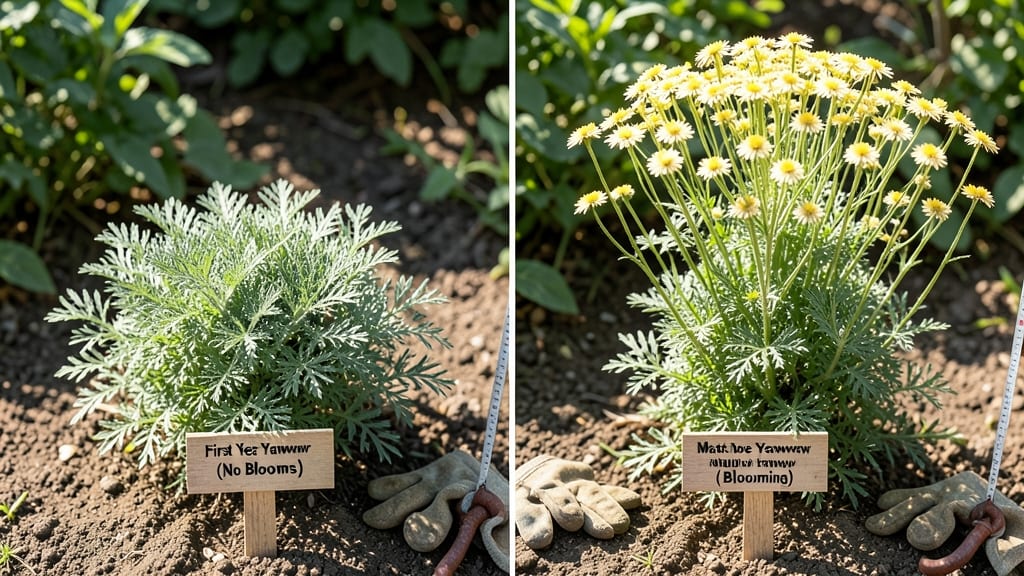
Yarrow does not typically bloom in its first year, as it prioritizes developing a robust root system and lush foliage before producing flowers in its second year or later, though some vigorous varieties may show limited blooms under perfect growing conditions.
Yarrow’s first-year focus on root and leaf growth isn’t just a quirk—it’s a survival strategy. 🌱 This herbaceous perennial allocates energy to building a deep, resilient root network that supports future blooms, especially in cooler climates where growth slows.
The plant’s flowering cycle is also triggered by daylight length and temperature, meaning some varieties in warm regions might surprise you with sporadic blooms by late summer. I’ve seen this happen with Achillea millefolium ‘Cerulea’ when planted in full sun with consistently moist soil.
What sets yarrow apart is its adaptability—once established, it can bloom prolifically for years with minimal care. The key is patience: providing well-draining soil, 6+ hours of sunlight daily, and occasional deadheading after blooms fade will encourage stronger second-year displays.
For gardeners eager to see flowers sooner, opt for pre-established plants or fast-growing varieties like ‘Moonshine’—they’ll often reward you with flat-topped clusters of tiny blossoms by early summer.
💡 In This Article
- Why Yarrow Plants Delay Flowering in Early Growth
- Encouraging Yarrow Blooms: Soil, Light, and Care Tips
Why yarrow plants delay flowering in early growth
Yarrow follows a classic survival strategy seen in many perennials: prioritizing root and foliage development before flowering. During its first growing season, up to 80% of the plant's energy goes toward expanding its root system, which can reach depths of 12-24 inches in ideal conditions.
This deep root network stores nutrients and water, creating a foundation for future blooms. The plant's leaves also grow densely to maximize photosynthesis, building energy reserves through a process called autotrophy—where the plant produces its own food from sunlight.
The timing of yarrow's flowering is also controlled by photoperiodism, its response to daylight length. Most varieties need 14-16 hours of daylight to trigger flower buds, which typically occurs in late spring or early summer of the second year.
Temperature plays a crucial role too—yarrow needs consistent soil temperatures above 50°F to initiate blooming. In cooler climates, this delay can extend to the third year, while warmer regions might see sparse blooms by late summer of the first year if conditions are perfect.
This delayed flowering isn't just about size—it's about maturity. Yarrow plants produce sesquiterpene lactones, compounds that give them their medicinal properties, but these require fully developed foliage to synthesize properly. The plant's first-year growth creates the biochemical foundation needed for both survival and reproduction.
Think of it like a marathon runner building endurance before sprinting—the yarrow's first year is all about laying the groundwork for future performance.
What makes this fascinating is how yarrow adapts its strategy based on environmental cues. For example, plants grown in full sun with well-draining soil may produce 1-2 small flower stems in their first year, while those in partial shade or poor soil focus entirely on vegetative growth.
This flexibility explains why some gardeners report blooms in the first year while others don't see them until the third. The key difference often comes down to soil quality and sunlight exposure during that critical first season.
Interestingly, yarrow's flowering pattern follows a monocarpic strategy in some varieties—meaning they produce flowers from the same growth points year after year, rather than from new growth. This explains why established plants can bloom prolifically while first-year plants remain focused on building their structural framework.
The plant's ability to delay flowering gives it a competitive advantage in unpredictable environments, ensuring it has the resources needed to survive and reproduce when conditions are right.
One visual clue gardeners can watch for is the development of pinnate leaves with fine divisions, which indicate healthy foliage growth. When these leaves reach 6-12 inches in height and develop a silvery-green hue, you're seeing the plant's energy investment in its above-ground structure.
This is your first sign that the yarrow is preparing for future blooming cycles, even if flowers don't appear until the following season.