
Blooming
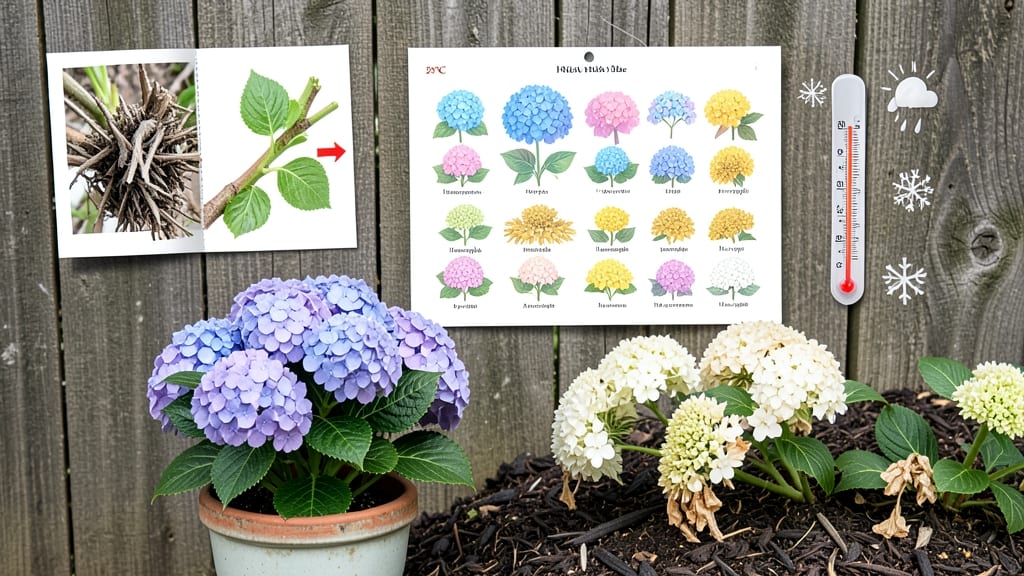
Hydrangeas do not bloom all year—their flowering cycles depend on variety, climate, and pruning habits, with most blooming seasonally in spring or summer and some reblooming varieties producing intermittent flowers.
Hydrangeas follow natural seasonal rhythms tied to their type and growing conditions. Most varieties like mophead and lacecap produce a single flush of blooms in late spring to early summer, while panicle and some oakleaf types may rebloom later in the season under ideal conditions.
Climate plays a huge role—cooler regions often see longer blooming periods, while hot summers can shorten flowering windows. 🌸
What many gardeners don't realize is that even reblooming varieties need proper care to perform consistently. Pruning at the right time (after blooms fade for spring-flowering types, early spring for rebloomers) and maintaining balanced soil nutrition can extend their display by several weeks.
The key is understanding your specific variety's needs—what works for a Bigleaf hydrangea differs completely from a Smooth one.
For those wanting year-round color, consider planting multiple varieties with staggered blooming periods. This creates a cascading effect where one type finishes just as another begins. Just remember—no hydrangea will flower continuously without careful management of light, water, and seasonal changes.
💡 In This Article
- Hydrangea Varieties and Their Natural Blooming Seasons
- Extending Hydrangea Blooms: Pruning and Care Tips
Hydrangea varieties and their natural blooming seasons
Hydrangeas exhibit distinct blooming patterns based on their botanical classification. The most common types—mophead (Bigleaf) and lacecap—follow a single-season cycle, producing their primary flush of blooms between late May and July in temperate climates.
These varieties rely on previous season's growth (old wood) to form flower buds, which develop during the cooler months of late summer and fall. The buds then bloom when daytime temperatures consistently reach 60-70°F and nights stay above 50°F.
In contrast, panicle hydrangeas (like 'Limelight' or 'Little Lime') and some oakleaf varieties (such as 'Alice') are rebloomers, capable of producing two distinct flowering periods. Their first flush appears in early summer, followed by a secondary display in late summer to early fall if given proper care.
The key difference lies in their bud formation—rebloomers develop new wood growth in spring that can produce flowers later in the season. However, this second flush often requires consistent moisture and balanced nutrients to maintain vigor.
Climate plays a critical role in determining blooming windows. In Zone 5 or colder regions, hydrangeas may experience a 2-3 week delay in blooming compared to warmer zones due to slower bud development.
Conversely, areas with hot, dry summers (like parts of Zone 8) can cause early bud drop, shortening the flowering period. The ideal temperature range for continuous blooming sits between 55-75°F—anything hotter or colder can stress the plant and reduce flower production.
What most gardeners overlook is how light exposure affects blooming patterns. Hydrangeas need at least 6 hours of sunlight daily for optimal flowering, though they tolerate partial shade.
Too much shade (less than 4 hours of sun) can lead to sparse blooms, while intense afternoon sun in hot climates may scorch leaves and buds. The color intensity of flowers also varies by sunlight—more sun typically produces brighter blooms, while shade results in softer hues.
For those seeking extended blooms, selecting the right variety for your climate is essential. For example, 'Endless Summer' mophead hydrangeas are bred to rebloom, while traditional varieties like 'Annabelle' panicle hydrangeas naturally produce flowers on both old and new wood.
Understanding these distinctions helps gardeners make informed choices when planning their landscape designs.
One practical tip: Plant reblooming varieties in sheltered locations (like near a north-facing wall) to protect them from harsh afternoon sun. This simple adjustment can extend their blooming season by 4-6 weeks in challenging climates.
The visual impact of hydrangeas in full bloom—with their lush, paper-like petals in shades of pink, blue, or white—makes the effort well worth it for any gardener.