
Blooming
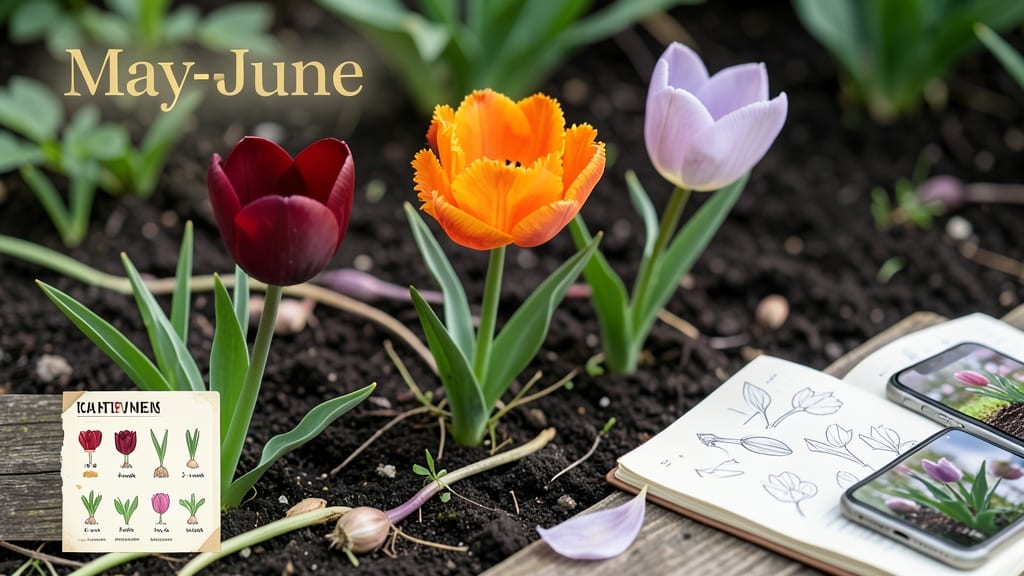
Tulips do not bloom all summer—they flower in early spring for 2-3 weeks, typically between March and May, depending on climate and variety. Some late-blooming types may extend into June, but they are not summer flowers.
Tulips are spring ephemerals, meaning they've evolved to bloom early when conditions are ideal for pollinators but before summer heat arrives. 🌸 Their flowering cycle is tightly linked to vernalization—tulips need a cold winter period to trigger blooms, which is why you'll rarely see them thriving in tropical climates.
The 2-3 week bloom window is actually a survival strategy; once they've finished flowering, their energy shifts to bulb storage for next year's growth.
What many gardeners don't realize is that tulips planted in USDA Zones 5-8 will naturally bloom 2-4 weeks earlier than those in warmer zones. For example, Pacific Northwest tulips might start in February, while Southern varieties wait until April.
This zone-based timing explains why some gardeners see tulips in June—it's not summer blooming, but rather a delayed spring bloom in milder climates.
💡 In This Article
- Tulip Bloom Seasons by Climate Zones
- How to Extend Tulip Blooming with Garden Strategies
Tulip bloom seasons by climate zones
Tulips are vernalization-dependent, meaning they require a period of cold temperatures—typically 4-6 weeks below 40°F (4°C)—to trigger their flowering mechanism. This biological process, called cold stratification, resets their internal clocks so they bloom in spring rather than autumn.
Without this cold exposure, tulip bulbs remain dormant, which is why you won’t find them flowering in summer climates like Florida or Southern California.
The USDA hardiness zones dramatically influence bloom timing. In Zones 3-5 (northern U.S. and Canada), tulips often bloom as early as late March to April, taking advantage of the brief window before summer heat arrives.
Meanwhile, in Zones 6-8 (Midwest to Pacific Northwest), blooms typically appear 2-4 weeks later, between April and early May. Even in these zones, the 2-3 week bloom window remains consistent—it’s just shifted based on when the region’s last frost occurs.
Temperature sensitivity plays a critical role too. Tulips prefer daytime highs of 50-65°F (10-18°C) during blooming, but they wilt quickly in summer’s 85°F (29°C)+ heat.
This is why you might spot a few late-blooming varieties in June in cooler microclimates—think shaded garden corners or high-altitude areas—where temperatures stay mild. However, these are exceptions, not the rule.
Another key factor is day length. Tulips are long-day plants, meaning they respond to increasing daylight hours (12+ hours) as a signal to bloom.
This explains why tulips in Alaska or Northern Europe—where days lengthen rapidly in spring—often bloom earlier than those in Southern states, where daylight increases more gradually. The result? A 3-4 week difference in peak bloom times across the U.S.
For gardeners in warmer zones (9-11), where tulips rarely bloom naturally, pre-cooled bulbs (available at nurseries) can trick them into flowering in winter. These bulbs undergo artificial vernalization, allowing them to bloom in December-February—but even then, they’re not summer flowers. The biology simply doesn’t support it!
What’s fascinating is how soil temperature also affects blooming. Tulip roots prefer 50-60°F (10-15°C) during growth. If soil stays too cold (40°F/4°C), bulbs may not flower at all, while soil above 70°F (21°C) can cause bulbs to "bake" and fail to bloom the next season.
This is why mulching with straw or leaves in fall helps regulate soil temps for optimal spring blooms.