
Blooming
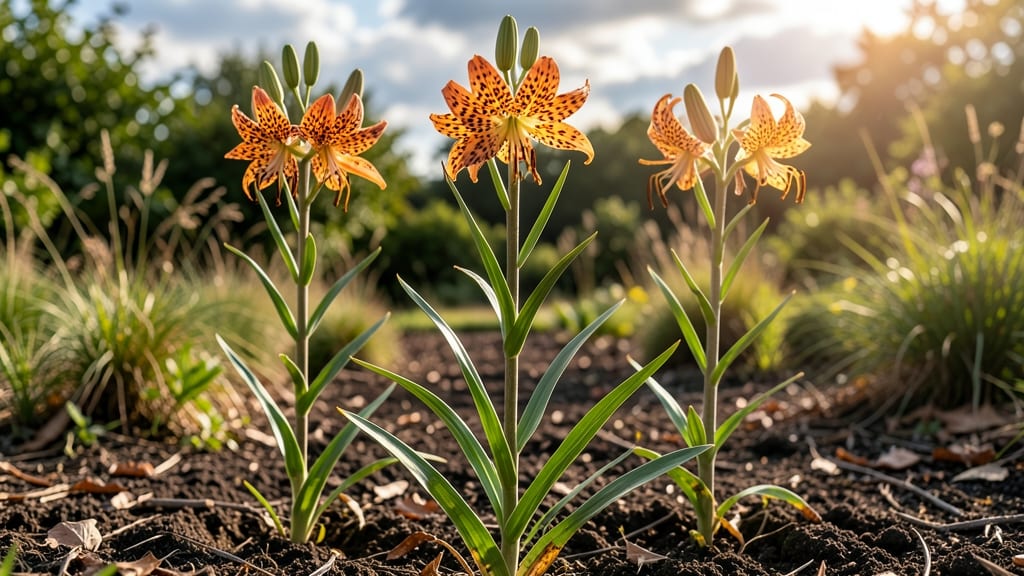
Tiger lilies do not bloom all summer; their flowering season typically spans June through August, peaking in July, though exact timing depends on climate zone and variety. In warmer regions, they may rebloom briefly in fall, while cooler zones see shorter blooming periods.
Tiger lilies are summer's showstoppers, but their blooming window is surprisingly short. 🌸 Unlike some perennials that stretch from spring to fall, these dramatic flowers focus their energy on a concentrated 3-month window—though with proper care, you might coax a second, smaller burst in late summer or early fall.
The key to longer blooms lies in your climate: Southern gardeners often enjoy extended seasons, while Northern growers may see blooms cut short by early frost.
What's fascinating is how temperature triggers their blooming cycle. Tiger lilies need consistent warmth to initiate flowers, which is why they rarely bloom in spring—even if planted early. Once established, they'll reward you with vibrant blooms if given well-draining soil and regular watering (about 1 inch per week).
The trade-off? Their intense flowering period means they need more nutrients during that time, which is why many gardeners swear by a mid-summer fertilizer boost.
💡 In This Article
- Tiger Lily Blooming Seasons by USDA Climate Zones
- Extending Tiger Lily Blooms: Pruning & Care Tips
Tiger lily blooming seasons by USDA climate Zones
Tiger lilies thrive when daytime temperatures consistently stay between 70-85°F, which is why their blooming windows shift dramatically across USDA climate zones.
In Zones 8-10 (Southern California, Florida, Gulf Coast), they often start blooming as early as late May and may continue through September, sometimes even into October in microclimates.
The extra warmth allows their rhizomes to store more energy, fueling longer flowering periods. 🌞 In contrast, Zones 3-6 (Midwest, Northeast) typically see blooms from mid-June to early August, with early frost cutting them short by mid-September.
The difference comes down to temperature thresholds: tiger lilies need at least 60 days of temperatures above 60°F to initiate blooms. In cooler zones, this means blooms often coincide with peak summer heat, while Southern gardens enjoy extended seasons.
Varieties like 'Stargazer' tend to bloom slightly later than 'Casa Blanca', giving gardeners in Zone 7 a 4-6 week window to enjoy their dramatic flowers. The trade-off? Northern growers may see shorter but more intense blooming periods, while Southern gardeners get prolonged displays at the cost of slightly smaller flowers.
What most gardeners don't realize is how altitude affects blooming times. At 5,000 feet elevation (common in mountain regions), tiger lilies may bloom 2-3 weeks later than at sea level due to cooler nighttime temperatures. This is why Colorado gardeners often see blooms starting in early July rather than June.
The key temperature trigger isn't just daytime warmth but also consistent nighttime temps above 55°F—cold snaps can shock the plants and delay flowering.
Climate also affects reblooming potential. In Zones 9-10, tiger lilies may produce a second, smaller flush of blooms in September-October if given proper care, while Zones 4-7 rarely see reblooming due to shorter growing seasons.
The science behind this involves photoperiodism—the plants' internal clocks respond to daylight length. Southern regions with longer summer daylight hours give tiger lilies more time to recover and produce secondary blooms.
For gardeners in transitional zones (Zones 7-8), the blooming window often becomes a 6-8 week spectacle rather than the standard 3 months. This is why these zones produce some of the most dramatic tiger lily displays—long enough to enjoy but not so extended that the plants become overstressed.
The ideal scenario balances warmth with adequate rest periods between blooming cycles.
Consider these regional examples to visualize the variations:
- Zone 10 (Southern California): Blooms from June through October, with peak in August
- Zone 7 (Mid-Atlantic): Blooms from late June to mid-September, peak in July
- Zone 5 (Great Lakes): Blooms from mid-July to early August, rarely reblooming
Understanding your specific climate zone helps you choose varieties and care strategies that maximize blooming potential. For instance, 'Black Beauty' tiger lilies tend to bloom slightly earlier than 'Lemon Queen', giving you flexibility in cooler regions. 🌿