
Blooming
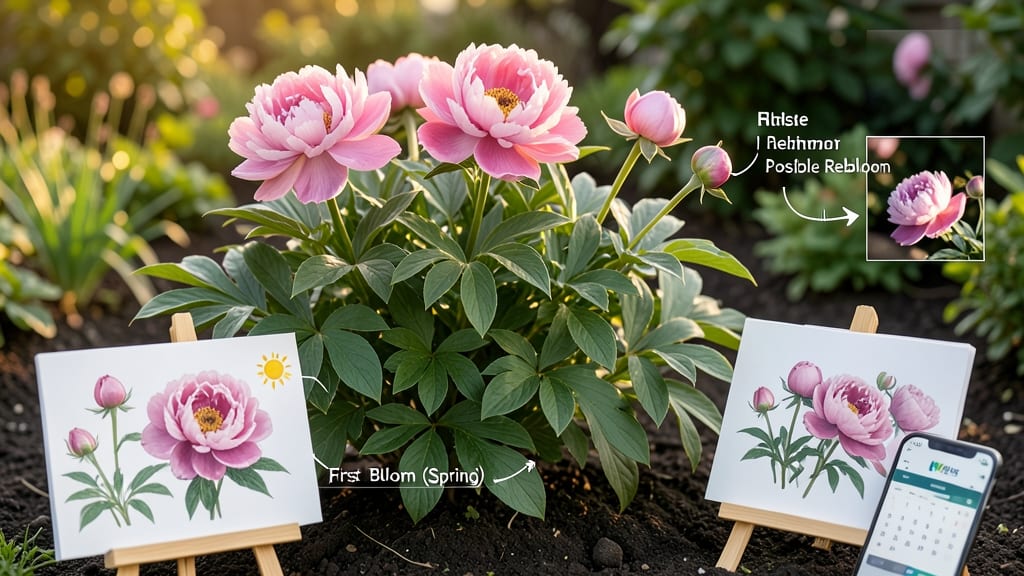
Peonies bloom more than once a year only if they’re herbaceous reblooming varieties, which produce a second flush of flowers in late summer or fall after their spring bloom. Tree peonies, however, typically bloom just once annually in spring or early summer, requiring proper care to encourage repeat blooms.
Most gardeners assume all peonies follow the same blooming pattern, but the truth is more nuanced. Herbaceous peonies—like 'Sarah Bernhardt' or 'Bowl of Beauty'—are bred specifically to rebloom when given the right conditions, while tree peonies (such as 'Duchesse de Nemours') rarely produce a second flush.
The key difference lies in their growth habits: herbaceous types die back to the ground each winter, storing energy for potential late-season blooms, while tree peonies maintain woody stems year-round. 🌸 Proper pruning after the first bloom and consistent moisture levels can coax reblooming from herbaceous varieties, but even then, results depend on climate and cultivar.
For those eager to maximize their peony display, focus on deadheading spent blooms promptly and avoiding over-fertilizing with nitrogen, which promotes leaf growth at the expense of flowers.
I’ve found that a balanced 10-10-10 fertilizer applied in early spring and again after the first bloom—paired with regular watering—helps encourage stronger second blooms in reblooming varieties.
💡 In This Article
- Herbaceous vs Tree Peonies: Bloom Cycle Differences
- Pro Tips for Encouraging Peony Reblooms
Herbaceous vs tree peonies: bloom cycle differences
The fundamental difference between herbaceous and tree peonies lies in their growth habits and energy storage mechanisms. Herbaceous peonies, like 'Bowl of Beauty', have fibrous root systems that store carbohydrates in their thick, fleshy roots during dormancy.
After their spring bloom, these roots can redirect stored energy to produce a second flush of flowers—typically between July and September—if given proper care. Their above-ground foliage dies back completely in winter, allowing them to "reset" for potential reblooming.
Tree peonies, such as 'Duchesse de Nemours', maintain woody stems year-round, storing energy in their thick, sturdy branches rather than roots. This structural difference means they rely on spring growth to fuel their single annual bloom, which occurs when the plant has accumulated enough energy from the previous season.
The buds form on the previous year's growth, and once they bloom in spring, there's no residual energy left for a second cycle. 🌿 What's fascinating is how tree peonies prioritize stem development over flower production—unlike herbaceous types that can "split" their energy between two bloom cycles.
The reblooming capability of herbaceous peonies comes with a trade-off: their second bloom is often smaller and less vibrant than the spring display. This is because the plant must balance maintaining foliage for photosynthesis while producing flowers.
In contrast, tree peonies put all their energy into that single spectacular spring show, which is why their blooms are typically larger and more dramatic. The choice between varieties often comes down to whether you prefer one stunning spring display or two modest seasonal shows.
Climate plays a crucial role in these bloom cycles. Herbaceous peonies need 6-8 weeks of winter chill (below 40°F) to properly dormant and store energy, while tree peonies often require 10-12 weeks of chill.
In warmer climates, herbaceous varieties might produce weaker second blooms or none at all, while tree peonies may struggle to bloom at all without sufficient winter dormancy. This is why proper site selection—with well-draining soil and adequate sunlight—is critical for both types to perform optimally.
Here's what happens biologically during the reblooming process: After the spring bloom, herbaceous peonies enter a period of vegetative growth where they rebuild energy reserves. The key is to avoid cutting back foliage too aggressively after the first bloom, as the leaves continue photosynthesizing to fuel potential second blooms.
In tree peonies, the energy pathway is different—they focus on thickening stems and roots for next year's spring display, making reblooming biologically impossible without genetic modification.
One visual clue to identify these differences is the plant's structure: herbaceous peonies have bushy, mounded growth with multiple stems emerging from the center, while tree peonies develop a more tree-like form with a single main trunk and branches.
This structural distinction affects how you should prune each type—herbaceous varieties need careful deadheading to encourage reblooming, while tree peonies benefit from more aggressive pruning to maintain their form and health.