
Blooming
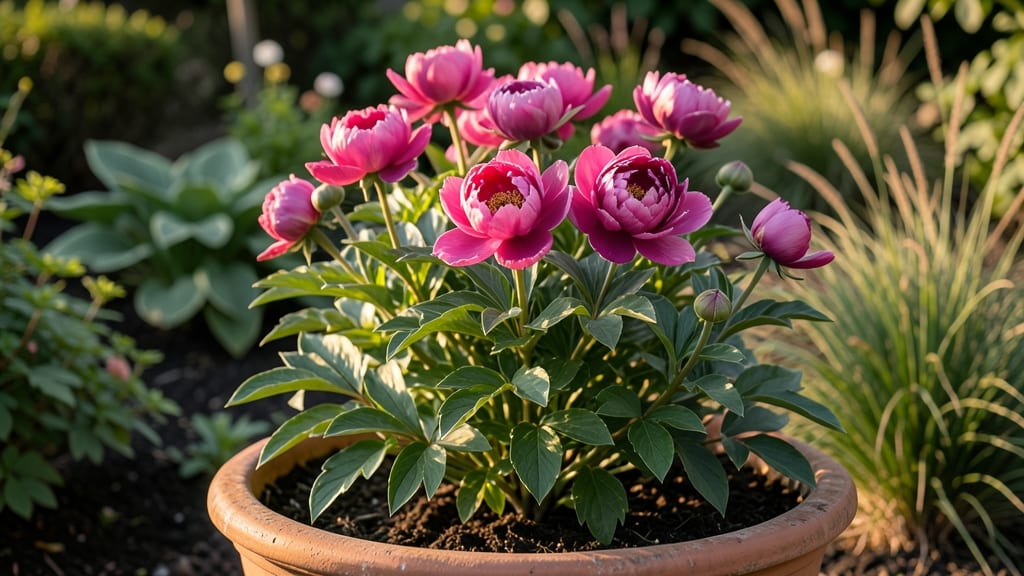
Peonies do not bloom all summer—their flowers typically last just 7 to 10 days per season, with most varieties blooming only once annually in late spring. Early bloomers fade fastest, while late-season types may linger slightly longer under ideal care.
Peonies are famous for their dramatic, short-lived blooms because their energy is focused entirely on one spectacular show each year. 🌸 Once those flowers open, the plant shifts resources to seed production, causing petals to wilt within days.
The timing varies slightly by variety—early bloomers like 'Sarah Bernhardt' might last just 5-7 days, while late-season types such as 'Bowl of Beauty' can stretch to 10-12 days under perfect conditions.
What's fascinating is how temperature triggers their bloom: most peonies need consistent 60-70°F days to initiate flowering, which is why they're so reliable in late spring but fade quickly when summer heat arrives.
This brief bloom window is actually a survival strategy—peonies store energy in their thick roots for years, so they conserve resources by producing flowers just once per season.
The trade-off is their fleeting beauty, which is why gardeners often plant them alongside longer-blooming perennials like daylilies or coneflowers to extend seasonal interest. Understanding this cycle helps you appreciate their one-time spectacular display and plan your garden layout accordingly.
💡 In This Article
- Peony Bloom Cycles: Why Flowers Last Only Weeks
- How to Prolong Peony Blooms Beyond Their Natural Season
Peony bloom cycles: why flowers last only weeks
Peonies follow a strict biological clock that prioritizes one dramatic bloom cycle per year. Their flowering process begins in late winter when the plant's roots—storing energy for years—initiate bud formation.
Once buds open, the plant diverts nearly all its energy to producing flowers and later seeds, which depletes the blooms' vitality within 7-10 days.
This rapid decline happens because peonies are monocarpic in their annual cycle: they produce flowers at the expense of foliage growth, unlike perennials that bloom repeatedly.
The timing of this cycle is controlled by temperature cues—most varieties need 60-70°F for 10-14 days to trigger blooming, which is why they peak in late spring.
Early bloomers like 'Karl Rosenfield' may last just 5-7 days because they emerge when days are still cool, while late-season types like 'Bowl of Beauty' can stretch to 10-12 days by taking advantage of warmer temperatures.
The trade-off is that summer heat accelerates wilting, as the plant's energy shifts to root storage for next year.
Sunlight also plays a critical role—peonies need 6-8 hours of direct sun daily to fuel their blooms, but too much midday heat can stress the flowers.
The petals' waxy coating helps retain moisture, but when temperatures exceed 85°F, the plant's natural defenses break down, causing petals to crisp and drop faster. This is why peonies in hot climates often bloom earlier and fade quicker than those in cooler regions.
Genetics further influence bloom duration. Traditional herbaceous peonies (like 'Sarah Bernhardt') typically bloom for 7-9 days, while Itoh hybrids—a cross between herbaceous and tree peonies—can extend blooms to 10-14 days due to their stronger stems and delayed seed production.
The key difference lies in their root structure: Itoh hybrids store energy more efficiently, allowing them to sustain flowers longer before shifting resources to foliage growth.
What most gardeners don't realize is that peonies' short bloom time is a survival strategy. Their thick, fleshy roots act like underground batteries, storing nutrients for years. By focusing all energy on one spectacular bloom, they ensure maximum reproductive success—even if it means the flowers last only a few weeks.
This is why peonies are often called "the queen of perennials": their brief but stunning display makes every moment count.
To appreciate their fleeting beauty, consider planting peonies alongside perennials with staggered bloom times, like daylilies (Hemerocallis) or black-eyed Susans (Rudbeckia). This way, your garden stays vibrant even after the peonies fade.
The contrast between peonies' bold, 3-5 inch blossoms and the delicate foliage of neighboring plants creates a dynamic seasonal tapestry that extends beyond their natural bloom cycle.