
Blooming
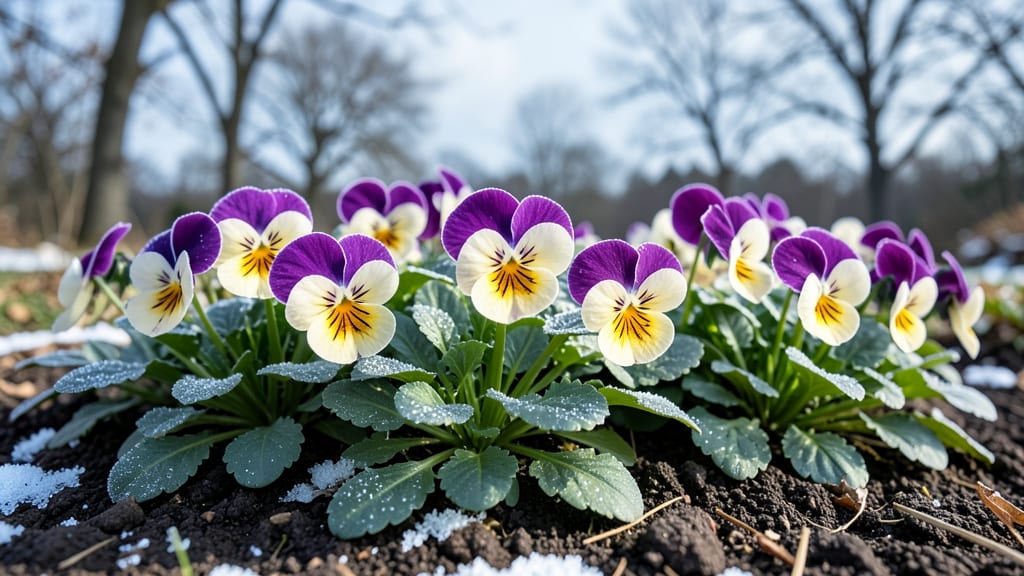
Pansies bloom in winter in many cold-hardy varieties, thriving in temperatures as low as 20°F (-6°C) and often producing vibrant flowers from late fall through early spring. Choose hardy types like 'Ice Dance' or 'Soraya' for reliable winter color.
Winter-blooming pansies are a gardener's secret weapon for adding color to chilly months. 🌸 These hardy annuals (often biennial in mild climates) survive frost thanks to their cold-resistant foliage and flowers that actually brighten up snowy landscapes.
The key is selecting varieties bred for winter hardiness—like 'Matrix' or 'Soraya'—which can handle temperatures down to 10°F (-12°C) with proper care.
What's fascinating is how their blooms respond to cooler weather: many varieties produce even more flowers when daytime temperatures stay below 60°F (15°C), creating a stunning contrast against frost-kissed greenery.
For best results, plant them in full sun to partial shade (at least 4-6 hours of sunlight daily) and keep the soil consistently moist but well-draining. A 2-3 inch layer of mulch around the base helps insulate roots during temperature swings.
I've found that pansies planted in fall (4-6 weeks before first frost) establish stronger root systems, giving them a head start for winter blooming. The trade-off? They may need light protection during heavy snowfall to prevent stem breakage.
💡 In This Article
- Why Pansies Thrive in Winter Conditions
- Best Winter-Blooming Pansy Varieties and Planting Tips
Why pansies thrive in winter conditions
Pansies (Viola × wittrockiana) have evolved remarkable cold tolerance through a combination of biological adaptations.
Their leaves contain high levels of antifreeze proteins, similar to those found in some winter wheat varieties, which prevent ice crystals from forming in their cells at temperatures down to 20°F (-6°C). This allows the foliage to remain flexible and functional even when other plants are frozen solid.
The flowers themselves contain anthocyanins—the same pigments that give red cabbage its color—which act as natural sunscreen, protecting delicate petals from UV damage during bright winter days.
Their shallow root systems (typically 3-6 inches deep) stay insulated by snow cover, which acts like a natural blanket. Studies show that a 4-inch snow layer can raise soil temperatures by 10-15°F compared to exposed ground, creating microclimates perfect for pansy survival.
What's counterintuitive is that pansies often bloom more prolifically in winter because cooler temperatures (between 40-60°F/4-15°C) slow their metabolic rate, causing them to redirect energy toward flower production rather than foliage growth. This is why you'll see gardeners in USDA Zones 3-7 enjoying continuous blooms from November through March.
Light exposure plays a critical role too. While pansies need at least 6 hours of sunlight daily for optimal flowering, their partial shade tolerance (down to 4 hours of sun) makes them ideal for winter gardens where sunlight is less intense.
The blue-violet light spectrum (380-450 nm) dominates winter sunlight, and research shows pansies actually photosynthesize more efficiently under these conditions than in summer's harsh UV light. This is why their foliage stays a vibrant green even when other plants yellow.
Moisture management is another key factor. Pansies require consistently moist but well-draining soil—never soggy—to prevent root rot in winter. Their succulent leaves store water efficiently, allowing them to survive brief dry spells, but prolonged drought stresses them.
A 1-inch layer of mulch (like straw or shredded leaves) helps retain soil moisture while preventing temperature fluctuations that can shock the plants.
What most gardeners don't realize is that pansies actually prefer slightly acidic soil (pH 6.0-6.5) in winter, as this enhances nutrient uptake during their slowed growth phase.
One fascinating adaptation is their flower positioning. Pansy blooms grow on short stems that stay close to the ground, reducing wind damage and allowing them to absorb reflected light from snow-covered surfaces.
This "ground-hugging" strategy also prevents heavy snow from breaking stems, which is why varieties like 'Ice Dance' (with 12-inch spread) perform better than taller types in winter landscapes. The trade-off?
Their low-growing habit means they need protection from heavy snow loads, which is why staking or using cloche covers becomes essential in regions with frequent snowfall.
Here's what's actually happening at the cellular level: Pansies produce more abscisic acid in cold weather, a hormone that helps them enter a semi-dormant state while still allowing flowering.
This is why you'll see buds forming even when daytime highs are only 45°F (7°C)—their biological clock is synchronized with the shorter daylight hours of winter. The result? A continuous bloom cycle that most other annuals can't match.