
Blooming
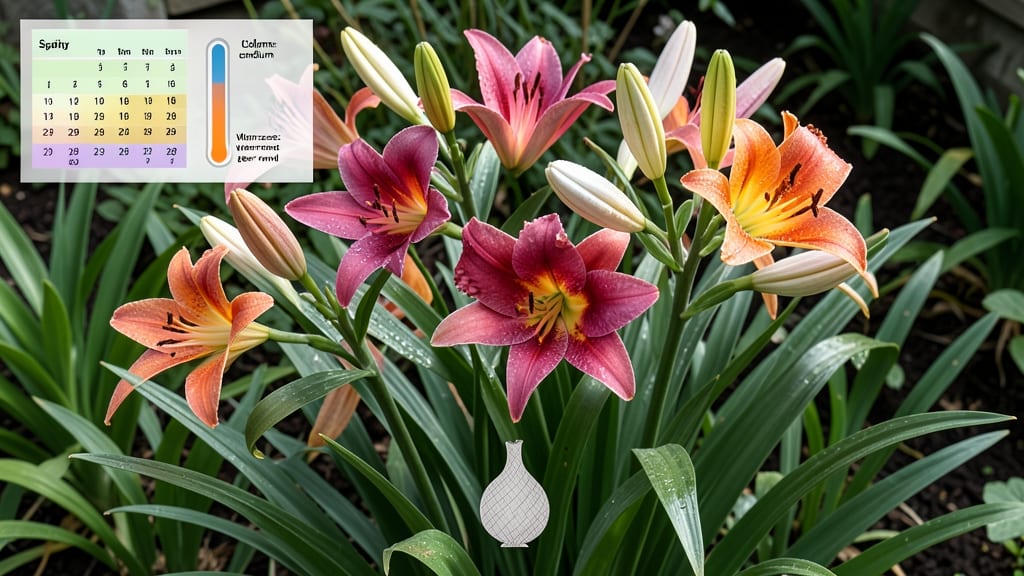
Lilies do not bloom all year—they follow seasonal cycles based on variety and climate. Most bloom in late spring to summer, while some tropical types may flower sporadically in warm regions. Proper dormancy and care extend blooming seasons slightly but never year-round naturally.
Lilies are seasonal bloomers, with their flowering periods tightly linked to natural daylight cycles and temperature shifts. 🌸 In cooler climates, most varieties like Asiatic or Oriental lilies sync with spring's lengthening days, while tropical lilies in warm zones may produce sporadic blooms year-round—but never continuously.
The key is understanding your specific lily type's hardiness zone and growth habits, as these determine whether you'll see flowers in summer or fall rather than winter.
What many gardeners don't realize is that forcing lilies to bloom outside their natural season often backfires. While you can extend blooming periods slightly through proper dormancy care or container gardening, pushing them too far disrupts their biological rhythms.
For example, Asiatic lilies planted in containers can sometimes be coaxed into blooming a few weeks earlier by providing controlled light exposure, but this requires careful monitoring of soil moisture and temperature.
💡 In This Article
- Lily Blooming Seasons by Variety and Climate Zones
- Tips to Maximize Lily Blooms Beyond Natural Seasons
Lily blooming seasons by variety and climate Zones
The blooming cycle of lilies is primarily governed by photoperiodism—their response to daylight length. Most temperate varieties, like the popular Asiatic lilies, require 12-14 hours of daylight to trigger flowering, which typically occurs in late spring to early summer when days lengthen.
For example, in USDA Hardiness Zones 3-8, Asiatic lilies planted in March will often bloom between June and July because their bulbs need 60-90 days of consistent growth before producing flowers.
Tropical lilies, such as Stargazer or Casa Blanca, behave differently—they thrive in Zones 9-11 and may produce blooms in late summer to fall when temperatures stay above 70°F. These varieties are less sensitive to daylight changes but still need warm soil (65°F+) to initiate flowering.
The key difference is that tropical lilies can sometimes rebloom if given ideal conditions, but this is rare and depends on the specific cultivar. For instance, Lilium longiflorum (Easter lily) may produce a second bloom in fall if summer temperatures remain mild.
Soil temperature and moisture also play critical roles. Lilies planted in well-draining, slightly acidic soil (pH 6.0-7.0) will bloom more reliably because poor drainage or alkaline soil can stress the bulbs, delaying or preventing flowering.
In cooler climates, bulbs need a winter dormancy period (below 50°F for 6-8 weeks) to reset their biological clocks. Without this dormancy, lilies may produce foliage but skip flowering entirely—a common mistake among gardeners in Zones 4-6 who try to force blooms too early.
Climate extremes can also shift blooming windows. In Zone 7, for example, a hot summer may cause Oriental lilies to bloom 2-3 weeks earlier than usual because the heat accelerates their growth cycle. Conversely, a cool summer in Zone 8 might delay blooms until August or September.
The scent of lilies—ranging from sweet and spicy in Asiatics to heavy, almost overpowering in Orientals—also peaks during their natural blooming season, making artificial forcing less rewarding for sensory enjoyment.
One fascinating exception is the Peruvian lily (Alstroemeria), often confused with true lilies, which can bloom year-round in frost-free climates (Zones 8-11) due to its continuous flowering habit.
However, true lilies (genus Lilium) lack this ability because their flowering is tied to vernalization (cold treatment) and thermoperiodism (temperature cycles). Even with perfect care, you won’t see lilies blooming in December or January in temperate zones—nature’s timing is far stricter than gardeners might hope!
For those in Zone 5 or colder, where winters drop below 0°F, lilies may only bloom for 4-6 weeks per season.
The bulbs must endure freeze-thaw cycles to break dormancy, which is why mulching with 4-6 inches of straw or leaves can extend the blooming window by 1-2 weeks in spring. The trade-off? Bulbs may take 2-3 years to establish enough energy reserves to flower reliably after such harsh winters.