
Blooming
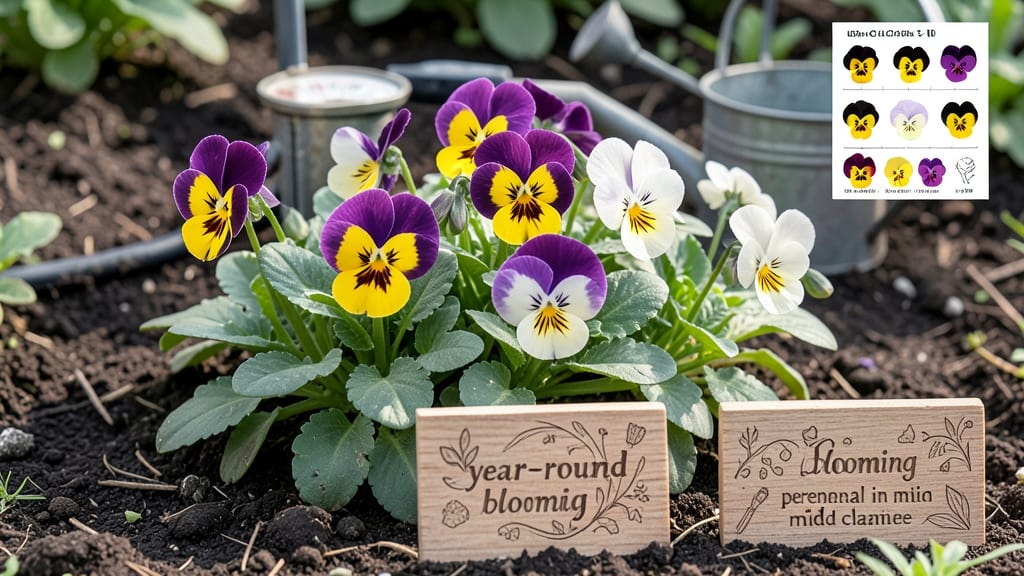
Pansies don't bloom all year—they follow seasonal cycles tied to temperature and daylight. Most varieties peak in spring and fall, with some hardy types offering light reblooms in mild winters or late summers when given proper care.
Pansies are cool-season flowers, meaning they naturally enter dormancy when temperatures rise above 75°F or drop below 30°F. 🌸 Their blooming patterns vary by region—northern climates may see winter blooms, while southern gardens often enjoy fall and spring displays.
The key to encouraging extended blooming lies in selecting the right variety for your zone and providing consistent moisture during their active growth periods.
For gardeners eager to enjoy pansies year-round, strategic pruning and shade management can help maintain blooms outside their natural seasons. Removing spent flowers regularly prompts new growth, while afternoon shade in hot climates prevents early dormancy.
In colder regions, mulching and winter protection layers can shield plants from harsh frosts, allowing them to rebound with spring's arrival.
💡 In This Article
- Pansy Flowering Seasons by Climate Zone
- Extending Pansy Blooms Beyond Their Natural Season
Pansy flowering seasons by climate Zone
Pansies are cool-season annuals, meaning their blooming cycles are tightly linked to temperature and daylight patterns. In temperate zones (USDA 5-8), they typically bloom from early spring through fall, with peak production during 50-65°F days.
The key trigger is photoperiod—longer daylight hours in summer can actually suppress flowering, causing many varieties to go dormant by mid-summer when temperatures exceed 75°F. 🌸 This is why you'll see vibrant displays in March-May and September-November, but sparse blooms in July-August.
Cold-hardy varieties like 'Matrix' or 'Soraya' can tolerate 20-30°F and may rebloom lightly in winter if protected from harsh freezes. These types contain antifreeze proteins that prevent cell damage, allowing them to survive light frosts while other varieties would perish.
In contrast, tropical pansies (like 'Majestic Giant') struggle below 40°F and bloom only in spring and fall, withering completely in summer heat. The difference comes down to their native habitats—European pansies evolved for mild winters, while some newer hybrids incorporate genes from frost-tolerant species.
Daylight length also plays a crucial role. Pansies are short-day plants, meaning they flower best with 10-12 hours of daylight. During summer solstice (when days exceed 14 hours), many varieties enter a vegetative state, focusing energy on leaf growth rather than blooms.
This is why gardeners in Zone 9+ often see pansies bloom in winter (shorter days) but struggle in summer. The exception is 'Cool Wave' series, bred to handle 80°F heat while maintaining blooms through summer's long days.
Frost timing matters too—light frosts (28-32°F) can actually stimulate blooming by breaking dormancy, while hard freezes (below 20°F) kill plants outright. In northern climates, pansies planted in late summer often bloom through winter, while southern gardeners must plant in early fall to avoid summer heat stress.
The ideal planting window varies by 1,000-foot elevation changes, with high-altitude gardens having 2-3 weeks earlier blooming seasons than coastal areas.
Soil temperature is another critical factor—roots need to stay above 50°F to absorb nutrients efficiently. In cold climates, mulching with 4-6 inches of straw maintains root-zone warmth, while in hot zones, reflective mulches (like white gravel) prevent soil from exceeding 85°F.
These microclimate adjustments can shift blooming windows by 3-4 weeks in either direction, depending on your specific growing conditions. 🌡️
Understanding these patterns helps explain why your neighbor's pansies might bloom year-round in their Zone 5 garden while yours struggle in Zone 7's summer heat**.
The solution often lies in selecting varieties bred for your specific climate extremes—whether that means choosing heat-tolerant 'Cool Wave' for southern gardens or frost-hardy 'Ice Dance' for northern winters.