
Blooming
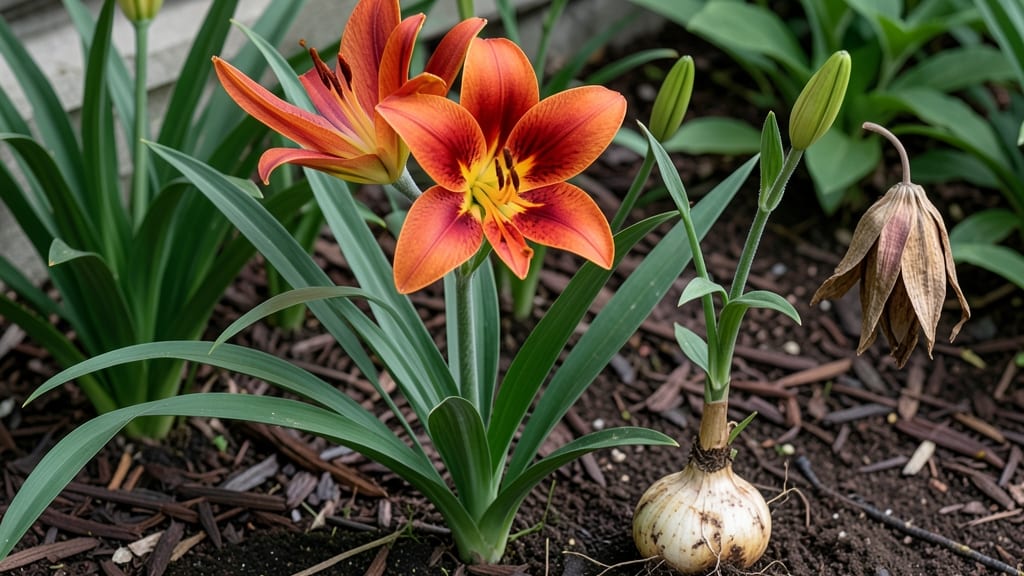
Lilies bloom again only if they're perennial varieties like Asiatic, Oriental, or Stargazer types, planted in well-draining soil with consistent care. Most true lilies (Lilium species) die back after flowering but regrow annually from bulbs under ideal conditions.
Not all lilies return with flowers each year—it depends on their species and growing conditions. 🌸 The perennial types I mentioned (Asiatic, Oriental, and Stargazer) are bred to rebloom reliably when given proper care, while others like Martagon or Trumpet lilies typically flower once per season.
The key to encouraging repeat blooms lies in mimicking their natural habitat: rich, well-draining soil, full sun exposure, and regular watering without waterlogging. I've found that deadheading spent blooms and fertilizing with a balanced formula in early summer significantly boosts reblooming success.
What many gardeners overlook is the importance of bulb health. Overwatering or poor drainage can lead to bulb rot, which kills the plant before it can regrow. I always recommend adding compost or organic matter to planting holes and avoiding heavy clay soils.
For maximum results, I also suggest dividing mature clumps every 3-4 years to prevent overcrowding and encourage stronger regrowth.
💡 In This Article
- Perennial Lily Types That Rebloom Reliably
- Tips to Encourage Repeated Lily Blooms
Perennial lily types that rebloom reliably
The difference between reblooming lilies and one-time bloomers comes down to their botanical structure and breeding. Asiatic and Oriental hybrids are specifically cultivated to produce multiple flower stalks per season, often with 3-5 blooms per stem when conditions are ideal.
These varieties store more energy in their bulbs during the growing season, allowing them to produce new flower buds after the first bloom cycle. 🌸 For comparison, Trumpet lilies (like 'Stargazer') typically bloom just once per season because their energy reserves are focused on a single, dramatic floral display rather than repeated blooming.
Oriental lilies, in particular, have thicker stems and larger blooms that require significant energy production. Their bulbs develop a more complex internal structure with multiple growth points, which is why they can produce 2-3 flower stalks per bulb under optimal conditions.
Asiatic lilies, while smaller, have faster growth cycles and can rebloom more reliably in warmer climates. The key difference lies in their leaf structure—Oriental varieties have broader leaves that photosynthesize more efficiently, giving them the energy advantage for repeated blooming.
What most gardeners don't realize is that even within reblooming varieties, there's a 6-8 week window after the first bloom where the plant must receive consistent care to trigger the second flowering. This is when the bulb is actively storing energy for the next cycle.
During this period, you'll notice new leaf growth emerging from the base—this is your plant's way of preparing for another round of blooms. The process involves complex hormonal signals within the bulb that respond to daylight length and temperature fluctuations, similar to how daylilies (Hemerocallis) produce continuous blooms.
Martagon lilies, on the other hand, have a different growth strategy. Their bulbs are more focused on producing a single, often fragrant bloom that lasts 10-14 days, after which the plant's energy shifts entirely to bulb maintenance rather than new growth.
This is why they rarely rebloom—their entire energy budget is allocated to that single spectacular display. The same goes for species like the Tiger lily (Lilium lancifolium), which prioritizes bulb expansion over repeated flowering.
Here's a quick comparison of reblooming potential:
- Asiatic hybrids: 2-3 blooms per season with proper care, early bloomers (May-June)
- Oriental hybrids: 1-2 blooms per season, later bloomers (July-August), larger flowers
- Stargazer (Trumpet): 1 bloom per season, dramatic but single display
- Martagon: 1 bloom per season, fragrant but no reblooming
The science behind reblooming involves a process called "reflowering," where the plant's apical dominance (the main growth point) is temporarily suppressed to allow lateral buds to develop.
This is why deadheading (removing spent blooms) is so crucial—it signals the plant to redirect its energy toward new growth rather than seed production. Without this intervention, most lilies would focus their remaining energy on developing seed pods, which would prevent any chance of reblooming. 🌿