
Blooming
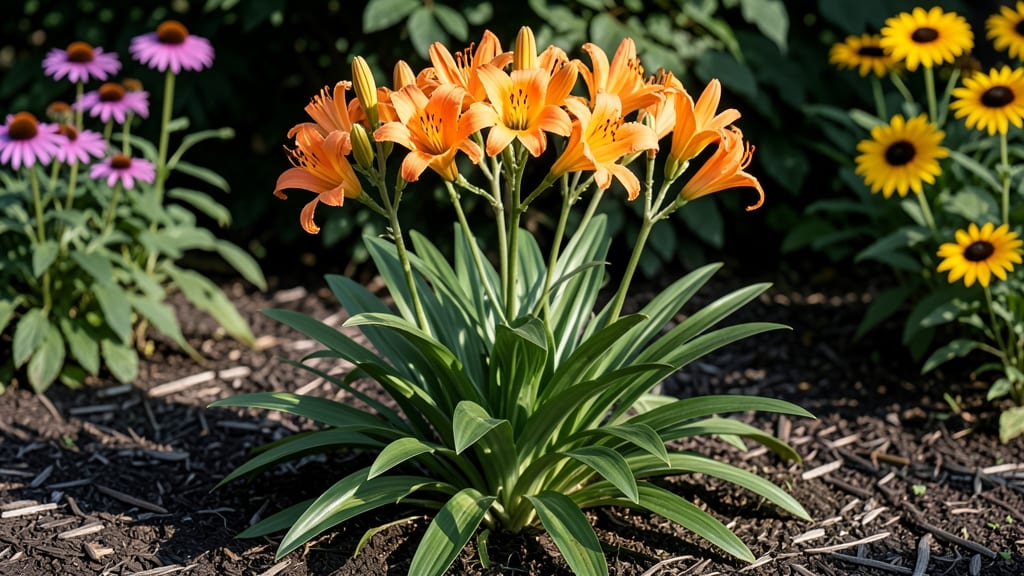
Day lilies do bloom all summer when given the right conditions—full sun exposure, consistent deadheading, and proper soil nutrition. Their flowers appear in sequential waves throughout the season, with some varieties producing nonstop blooms if cared for correctly.
These hardy perennials thrive because their blooming isn't a single burst but a staggered process tied to temperature shifts. Everblooming cultivars like 'Stella de Oro' or 'Happy Returns' are bred to produce flowers continuously, while traditional types may need regular deadheading to trigger new growth.
The key is maintaining moisture without overwatering—day lilies hate soggy roots—and feeding them every 4-6 weeks with balanced fertilizer. 🌸 I've seen gardens where proper care turned a single plant into a summer-long flower show!
What sets day lilies apart is their adaptability—unlike many perennials, they tolerate heat and drought once established. That's why they're perfect for low-maintenance gardens. The trade-off? Their aggressive root systems can spread quickly, so plant them where they won't crowd other plants.
For maximum blooms, I recommend choosing everblooming varieties if you want minimal effort, or traditional types if you enjoy the challenge of coaxing multiple bloom cycles.
💡 In This Article
- How Day Lily Bloom Cycles Work
- Tips to Extend Day Lily Blooms Through Summer
How day lily bloom cycles work
Day lilies follow a fascinating biological rhythm where flower production is triggered by temperature shifts rather than just daylight hours. Their blooming process begins when soil temperatures reach 55-60°F—this warmth signals the plant's underground rhizomes to initiate growth.
Each flower stalk emerges from these rhizomes and produces buds in a sequential pattern, opening one at a time over 2-3 weeks. This staggered bloom cycle is what gives day lilies their prolonged flowering appearance, with new blooms replacing spent ones throughout the season.
The difference between everblooming varieties and traditional types comes down to genetics. Everblooming cultivars like 'Happy Returns' or 'Pardon Me' have been selectively bred to produce multiple flower stalks simultaneously, creating the illusion of continuous blooms.
Traditional varieties typically produce just one main stalk per season, with blooms lasting 2-3 weeks unless deadheaded.
The key distinction is that everblooming types generate new flower stalks from the same rhizome system, while traditional types rely on new rhizome growth each season. 🌿 This genetic difference explains why some day lilies can keep producing flowers for 6-8 weeks while others may only bloom for 2-3 weeks without intervention.
Daylight length plays a surprisingly minor role in day lily blooming compared to temperature. Unlike many perennials that rely on photoperiodism (day length changes), day lilies are more influenced by thermal cues. This is why they often bloom later in northern climates where soils warm more slowly in spring.
The plant's internal clock measures heat accumulation—once a certain threshold is reached (typically 1,000-1,500 growing degree days), the blooming process begins.
This thermal sensitivity is why day lilies in warmer climates may start blooming as early as late spring, while those in cooler regions might not peak until mid-summer.
What most gardeners don't realize is that day lilies actually produce flowers in a specific sequence based on their position on the stalk. The first buds to open are at the bottom, with newer blooms appearing progressively higher up the stalk.
This vertical progression creates the visual effect of a "wave" of color moving upward. The plant's natural design ensures that even if some lower blooms are damaged or removed, there are always fresh flowers emerging higher up.
This built-in redundancy is one reason day lilies are so resilient in garden settings.
Temperature fluctuations during the blooming season can dramatically affect how long day lilies continue flowering. Ideal daytime temperatures for continuous blooming range between 75-85°F, with nights staying above 60°F. When temperatures drop below 50°F at night, many day lilies will pause blooming until conditions improve.
This is why late summer heatwaves can sometimes trigger a second flush of blooms—warm nights break the dormancy-like state that cooler temperatures induce. The plant's ability to respond to these temperature shifts explains why some gardeners report their day lilies "take a break" in mid-summer only to bloom again later.
For those interested in the science, day lilies belong to the Hemerocallis genus, which contains over 60 species with thousands of cultivars. The genus name comes from Greek words meaning "beautiful for a day," referencing how individual flowers typically last only 24 hours before wilting.
However, the rapid production of new buds ensures the plant maintains its vibrant display. This daily renewal cycle is what makes day lilies so rewarding for gardeners—they're never truly "done" blooming, just continuously producing fresh flowers to replace the ones that fade. 🌺