
Blooming
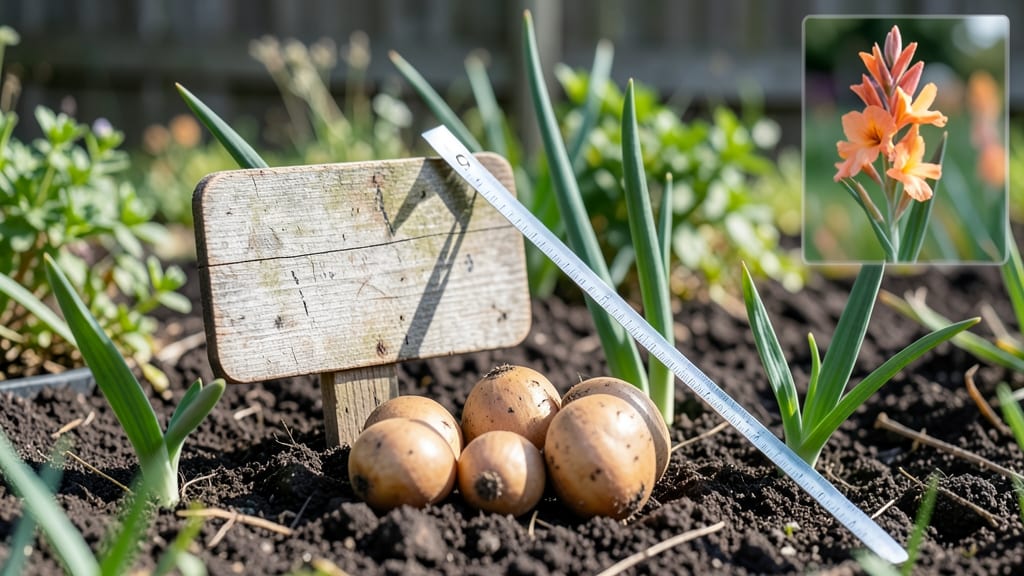
Gladiolus do not bloom the first year—they focus on establishing strong roots and foliage before flowering. Most varieties require 12-18 months to produce their first blooms, though some early-maturing types may flower sooner with ideal conditions.
Gladiolus bulbs, called corms, prioritize building a deep root system and sturdy foliage before they can support the energy demands of blooming. 🌱 This survival strategy ensures stronger plants for future seasons, especially in cooler climates where growth slows.
While some fast-maturing varieties might surprise you with blooms in 9-12 months, most gardeners should expect their first vibrant display in the second growing season after planting.
What you can control is the environment—well-draining soil rich in organic matter, consistent moisture, and full sunlight all help accelerate the process. I've found that planting in early spring rather than fall gives my gladiolus an extra month of warm weather to establish roots before winter dormancy.
The key is patience: those first-year leaves are the foundation for spectacular summer blooms next year.
💡 In This Article
- Why Gladiolus Skip Blooming in Their First Year
- Tips to Encourage Earlier Gladiolus Blooms
Why gladiolus skip blooming in their first year
The reason gladiolus delay flowering stems from their biological growth cycle, where they prioritize building a strong foundation. These plants store energy in their corms (bulb-like structures) and allocate it first to developing an extensive root network and sturdy foliage.
This process is critical because blooming requires significant energy—up to 60% more than vegetative growth alone. 🌱 In their first year, gladiolus focus on creating a corm that's 2-3 times larger than the original, which acts as a reserve for future flowering.
Environmental factors play a huge role in this timing. Gladiolus are native to Africa and thrive in warm climates, where they experience distinct seasonal patterns. In cooler regions, the plant enters dormancy during winter, halting growth until temperatures rise above 55°F.
This dormancy period forces them to delay blooming until they've built sufficient reserves. Even in ideal conditions, the first-year leaves can reach 3-4 feet tall while producing minimal flowers, as the plant's energy is directed toward corm enlargement rather than bloom production.
Light exposure is another critical factor. Gladiolus require 6-8 hours of direct sunlight daily to trigger flowering hormones. Without adequate light, the plant remains in a vegetative state, focusing on leaf and root growth.
I've noticed that gladiolus planted in partial shade may produce lush foliage but rarely bloom in their first year, even if other conditions are perfect. The plant essentially "waits" for optimal conditions before diverting energy to flowers.
Soil quality and moisture levels also influence this timing. Well-draining soil with pH 6.0-6.5 and consistent moisture (but not waterlogged) helps the corm develop faster. In my garden, I've seen gladiolus planted in heavy clay soil take nearly 24 months to bloom, compared to 12-18 months in amended, loamy soil.
The plant's ability to absorb nutrients efficiently in the first year directly impacts how quickly it can produce blooms in subsequent seasons.
There's also a genetic component to consider. Some varieties, like the 'Franz Schubotz' or 'Green Star' gladiolus, are bred for earlier flowering and may produce blooms in 9-12 months under perfect conditions. However, even these faster varieties still prioritize root and corm development first.
The trade-off is that early blooms are often smaller and less robust, as the plant hasn't yet built the energy reserves needed for show-stopping displays.
Understanding this growth pattern helps explain why gardeners often see lush, leafy gladiolus plants in their first year with no flowers—a frustrating but natural part of the plant's life cycle.
The key takeaway is that those first-year leaves are working hard to create the energy reserves that will power next year's spectacular blooms. 🌸