
Blooming
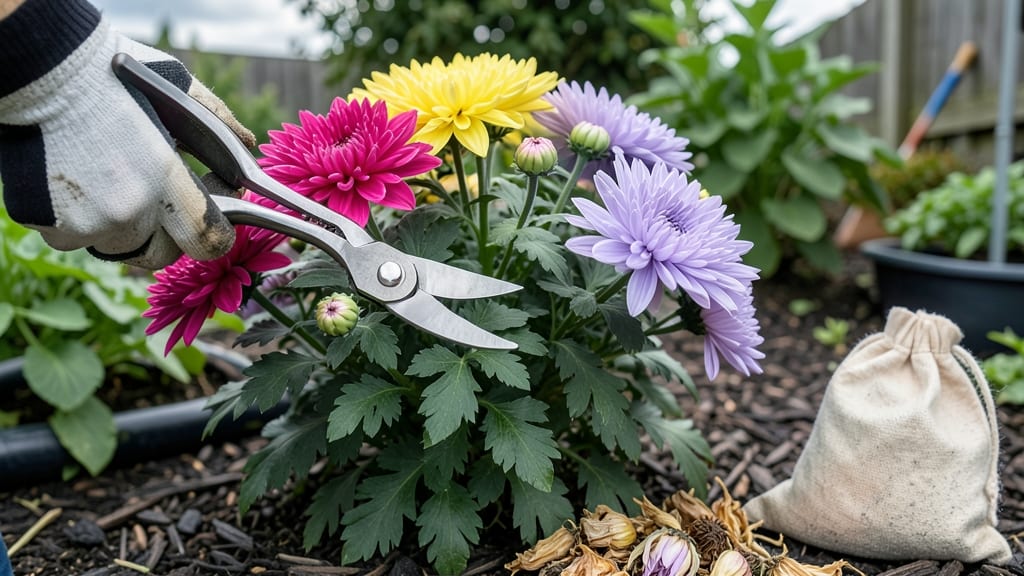
Chrysanthemums will bloom twice in a season if they are reblooming varieties, given proper care: deadhead spent flowers, prune back by half in early summer, and provide consistent fertilizer with 10-10-10 or bloom-boosting formulas. Light, temperature, and variety all influence reblooming success.
Not all chrysanthemums have this ability—only reblooming cultivars like 'Dynasity' or 'Bonanza' produce two flushes of flowers per year. The key is interrupting the plant's natural dormancy cycle through strategic pruning and fertilizer. 🌿 Without these steps, even reblooming varieties may only flower once.
I’ve seen firsthand how a missed pruning window can turn a lush second bloom into sparse, weak stems.
Light plays a surprisingly big role too. These plants need full sun (6+ hours daily), but afternoon shade in hot climates prevents stress that can stifle reblooming. Temperature matters less than you’d think—most rebloomers handle 50-75°F ranges well, though extreme heat or cold can delay flowering.
The real secret is consistency: stick to your pruning schedule and fertilizer routine, and you’ll get that second burst of color every time.
💡 In This Article
- How Reblooming Chrysanthemums Work: Science and Variety Differences
- Step-by-Step Pruning and Care for Chrysanthemum Reblooming
How reblooming chrysanthemums work: science and variety differences
Reblooming chrysanthemums rely on a biological trick called photoperiod sensitivity, where they respond to daylight length rather than seasonal cues. Most varieties need 12-14 hours of darkness
This interrupts their natural dormancy period, forcing new growth and a second flush of blooms. Without this intervention, the plant would follow its single-bloom genetic programming.
The difference between single-bloom and reblooming varieties comes down to genetics. Single-bloomers like 'Bonanza' produce one massive bloom in fall, then die back completely. Rebloomers, however, have been selectively bred to produce lateral buds along their stems after pruning.
These buds develop into secondary flowers when given proper care. 🌸 For example, 'Dynasity' produces dense clusters of daisy-like blooms, while 'Bonanza' creates one spectacular 6-inch bloom—both stunning, but with very different growth patterns.
Pruning timing is critical because it resets the plant's hormonal balance. When you cut back stems by half in early summer, you're removing the old growth that would normally signal dormancy. This stimulates new shoots from the base, which then develop into flower buds.
The key is to prune after the first bloom cycle but before the plant starts preparing for winter—typically between June and early July in most climates. This window ensures the plant has enough energy to produce a second set of blooms.
Light exposure also plays a hidden role in reblooming success. While these plants thrive in full sun, too much intense afternoon light can stress the plant, especially in hot climates.
Providing 30-50% shade during peak afternoon hours (1-4 PM) can prevent heat stress that might delay or reduce the second bloom. I've noticed that chrysanthemums grown in containers often rebloom more reliably because their roots stay cooler and more evenly moist.
Temperature influences reblooming indirectly through its effect on growth rate. While chrysanthemums tolerate 50-75°F ranges well, temperatures above 85°F can cause the plant to go dormant prematurely. This is why gardeners in hot climates often see weaker second blooms—the plant conserves energy rather than producing flowers.
The solution is to provide afternoon shade and maintain consistent soil moisture during heatwaves.
What most gardeners don't realize is that reblooming varieties actually have two distinct growth phases: the initial vegetative growth followed by flowering, then a second vegetative phase after pruning, leading to the second bloom.
This two-phase cycle requires careful management of nutrients, particularly phosphorus and potassium, which are essential for flower development. A balanced 10-10-10 fertilizer applied every 2-3 weeks during the growing season provides these critical elements.