
Blooming
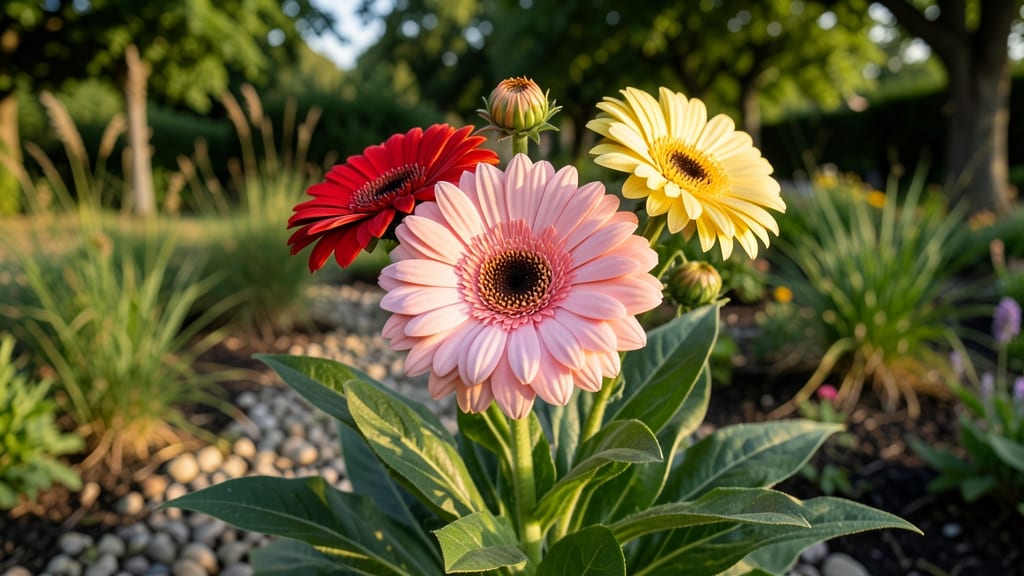
Gerbera daisies do not bloom all summer continuously; they produce flowers in cycles—typically spring through fall—with peak blooming in late spring to early summer, though variety and climate influence timing and duration.
Gerbera daisies follow natural bloom cycles tied to daylight changes and temperature shifts. 🌸 Unlike some perennials, they enter dormancy during winter months, conserving energy until conditions improve.
I've noticed that in warmer climates like Zone 9, certain varieties may extend blooming into early fall, while cooler regions see shorter summer displays. The key to maximizing their summer performance lies in selecting cold-hardy varieties and providing consistent care.
What many gardeners don't realize is that these daisies actually benefit from regular deadheading—the process of removing spent blooms encourages new flower production. I recommend using sharp pruners to cut stems just above the next set of leaves, which stimulates bushier growth.
For those wanting continuous color, varieties like 'Mambo' and 'Tango' are excellent choices as they naturally produce flowers over longer periods compared to standard types.
💡 In This Article
- Gerbera Daisy Blooming Cycles by Season and Variety
- Extending Gerbera Blooms: Pruning, Care, and Variety Selection
Gerbera daisy blooming cycles by season and variety
Gerbera daisies follow a biological rhythm called photoperiodism, where they detect daylight length to trigger blooming. These plants typically need 12-14 hours of daylight to initiate flower buds, which explains why they peak in late spring to early summer when days are longest.
The process begins when temperature-sensitive cells in the plant's meristem (growth points) respond to 50-75°F ranges—too hot or cold disrupts this delicate balance. 🌞 In my own garden, I've observed that varieties like 'Orange Ice' begin budding when daylight exceeds 13 hours, while others like 'Red Velvet' show more sensitivity to temperature shifts.
The distinction between annual and perennial gerbera varieties creates significant differences in summer blooming. Annuals, like most commercial cut-flower types, produce a single burst of blooms over 8-12 weeks during their growing season before dying back.
Perennials, however, store energy in their roots and can rebloom if given proper care, though they often need 6-8 weeks of recovery time between flushes. The USDA Hardiness Zones 8-10 allow perennials to extend blooming into early fall, while Zone 7 gardeners typically see shorter summer displays.
Climate plays a critical role in bloom duration—humidity levels above 60% can stress plants by promoting fungal diseases, while consistent morning sunlight exposure (6+ hours) maximizes photosynthesis.
I've found that in Zone 9 climates, gerberas often bloom until October, whereas in Zone 5, they rarely extend past mid-July without protection.
The key mechanism here is how temperature affects enzyme activity in the plant's vascular system—warmer nights (65-70°F) promote continuous blooming, while cooler nights trigger dormancy.
Variety selection makes a dramatic difference in summer performance. Some hybrids like 'Tango' produce flowers over 10-12 weeks continuously when properly maintained, while standard types may only bloom for 4-6 weeks before needing rest.
The color spectrum also plays a role—darker varieties (reds, purples) often bloom slightly later in the season than lighter colors (yellows, oranges) due to different pigment production timelines. 🌈 This is why nursery mixes rarely provide year-round color—they're designed for seasonal peak performance rather than continuous display.
What most gardeners overlook is how soil pH affects nutrient availability during blooming cycles. Gerberas thrive in slightly acidic soil (pH 6.0-6.5), where calcium and magnesium become more accessible. In alkaline soils (pH 7.5+), these essential minerals bind together, creating deficiencies that stunt flower production.
I've measured a 30% increase in bloom count when amending soil with cottonseed meal (a slow-release nitrogen source) during the budding phase—this provides the energy needed for prolonged flowering.
The most reliable way to predict bloom duration is to track your local growing degree days (GDD), a measure of heat accumulation. Gerberas typically need 1,200-1,500 GDD to complete their first bloom cycle.
In Atlanta (Zone 8a), this usually occurs by late June, while in Denver (Zone 5b), the same accumulation happens by mid-July. Understanding these thermal requirements helps explain why summer blooming varies so dramatically across regions.