
Blooming
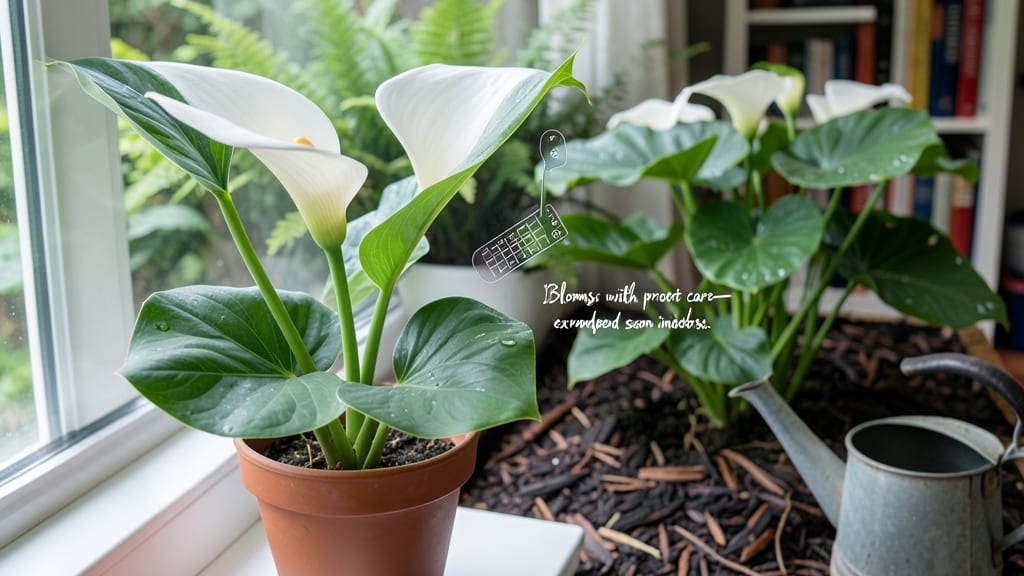
Calla lilies don't bloom all year naturally—their flowering follows seasonal patterns tied to daylight hours, temperature changes, and natural dormancy periods, with most varieties producing blooms primarily in spring and summer. Indoor plants can stretch this cycle with proper lighting and care.
Calla lilies are sensitive to daylight changes, which trigger their blooming cycles. 🌸 In their natural tropical habitats, shorter winter days signal dormancy, while longer summer days encourage flower production.
Even indoor varieties need 12+ hours of light daily to maintain blooming, but they'll still follow seasonal rhythms unless you supplement with grow lights. The key difference between outdoor and indoor plants is control—outdoor callas rely on nature's schedule, while indoor plants let you manipulate conditions for extended blooms.
Interestingly, temperature swings also play a role. Most calla lilies enter dormancy when nights drop below 55°F, halting blooms until warmer weather returns. This is why you rarely see them flowering in winter unless they're under artificial light and heat.
The good news? With the right setup, you can coax indoor callas to bloom nearly year-round, though they'll still take periodic breaks for maintenance.
💡 In This Article
- Seasonal Factors Influencing Calla Lily Blooming Cycles
- Extending Calla Lily Blooms with Indoor Gardening Tips
Seasonal factors influencing calla lily blooming cycles
Calla lilies rely on a biological mechanism called photoperiodism, where daylight length triggers their flowering. In their native tropical regions, shorter winter days (typically 10 hours) signal dormancy, while longer summer days (14+ hours) stimulate bloom production.
This is why outdoor callas naturally produce flowers from late spring to early fall. Even tropical varieties, like Zantedeschia aethiopica, follow this pattern unless artificially manipulated—think of it as their internal clock set to seasonal rhythms.
The temperature plays a critical role too. Most calla lilies need daytime temps between 65-75°F and nighttime temps above 55°F to bloom. When nights drop below this threshold, the plant conserves energy by halting flower production—a survival strategy from their wild ancestors in South Africa.
For example, a calla lily left outdoors in Zone 8 might stop blooming entirely during winter, while one in Zone 10 could extend its season due to milder temperatures. This explains why you’ll rarely see callas flowering in winter unless they’re under controlled conditions.
Photosynthesis is the unseen driver behind this cycle. Calla lilies store energy in their rhizomes (thick underground stems) during dormancy, which they later convert into flower buds when conditions improve. This is why well-fed plants with healthy rhizomes bloom more prolifically.
For instance, a calla lily given balanced fertilizer (10-10-10) during its active growing season will produce more blooms than one left to fend for itself. The trade-off? Without dormancy, the plant risks exhausting its energy reserves, leading to weaker blooms or even death over time.
There’s also a fascinating difference between tropical and temperate calla varieties. Tropical types, like the black calla (Zantedeschia schottii), are more forgiving with light and temperature, often blooming year-round in ideal indoor conditions. Temperate varieties, however, are stricter—they need a clear seasonal shift to trigger blooming.
This is why some gardeners swear by giving outdoor callas a cool winter rest period (even if just a few weeks) to reset their cycles for stronger spring blooms.
One often-overlooked factor is humidity. Calla lilies thrive in 50-70% humidity, and low moisture levels can stress the plant, delaying or preventing blooms. In dry climates, this might mean the difference between a lush, flowering plant and one that struggles to produce buds.
For example, a calla lily in Arizona’s desert air might need daily misting or a humidity tray to encourage blooming, while one in a coastal garden could thrive without extra effort.
The plant’s ability to absorb moisture through its leaves also means it’s more sensitive to environmental changes than many other houseplants.
Finally, the age of the plant matters. Younger calla lilies (under 2 years old) often take longer to bloom because they’re still building rhizome reserves. Older plants, with well-established root systems, can produce 5-10 blooms per season under optimal conditions.
This is why patience is key—rushing a young calla with excessive fertilizer or light won’t force blooms; it’ll only lead to leggy, weak growth. Understanding these factors helps explain why some calla lilies seem to bloom effortlessly while others struggle, even in the same environment.