
Blooming
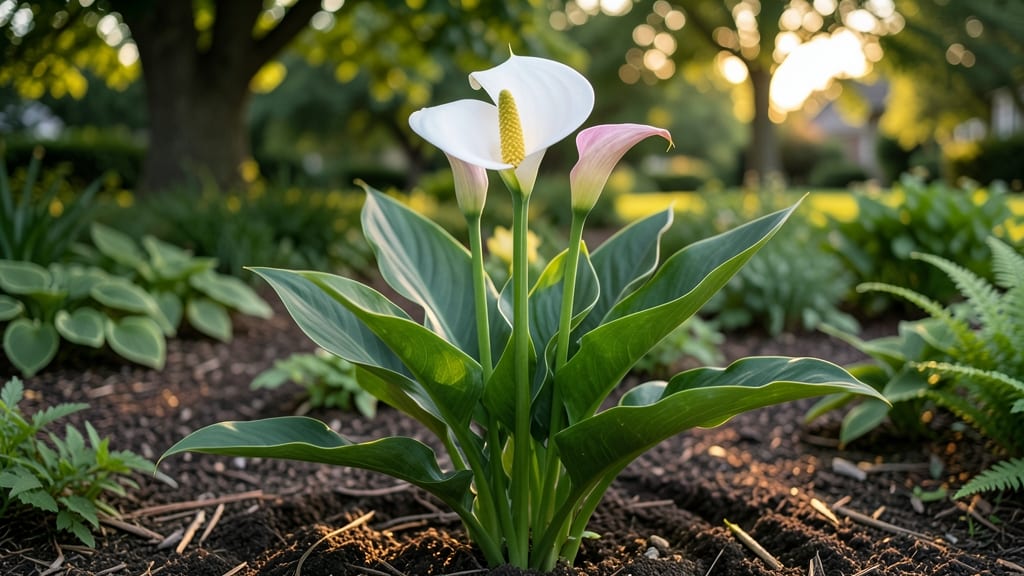
Calla lilies bloom all summer only in reblooming varieties like 'Black Star' or 'Pink Fantasy,' which continuously produce flowers with consistent care. Standard calla lilies typically bloom just once per season unless you prune and fertilize them properly to stimulate regrowth.
Not all calla lilies are created equal when it comes to summer blooms. 🌸 The key difference lies in their genetics—reblooming varieties like 'Pink Perfection' or 'White Queen' have been selectively bred to produce multiple flower stalks throughout the growing season.
These plants store energy differently in their rhizomes, allowing them to push out new blooms after each pruning. For non-reblooming types, you'll need to mimic their natural dormancy cycle by cutting back foliage in late fall and providing winter protection to encourage a second flush of flowers the following summer.
Even with rebloomers, timing matters. I've found that regular deadheading (removing spent blooms) every 2-3 weeks triggers new growth, while a balanced fertilizer (10-10-10 ratio) applied every 4-6 weeks keeps them flowering consistently. The secret weapon?
Consistent moisture—never let the soil dry out completely, but avoid soggy conditions that can rot the rhizomes. With these care adjustments, you can enjoy continuous summer blooms from your calla lilies.
💡 In This Article
- Why Most Calla Lilies Bloom Once (And How Rebloomers Differ)
- Step-by-Step Guide to Encouraging Summer Reblooms in Calla Lilies
Why most calla lilies bloom once (and how rebloomers defy the norm)
The reason standard calla lilies produce just one bloom per season lies in their natural energy storage system. These plants store nutrients in thick, underground rhizomes during their growing phase, which they then use to fuel a single dramatic flower spike.
This single-blooming pattern is hardwired into their biology as an evolutionary adaptation—producing one large, showy bloom increases their chances of attracting pollinators during their peak growing season. 🌿 The energy investment is massive, leaving little reserve for subsequent blooms.
Reblooming varieties like 'Black Star' or 'Pink Fantasy' (Zantedeschia elliottiana) have been genetically modified to break this cycle. Their rhizomes develop a different storage pattern, allowing them to partition energy more efficiently.
These varieties can produce multiple flower stalks because they've been bred to maintain a steady supply of carbohydrates and nutrients throughout the growing season. The key difference is in their leaf production—rebloomers continue generating new foliage after each bloom, which photosynthesizes and replenishes energy stores faster than single-bloomers.
The science gets even more interesting when you consider temperature triggers. Standard calla lilies often enter dormancy after their single bloom, triggered by shortening daylight hours and cooler temperatures. Rebloomers, however, have been selected to remain active longer.
They'll continue flowering as long as they receive consistent care—typically until the first hard frost. This is why you'll see reblooming varieties in garden centers with multiple flower stalks at once, while standard types might have just one or two.
Here's what sets rebloomers apart in practical terms: their flower stalks (spathes) emerge from different points along the rhizome rather than all at once. This staggered growth pattern means you'll see new blooms appearing every 3-4 weeks throughout the summer, creating a continuous display.
The trade-off? Rebloomers generally produce slightly smaller individual flowers than their single-blooming counterparts, but the volume makes up for it.
Light exposure plays a crucial role in this difference. Reblooming varieties can tolerate slightly lower light conditions (partial shade) while still producing flowers, whereas single-bloomers often require full sun to trigger their one dramatic bloom.
This adaptability is another genetic trait that makes rebloomers more forgiving for gardeners who can't provide ideal growing conditions. 🌞 The ability to flower under less intense light means they'll keep blooming even in late summer when daylight hours naturally decrease.
What most gardeners don't realize is that even standard calla lilies can sometimes produce a second bloom if you mimic the rebloomer's energy management.
By removing the first bloom just as it starts to fade and providing consistent fertilization, you can encourage the plant to produce a second, though often smaller, flower. This works because you're essentially tricking the plant into thinking it has more energy reserves than it actually does.