
Blooming
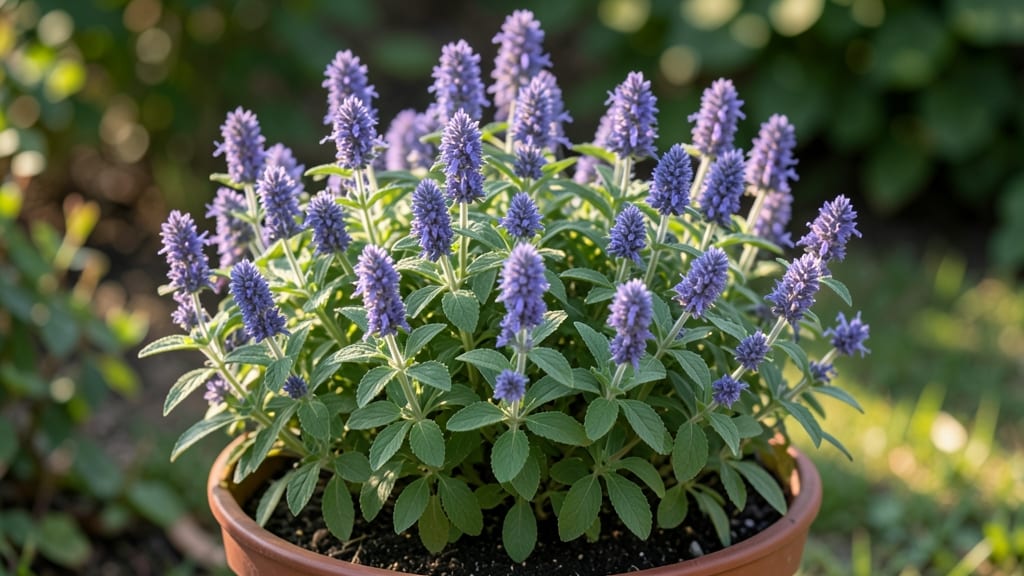
Catmint’s bloom time stretches from late spring through early fall, turning your garden into a buzzing, fragrant cloud of color that hummingbirds can’t resist. 🌿 I’ve watched my catmint rebloom for months after most perennials give up—it’s like nature’s built-in extension cord for summer beauty.
The first flush arrives in May, and with the right care, you’ll enjoy fresh blooms until frost.
The timing depends on your zone and variety. Walker’s Low (my favorite) starts early and keeps going, while ‘Blue Spire’ might bloom slightly later but stays compact. Southern gardeners get two full seasons, while northern growers squeeze in 3-4 months of color.
Healthy plants with deep green foliage and plump buds mean better blooms—prune back leggy stems after the first flush to encourage a second wave.
To stretch the season, deadhead spent blooms regularly (I do this every 10-14 days) and water deeply during dry spells. Mulch helps too—it keeps roots cool in summer and protects against winter dieback. The result? Six months of purple instead of three, with minimal effort.
Works in full sun to partial shade, from containers to borders. Here’s how to keep yours flowering like clockwork—no fancy tricks, just smart care.
📚 In This Guide
- What you need
- Instructions
- Tips and common mistakes
- Wrapping up and next steps
What you need
- ● Catmint plants: 1–3 Nepeta plants (e.g., 'Walker’s Low,' 'Six Hills Giant,' or 'Purpurascens')—choose based on your climate and preferred height (12"–36").
- ● Soil: Well-draining, loamy soil with a pH of 6.0–7.5. Amend heavy clay with compost or perlite (1 part per 2 parts soil).
- ● Sunlight: Full sun (6–8+ hours/day); partial shade (3–6 hours) tolerates blooms but may reduce vigor.
- ● Water: Drip irrigation or soaker hose (avoid overhead watering to prevent fungal issues).
- ● Planting tools: Trowel or hand shovel (for transplanting).
- ● Garden fork (to aerate soil).
- ● Pruning shears (for deadheading or shaping).
- ● Fertilizer: Balanced, slow-release granular fertilizer (10-10-10) or compost tea (apply once in early spring). ✨ Pro tip: Catmint thrives on neglect—over-fertilizing can reduce blooms!
- ● Mulch: 2–3 inches of organic mulch (straw, pine needles, or shredded bark) to retain moisture and deter weeds.
- ○ Containers (optional): 5–7 gallon pots with drainage holes for patio gardening (use fast-draining potting mix).
- ○ Pest control (optional):strong> Neem oil or insecticidal soap (for aphids or spider mites).
- ● Row covers (to protect young plants from deer or rabbits).
- ● Check your USDA Hardiness Zone (catmint thrives in Zones 3–9; adjust planting time accordingly).
- ● Plan for spaced planting: 18–24 inches apart for full growth (or 12 inches apart in containers).
- ● Test soil moisture 1–2 inches below the surface before watering (catmint hates soggy roots).
How to time catmint's purple bloom season for maximum impact
This hardy perennial delivers two seasons of lavender-blue spikes—here's how to coax the most dramatic reblooms.
🌱 Step 1: Plant in Full Sun for Peak Flowering
Catmint thrives in 6+ hours of direct sunlight daily, preferably morning sun with afternoon shade in hot climates. I plant mine where they get full sun exposure but avoid midday intensity that can scorch leaves. The more sunlight, the more vigorous the stems and the longer the bloom spikes will last.
Watch for the first flush of flowers in early summer—this is your signal that the plant has established strong roots. If you notice flowers fading by midsummer, it's often because the plant needs more light. Move containers or thin nearby shade plants to improve air circulation and light penetration.
☀️ Step 2: Prune Strategically After First Bloom
The secret to catmint's second bloom is cutting back stems by one-third immediately after the first flush of flowers fades. I use clean, sharp pruners to make cuts just above a set of leaves or buds. This encourages the plant to redirect energy into new growth rather than seed production.
Don't prune too late—wait until flowers have mostly dropped but before the stems turn woody. You'll see fresh, vibrant new growth within 2-3 weeks, followed by a second wave of blooms in late summer or early fall. This second flush often produces even more dramatic spikes than the first.
✂️ Step 3: Deadhead and Maintain for Extended Blooms
To prolong flowering, I deadhead spent blooms regularly throughout the season. Simply pinch off the faded flower spikes with your fingers or pruners. This prevents the plant from wasting energy on seed production and encourages continuous new blooms.
Watch for leggy growth—this is a sign the plant needs more light or is overcrowded. Thin out congested stems to improve airflow, which reduces disease risk. You'll see stronger, more compact plants with fuller blooms when you maintain this balance.
💧 Step 4: Water Deeply but Sparingly
Catmint is drought-tolerant once established, but consistent moisture during the first growing season is key. Water deeply 1-2 times per week until the plant reaches 12-18 inches tall, then reduce to once every 10-14 days unless your area experiences extreme heat.
Let the top 1-2 inches of soil dry out between waterings to prevent root rot. You'll know you're watering correctly when leaves remain vibrant green and stems stay firm. Overwatering causes yellowing leaves and weak growth, while underwatering leads to wilting and stunted blooms.
⏰ Step 5: Prepare for Winter Dormancy
In fall, reduce watering as temperatures drop. Catmint goes dormant in winter but returns stronger each year. Cut back stems to 3-4 inches tall after the first hard frost to prevent snow accumulation from breaking stems.
Mulch around the base with 2-3 inches of organic mulch to protect roots from freeze-thaw cycles. You'll see fresh green growth emerge in early spring, followed by that familiar lavender-blue bloom within 6-8 weeks of new growth.
Tips & tricks for perfect catmint bloom timing
Here's what nobody tells you about getting those second blooms to rival the first flush.
Light Position Strategy: If your catmint shows signs of fading by midsummer, it's not necessarily dying—it's telling you it needs better light placement. I've seen dramatic turnarounds when I moved potted plants to south-facing windows or thinned out nearby shade trees. The key is morning sun with afternoon shade in hot climates, but don't be afraid to experiment with full sun exposure if your first blooms were particularly weak.
Pruning Precision: That one-third cut after the first bloom is critical, but timing matters just as much. I've learned the hard way that waiting until stems turn woody means you'll miss the second flush entirely. Look for when about 70% of flowers have faded—this is your perfect window. Use clean pruners to make cuts just above leaf nodes to encourage new growth from those dormant buds below.
Watering Wisdom: The 1-2 inches of dry soil between waterings is your golden rule, but don't treat all catmint the same. Container-grown plants dry out faster than in-ground specimens, so check soil moisture daily during heatwaves. I keep a soil moisture meter handy—when it reads below 40%, that's my cue to water deeply. The plant's vibrant green leaves are your best indicator of proper hydration.
Winter Prep Secret: That 3-4 inch winter cutback isn't just about snow prevention—it's about encouraging stronger spring growth. I time my final pruning right after the first hard frost when stems have already started to brown. This gives the plant a clean slate for spring while protecting it from winter damage. The mulch layer is non-negotiable—2-3 inches of organic material makes all the difference in protecting those delicate roots.
Pro Tips for Catmint Bloom Time
- Here's what nobody tells you about getting those second blooms to rival the first flush.
- Light Position Strategy: If your catmint shows signs of fading by midsummer, it's not necessarily dying—it's telling you it needs better light placement.
- Pruning Precision: That one-third cut after the first bloom is critical, but timing matters just as much.
Frequently asked questions
Got questions about getting the most out of your catmint bloom time? You’re not alone—gardeners love this hardy perennial for its long-lasting flowers, but timing, care, and troubleshooting can still stump even the pros. Here are answers to the most common queries to help you keep your catmint thriving and blooming beautifully!
When is the best time to plant catmint for optimal blooms?
Plant catmint in early spring or early fall for the best results. This gives roots time to establish before summer heat or winter cold. If planting in summer, water deeply and mulch to reduce stress. Pro tip: Avoid planting in late summer—it may not bloom as vigorously the following year.
How long does catmint bloom, and can I extend the season?
Catmint typically blooms for 6–8 weeks in late spring to early summer, but deadheading spent flowers encourages reblooming into fall. For extra-long blooms, choose varieties like Walker’s Low, which often produce a second flush. Bonus: Cutting back stems by half after the first bloom can trigger a second wave!
Why isn’t my catmint blooming this year?
Several factors can delay blooms: over-fertilizing (too much nitrogen = leafy growth, fewer flowers), poor sunlight (catmint needs full sun for 6+ hours daily), or crowded roots. Check your plant’s location—if it’s shaded or root-bound, relocate or prune to improve airflow. Troubleshoot: If soil is soggy, catmint may rot; amend with sand or gravel for better drainage.
Can I grow catmint in containers, and how does it affect bloom time?
Yes! Catmint thrives in containers with well-draining soil and regular watering (but avoid soggy roots). Container-grown catmint may bloom slightly later than in-ground plants due to temperature fluctuations, but deadheading still encourages longer seasons. Use 10–12-inch pots for mature plants and fertilize lightly with low-nitrogen feed.
Are there alternatives to catmint for long bloom times?
If you love catmint’s purple spikes and pollinator appeal, try these long-blooming perennials:
- Russian sage (Perovskia atriplicifolia) – Drought-tolerant, blooms summer to fall.
- Lavender (Lavandula) – Fragrant, thrives in poor soil, blooms mid-to-late summer.
- Coneflower (Echinacea) – Bold blooms from summer to frost; attracts butterflies.
- Salvia (Salvia nemorosa) – Heat-loving, blooms June–September.
Wrapping up and next steps
Catmint is a low-maintenance, long-blooming superstar that rewards gardeners with vibrant purple spikes year after year! Whether you're drawn to its fragrant foliage, butterfly magnet appeal, or drought-tolerant resilience, this plant proves that beauty and ease go hand in hand. 🌿✨
Ready to transform your garden? Start by choosing the perfect spot, gathering your supplies, and planting with confidence. Next up: Watch your catmint thrive—and enjoy the show!