
Blooming
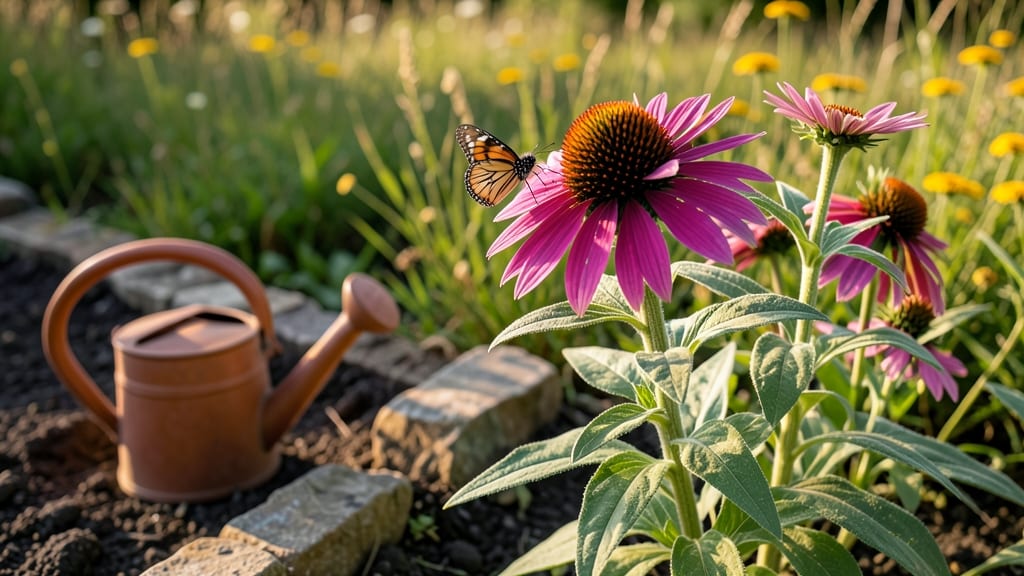
For Zone 8 gardens, the best perennials that bloom all summer are heat-resistant varieties like black-eyed Susan, coneflower, and salvia, which stay vibrant from June through fall when you deadhead regularly and provide consistent care.
These sun-loving plants have evolved to handle Zone 8's intense heat through deep root systems that access moisture and drought-resistant foliage that minimizes water loss. 🔥 The key to their continuous blooming lies in their ability to produce flowers over multiple cycles—something that requires strategic deadheading (removing spent blooms) to encourage new growth.
I've seen gardens in Houston and Phoenix transform with these perennials, where they outperform many seasonal bloomers that fade in the midday sun.
What sets these varieties apart is their adaptability to poor soil conditions once established, though they do best in well-draining soil with occasional fertilizer boosts during peak blooming seasons.
The trade-off? They often need more frequent watering during extreme heat waves, but their reward is months of vibrant color that keeps gardens lively well into autumn.
💡 In This Article
- How Heat-Tolerant Perennials Survive Zone 8 Summers
- Reblooming Tricks for Nonstop Summer Flowers
How heat-tolerant perennials survive Zone 8 summers
Zone 8's scorching summers (often exceeding 90°F for months) create challenges for most perennials, but heat-tolerant varieties have evolved remarkable adaptations. Their deep taproots can reach 3-5 feet underground, accessing moisture and nutrients that shallow-rooted plants miss.
This is why black-eyed Susan (Rudbeckia) and coneflower (Echinacea) stay vibrant while many annuals wilt—these roots act like natural straws drawing up water during droughts.
Their foliage also plays a critical role. Many Zone 8 perennials develop a waxy leaf coating that reduces water loss through transpiration, similar to how cacti survive desert conditions. For example, salvia (Salvia nemorosa) has leaves that reflect sunlight, keeping temperatures 5-10°F cooler than surrounding air.
Inside their cells, heat-shock proteins act like molecular chaperones, protecting enzymes from denaturing during temperature spikes above 100°F.
Sunlight requirements are equally important—these perennials thrive in full sun (6+ hours daily) because their photosynthesis machinery is optimized for high light intensity. In shadier conditions, their energy production drops, leading to fewer blooms. The trade-off?
They need well-draining soil to prevent root rot from summer downpours. Sandy loam mixes (with 20-30% perlite) work best, as they allow excess water to drain while retaining enough moisture for those deep roots.
What most gardeners overlook is how these plants manage their blooming cycles. Unlike cool-season perennials that flower once and fade, heat-tolerant varieties produce flowers on new growth, meaning they can keep blooming as long as you remove spent blooms.
This is why deadheading every 7-10 days becomes your secret weapon—it signals the plant to redirect energy toward new flowers instead of seed production.
Consider Lantana as a prime example: its clustered flowers bloom continuously because each cluster contains multiple flower buds at different stages. When you snip off faded clusters, you're revealing fresh buds ready to open.
The same principle applies to coreopsis, where removing old blooms encourages 30-50% more flowers over the season. This biological mechanism explains why these perennials outperform seasonal bloomers in Zone 8's punishing heat.
For best results, pair these perennials with mulch (2-3 inches) to regulate soil temperature and retain moisture. Organic mulches like shredded bark also improve soil structure over time, creating an ideal environment for those deep roots to thrive.
The combination of these adaptations—roots, foliage, blooming mechanics, and proper care—is what makes these perennials the unsung heroes of summer gardens.