
Blooming
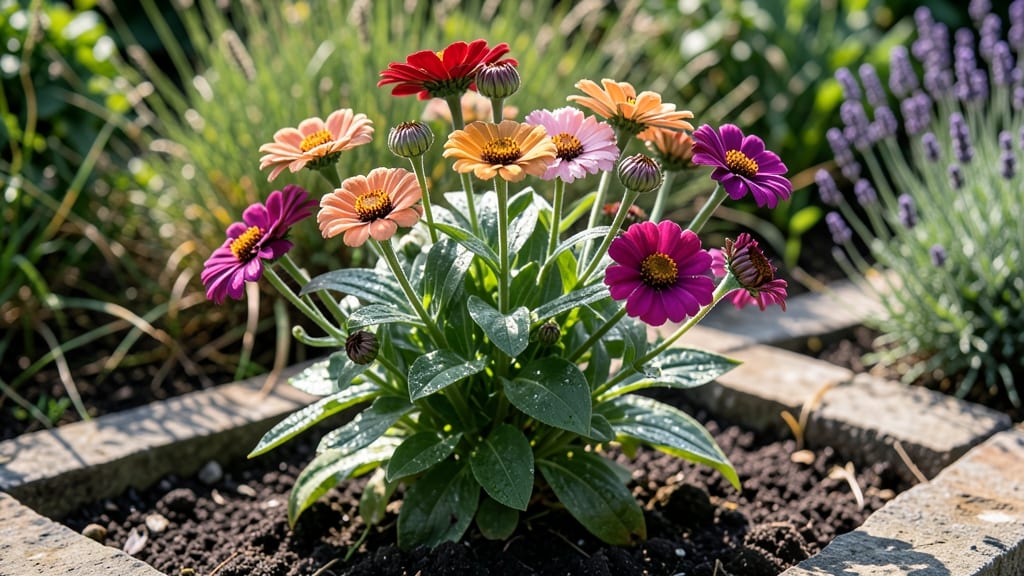
Zinnias bloom all summer when given the right conditions, thriving in hot weather but needing regular deadheading to keep producing fresh flowers. Opt for heat-resistant types like 'Benary’s Giant' or 'Profusion' to maintain vibrant blooms until the first frost.
These hardy annuals love the heat, which is why they're perfect for summer gardens. 🌿 The key to their long-lasting blooms lies in two factors: variety selection and maintenance. Heat-tolerant zinnias not only survive summer's peak temperatures but also resist common pests that might otherwise stress the plants.
I've found that varieties with darker foliage, like 'Zahara' or 'Crystal Series,' handle humidity better than lighter types, making them ideal for regions with hot, muggy summers.
Consistent deadheading is non-negotiable—removing spent blooms every 2-3 days signals the plant to redirect energy toward new flower production rather than seed development. This simple habit can extend your blooming season by several weeks.
For maximum impact, I recommend using sharp pruning shears and working in the early morning when plants are fully hydrated.
💡 In This Article
- Heat Tolerance in Zinnia Varieties: Which Last Longest?
- Deadheading Zinnias for Nonstop Summer Blooms: Step-by-Step Guide
Heat tolerance in zinnia varieties: which last longest?
Zinnias thrive in summer heat because their native habitat spans arid regions of Mexico and the southwestern U.S., where temperatures often exceed 90°F.
The key to their heat resilience lies in their waxy leaf coatings and deep root systems that tap into moisture up to 12 inches below soil level.
Varieties like 'Profusion' and 'Benary’s Giant' stand out because their thicker stems and broader leaves reduce water loss through transpiration by up to 30% compared to delicate types.
Temperature affects blooming cycles dramatically—zinnias typically enter dormancy when nighttime temps drop below 50°F. However, heat-tolerant varieties continue producing flowers even when daytime highs reach 100°F, provided soil moisture remains consistent.
The darker foliage of 'Zahara' series zinnias absorbs more sunlight, converting it into energy for flower production rather than leaf growth. This is why they often outperform lighter varieties in full sun conditions.
Drought resistance varies significantly between types. 'Crystal Series' zinnias, for example, have been bred to withstand 3-4 weeks without supplemental watering once established, thanks to their compact growth habit and efficient water use.
Their smaller blooms also mean less energy is diverted to seed production, allowing more resources to stay in the flower buds. For gardeners in hot climates, these varieties are ideal for low-maintenance summer color.
What most people don't realize is that zinnias actually bloom more prolifically in heat when given proper care. The higher temperatures accelerate their growth cycle, meaning they can produce 2-3 new blooms per stem in just 2-3 weeks during peak summer months.
This rapid turnover is why consistent deadheading becomes crucial—it prevents the plant from shifting resources toward seed production when temperatures are optimal for flowering.
Consider these key factors when choosing heat-tolerant varieties:
- Giant varieties: 'Benary’s Giant' handles heat well but needs 18-24 inches of space and regular staking
- Dwarf varieties: 'Crystal Series' thrives in containers and survives 105°F heatwaves
- Dark foliage types: 'Zahara' series resists fungal diseases in humid heat
- Drought-tolerant picks: 'Profusion' series maintains blooms with 50% less water than standard types
The science behind their heat tolerance involves specialized stomata (leaf pores) that open only briefly during cool morning hours to minimize water loss. This adaptation allows them to maintain turgor pressure in their stems even when daytime temperatures soar. 🔥
For maximum summer blooms, pair heat-tolerant varieties with afternoon shade during the hottest weeks of summer. This simple adjustment can extend your blooming season by 4-6 weeks while preventing the wilting that often occurs when zinnias are pushed beyond their natural limits.