
Blooming
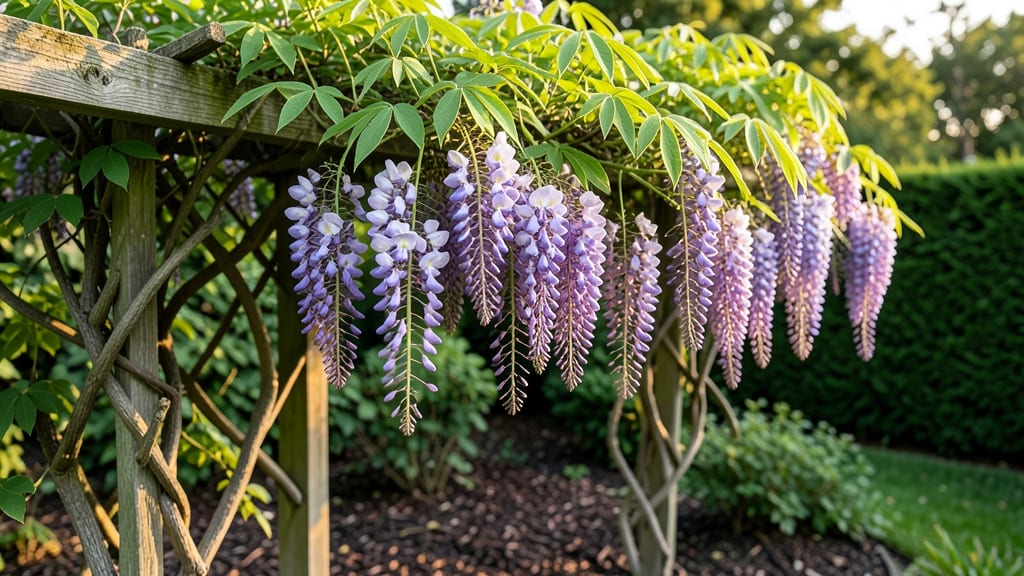
The wisteria bloom time is a fleeting yet spectacular event in late spring, typically between April and May, when clusters of fragrant 🌸 flowers cascade like purple waterfalls.
Picture this: you’ve waited years for your wisteria to flower, only to blink and miss the 2-4 week window when it finally puts on its best show. That’s the magic—and the frustration—of wisteria bloom time.
But timing isn’t the only factor. Japanese wisteria often blooms earlier than Chinese varieties, and cooler climates like USDA Zone 6a can push blooms back by weeks. The right sunlight, pruning, and even fertilizer can shift that window too.
Here’s what you need to know: when to expect flowers by type, how to stretch their display, and the one pruning trick that keeps them blooming year after year.
Wisteria bloom time by variety: when to expect flowers
Wisteria’s stunning fragrant blooms transform gardens into fragrant wonderlands, but their timing varies dramatically by variety. Understanding these differences helps you plan pruning and adjust care to ensure reliable blooms. Whether you’re growing Japanese, Chinese, or American wisteria, knowing when to expect flowers prevents years of waiting.
Let’s dive into the bloom windows for six popular varieties and how climate zones affect them.
Most wisteria varieties bloom in late spring, but some varieties push the envelope with early spring or summer blooms. For example, Japanese wisteria (Wisteria floribunda) typically blooms in May or June, while Chinese wisteria (Wisteria sinensis) often flowers in April or May.
These differences can mean the difference between a full spring display and a missed show. Regional climates also shift bloom times—warmer zones may see earlier blooms, while cooler areas might delay flowers until late spring.
Here’s the key: Pruning timing directly impacts bloom windows. Prune Japanese wisteria after blooming to encourage next year’s flowers, but Chinese wisteria needs pruning in late winter to shape growth. American wisteria, native to the U.S., blooms earlier—often in April—and is more forgiving with pruning.
Understanding these nuances ensures you’re not cutting off next year’s blooms by accident.
🌸
| Variety | Bloom Time | USDA Zones | Flower Color | Bloom Notes |
|---|---|---|---|---|
| Japanese Wisteria (W. floribunda) | Late May–June | 5–9 | Lavender to white | Longest blooms; needs summer pruning |
| Chinese Wisteria (W. sinensis) | April–May | 5–9 | Purple to blue | Earlier bloomer; prune in winter |
| American Wisteria (W. frutescens) | April (earliest) | 4–9 | Lavender | Native; drought-tolerant; blooms on old wood |
| Amethyst Falls (W. floribunda) | June–July | 5–9 | Deep purple | Late bloomer; longest-lasting flowers |
| Royal Purple (W. sinensis) | May | 6–9 | Purple | Compact growth; great for containers |
| Prolific (W. floribunda) | Late May | 5–9 | White | Heavy blooms; needs strong support |
If you live in USDA Zone 5, expect Chinese wisteria to bloom 2–3 weeks later than in Zone 9 due to cooler springs. For example, in Zone 5, Japanese wisteria may not flower until early June, while in Zone 9, it could bloom as early as
How long wisteria flowers last: duration and second bloom potential
Wisteria flowers typically bloom for 2 to 4 weeks, but with the right care, you can extend that show by 1 to 2 weeks.
Native varieties like American wisteria often produce a single, dramatic bloom in spring, while non-native types such as Chinese wisteria may reward you with a second, lighter display in late summer. The key to maximizing bloom duration lies in understanding your plant’s needs and timing pruning correctly.
In ideal conditions—full sun exposure, well-draining soil, and proper pruning—some wisteria varieties can even bloom sporadically throughout the growing season. For example, Amethyst Falls wisteria may produce smaller clusters in mid-summer if given consistent care.
However, most gardeners focus on the primary spring bloom as the star attraction, which is when wisteria truly steals the show with its cascading fragrance.
- 📅 Native varieties (e.g., American wisteria) bloom 2-3 weeks in late spring with one main flush.
- 🌿 Non-native varieties (e.g., Chinese wisteria) can extend blooms to 4-6 weeks with two potential flushes—spring and late summer.
- ☀️ Full sun exposure (6+ hours daily) doubles bloom duration compared to partial shade.
- ✂️ Prune after blooming (late summer) to encourage next year’s flowers—never prune in fall or winter.
- 💧 Deep watering weekly during bloom keeps flowers vibrant and lasting longer.
- 🌱 Fertilize lightly in early spring with balanced 10-10-10 to support flower production.
If you’re dreaming of a second bloom, focus on Chinese wisteria varieties, which are more likely to rebloom than their native counterparts. The secret? Prune strategically—cut back old wood in late winter (just before buds swell) to encourage new growth.
Avoid heavy pruning in fall, as this can reduce next year’s blooms by removing potential flower buds.
For extended flowering, pair your wisteria with companion plants that thrive in similar conditions, like clematis or climbing roses. These plants create a layered display, making your garden look lush even when wisteria’s primary bloom fades.
Just ensure they don’t compete for sunlight or nutrients—wisteria is a heavy feeder and needs space to shine.
One common mistake is assuming more water equals longer blooms. While wisteria loves moisture, overwatering can stress roots and shorten the bloom period. Aim for deep, infrequent watering—about 2 gallons per week during active growth—to keep the soil consistently moist but not soggy.
Mulch around the base with organic matter to retain moisture and regulate soil temperature.
With patience and the right techniques, you can turn your wisteria into a year-round star. Start by focusing on the primary spring bloom, then experiment with late-summer pruning to coax a second display.
Before you know it, your garden will be the envy of the neighborhood, filled with fragrant, cascading wisteria blooms that last longer than you ever imagined. 🌸