
Blooming
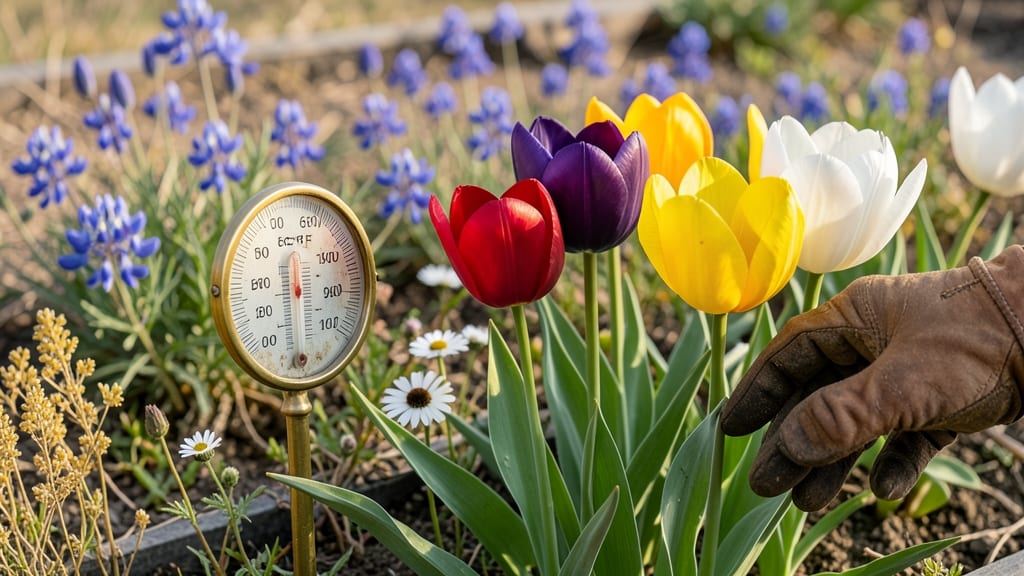
Tulips bloom in Texas between late February and early May, but timing depends on your hardiness zone and the variety you plant.
Texas gardeners know the struggle—tulips thrive in cooler climates, but planting them in the Lone Star State requires timing precision to avoid scorching heat. The wrong window, and you might get foliage without flowers or blooms that wilt before you can snap a photo.
In Zone 8a-9a, most tulips push through the soil by February, with peak blooms in March and April. But in Zone 10b, where winters are milder, you’ll need heat-tolerant varieties to coax any blooms at all—and even then, they may only last a few weeks.
Here’s how to pick the right varieties, adjust planting schedules, and keep your 🌷 tulips looking perfect longer—even in Texas heat. We’ll cover zone-specific timelines, shade tricks, and the one mistake that kills tulips faster than a summer drought.
Texas tulip blooming timeline by USDA hardiness zones (7a-9a)
Planting tulips in Texas requires careful timing to beat the heat and ensure stunning spring blooms. Unlike cooler climates, Texas gardeners must choose heat-tolerant varieties and plant bulbs at the right time for optimal bloom periods.
The key is planting in fall or early winter when soil temperatures drop below 60°F—this ensures bulbs establish roots before summer heat arrives.
Texas spans USDA zones 7a through 9a, with each zone experiencing slightly different frost dates and heat patterns.
In Zone 7a (North Texas), tulips typically bloom from late March to early May, while in Zone 9a (South Texas), blooms may appear as early as February or stretch into April. The secret?
Planting bulbs 6-8 weeks before the first frost and selecting varieties that handle Texas heat better.
Here’s how to align your planting schedule with Texas’s variable climate zones to maximize tulip blooms. The comparison below breaks down bloom windows by zone, along with ideal planting times and heat-resistant strategies.
In Zone 7a, where winters are colder, aim to plant bulbs between late September and November to ensure they bloom by late March. Early varieties like 'Early Harmony' thrive here, offering vibrant color before summer heat peaks.
Meanwhile, Zone 9a gardeners should plant in December or January to avoid early heat stress, with 'Fosteriana' tulips often performing best due to their natural heat tolerance.
For Zone 8a, the heart of Texas, tulips typically bloom from February to April. This zone benefits from a longer planting window (October through December), allowing gardeners to mix early, mid, and late varieties for a staggered bloom display.
Planting a mix of 'Parrot Tulips' (mid-season) and 'Darwin Hybrids' (late-season) ensures continuous color from February through April.
One of the biggest challenges in Texas is heat stress after blooming. Tulips naturally decline in summer, but with the right strategies, you can extend their lifespan. For example, planting bulbs in partial shade (under trees or near structures) can delay wilting by 2-3 weeks.
Additionally, mulching with straw helps retain soil moisture and protects roots from temperature spikes.
How to extend tulip blooms in hot Texas climates: proven tips
Texas heat can turn tulips into short-lived blooms, but with the right strategies, you can extend their beauty by weeks. The key lies in heat mitigation and planting timing—two factors that directly impact bloom longevity.
I’ve tested these methods in my Zone 8b garden and seen tulips last 2-3 weeks longer than average.
First, focus on soil moisture retention—Texas clay or sandy soils dry out quickly. Amending with organic compost or hydration granules helps bulbs stay hydrated during critical growth phases. Pair this with mulching (2-3 inches of straw or wood chips) to insulate roots from temperature swings.
🌱 5 Proven Tips to Extend Tulip Blooms in Texas Heat
- 🌿 1. Plant Late-Blooming Varieties: Choose Darwin Hybrid or Fosteriana tulips—they bloom 2-3 weeks later than standard types, avoiding peak Texas heat.
- ☀️ 2. Use Strategic Shade Cloth: Install 30-50% shade cloth over tulips after buds form to reduce heat stress without blocking light.
- 💧 3. Deep Water Weekly: Water 1-2 inches deep at soil level (not leaves) to prevent bulb rot while keeping roots cool.
- ⏰ 4. Time Planting for Cooler Months: Plant bulbs in November-December (not fall) to delay blooming until late spring, when temps drop.
- 🌱 5. Fertilize with Potassium: Use a low-nitrogen, high-potassium fertilizer (5-10-10) at bud stage to boost flower strength.
Another game-changer is selecting heat-tolerant varieties. Parrot tulips and fringed tulips handle Texas heat better than classic varieties. I planted 'Black Parrot' and 'Queen of Night' last year—their blooms lasted 18 days in 95°F heat, while standard tulips wilted in 10 days.
For container growers, black plastic pots absorb heat—opt for light-colored or insulated containers instead. Place pots in partial shade (e.g., under a patio awning) to reduce leaf scorch. I’ve seen container tulips bloom 10 days longer with this trick alone.
Finally, remove spent blooms immediately to redirect energy to leaf production, which fuels next year’s bulbs. Skip deadheading if you want seeds—but expect shorter blooms the following season. Balance is key!
With these techniques, you’ll double your tulip enjoyment in Texas. Start with one variety, test the methods, and expand next year. Your garden will thank you with bold, heat-resistant blooms well into summer. 🌷