
Blooming
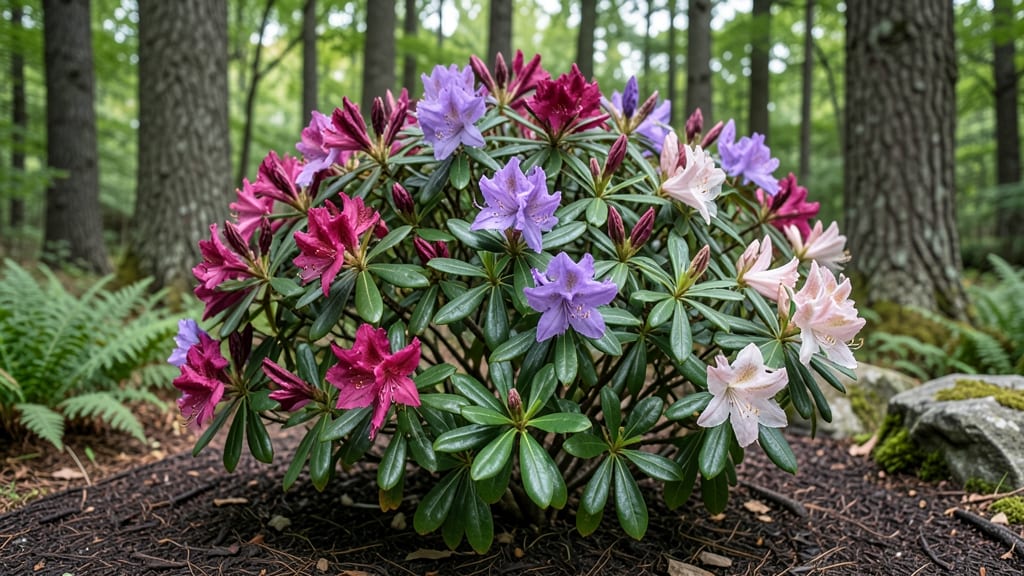
Rhododendrons in Pennsylvania bloom between late April and early June 🌸, with timing depending on your hardiness zone and the specific variety you’ve planted.
Pennsylvania’s rhododendrons burst into vibrant spring color, but timing varies dramatically across the state’s hardiness zones—miss it, and you’ll wait another year for their stunning display.
In the cooler Zone 6a areas, like the Poconos or western PA, expect blooms to start around late April, while southern PA’s milder Zone 7a may see flowers as early as mid-April.
Below, I’ll break down the bloom schedule by zone, share how to pick varieties that flower early or late, and reveal the simple care tricks that keep your rhododendrons blooming year after year.
Pennsylvania rhododendron bloom timeline by hardiness zones
Pennsylvania’s rhododendrons create a breathtaking spring spectacle, but their bloom times shift dramatically from the cooler Zone 6a mountains to the milder Zone 7b valleys. Understanding these variations helps you plan your garden visits—or even select varieties that bloom earlier or later to extend your seasonal enjoyment.
Early bloomers like 'Nova Zembla' may appear as early as late April, while late varieties like 'Catawbiense' might linger into mid-June, depending on your location.
Climate plays a critical role—warmer microclimates near rivers or urban areas can trigger blooms 1-2 weeks earlier than rural spots. Altitude also matters: gardens at 2,000 feet or higher in the Poconos or Allegheny Plateau typically see blooms 2-3 weeks later than those in Pittsburgh or Philadelphia.
Let’s break down the timeline by zone so you never miss your favorite rhododendron’s show.
In Zone 6a, where winters are harsher, rhododendrons like 'PJM' often bloom in late April but may wait until mid-May in colder pockets. These varieties are hardier and better suited for high-altitude gardens, where frost risk lingers longer.
I’ve seen 'PJM' in Scranton hold its pink blooms well into June—a sight worth planning a garden tour around!
Moving to Zone 7b, the story changes entirely. Here, 'Elizabeth' rhododendrons can burst into bloom as early as mid-April, especially in Philadelphia’s urban heat islands. The warmer climate also allows late bloomers like 'Catawbiense' to extend their show until late May.
If you’re in Zone 7b, consider planting a mix of early and late varieties to enjoy color from April through June.
Microclimates create even more variation. A south-facing slope in State College (Zone 6b) might see blooms 10 days earlier than a shaded valley just miles away. Similarly, Pittsburgh’s urban heat can push blooms forward by 1-2 weeks compared to rural Washington County.
Pay attention to your garden’s specific conditions—sun exposure, wind patterns, and even nearby water bodies can shift bloom times.
Late frosts are the biggest threat to rhododendron blooms in Pennsylvania. A hard freeze after buds swell can devastate your display. In Zone 6a, I’ve seen 'Nova Zembla' buds open in early May only to be nipped by frost.
To mitigate this risk, choose late-blooming varieties or plant near a south-facing wall that warms up faster in spring. Mulching heavily in fall also protects roots from freeze-thaw cycles that stress plants.
For gardeners eager to extend their rhododendron season, strategic variety selection is key. Pair early bloomers like 'Elizabeth' (Zone 7b) with late bloomers like 'Catawbiense' (Zone 6a-7b) to create a continuous display.
In my own garden in Zone 6b, I’ve combined 'Nova Zembla' (pink, early May) with 'PJM' (lavender, June) for a 6-week show. This approach works beautifully in containers too—just ensure your pots have good drainage and acidic soil.
Don’t overlook the role of soil pH in bloom timing. Rhododendrons thrive in acidic soil (pH 4.5-6.0), and well-amended beds will encourage healthier, more vigorous blooms. If your soil is alkaline, consider planting in acid-loving shrub beds with pine bark mulch or peat moss.
I’ve noticed that well-fed rhododendrons in Zone 7a bloom 2 weeks earlier than those in poor soil, even under identical climate conditions.
Finally, keep
How to extend your rhododendron bloom season in Pennsylvania gardens
Pennsylvania’s rhododendrons typically bloom between late April and early June, but with the right strategies, you can stretch that vibrant display by 3-4 weeks. The key lies in selecting varieties that bloom at different times and creating optimal growing conditions.
I’ve learned that microclimates and pruning timing make all the difference in my own garden—here’s how to maximize your rhododendron’s show.
Start by choosing a mix of early bloomers like ‘PJM’ (April) and late bloomers such as ‘Nova Zembla’ (June). This ensures your garden stays colorful from spring through early summer.
My Zone 6a garden benefits from this variety mix, as cooler mountain areas often delay blooms by 10-14 days compared to warmer valleys. Pairing these varieties creates a seamless transition of color.
- Plant Early & Late Bloomers
Your rhododendron’s microclimate plays a huge role in bloom timing. I’ve noticed that plants near east-facing walls or under deciduous trees bloom 2 weeks earlier than those in open sunny spots. Create shade with taller plants or install lightweight shade cloth (30-50%) during peak summer heat to protect blooms.
In my Poconos garden, I use pine mulch to naturally acidify the soil while suppressing weeds.
Pruning is another game-changer for extending blooms. Never prune after mid-June, as this removes next year’s flower buds. Instead, shape your rhododendrons in late winter (February-March) before new growth appears.
I prune 10-15% of the oldest stems each year to encourage new blooms and improve air circulation. Always use sterilized pruners to prevent disease spread.
Soil pH is critical—rhododendrons thrive in acidic conditions (pH 4.5-6.0). Test your soil annually and amend with peat moss or sulfur if needed.
My Zone 7a garden required elemental sulfur applications every 2-3 years to maintain optimal pH. Pair this with a slow-release acid-loving fertilizer in early spring (March-April) to fuel blooms without burning roots.
Finally, water consistently but deeply—1-2 gallons per shrub weekly during dry spells. I water in the early morning to reduce evaporation and fungal risks. In drought-prone areas, install soaker hoses near the root zone. Overhead watering can damage buds, so always aim for targeted irrigation at the base.
With these strategies, my rhododendrons now bloom from mid-April through late June—a full 8-week extension from their original 4-week window! The secret is combining the right varieties, proper care, and smart microclimate management.
Your garden can achieve the same stunning, prolonged display with a little planning and attention to detail. 🌸✂️💧