
Blooming
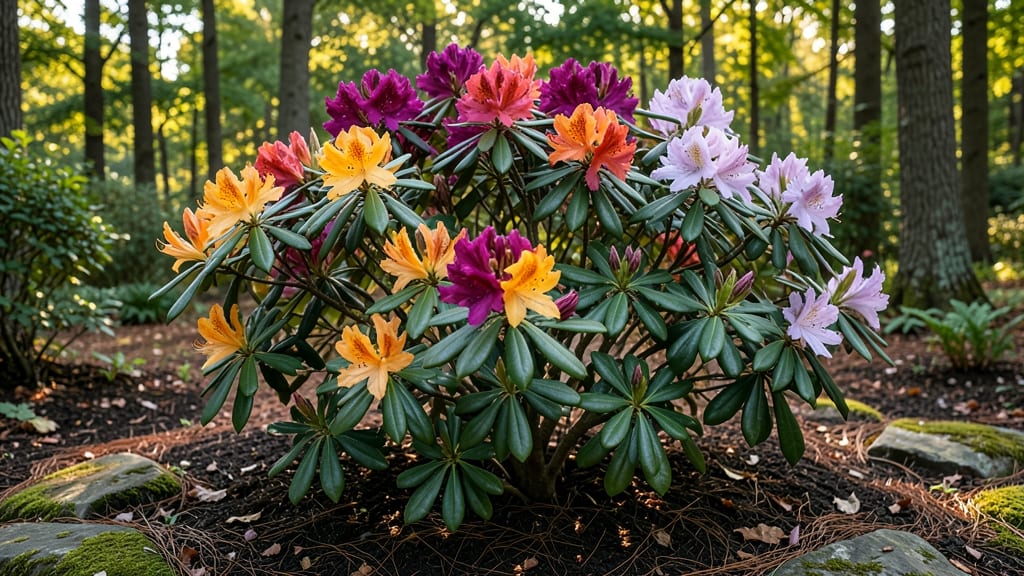
Rhododendrons in North Carolina bloom between late March and June, but the exact timing depends on elevation and variety—coastal plants wake up weeks earlier than mountain ones.
North Carolina’s rhododendrons create a breathtaking spring spectacle—but their bloom timing varies wildly depending on elevation. Get the exact months to plan your garden visits or pruning schedule, and discover how elevation turns a single plant into a multi-season showstopper.
In the Coastal Plains (Zone 8a), blooms often start by mid-March, while Mountain regions (Zone 6b) may wait until late April or May. Even within the same zone, microclimates—like a north-facing slope—can shift blooms by two weeks.
Here’s how to predict your local bloom window, choose the right varieties, and keep your rhododendrons 🌸 thriving year after year—no guesswork required.
Rhododendron bloom timing by North Carolina elevation zones
North Carolina's rhododendrons transform the state into a floral paradise each spring, but their bloom windows shift dramatically with elevation. In the Coastal Plains, warmer microclimates trigger earlier blooms, while Mountain regions like Asheville experience delayed, cooler-season displays.
Understanding these patterns helps you plan garden visits, pruning schedules, and even wedding photo shoots under rhododendron canopies.
The Piedmont region serves as a transitional zone where blooms overlap between early and late varieties. My Asheville garden (Zone 6b) typically sees 'Catawbiense' peak in mid-May, while my friend's Raleigh plants (Zone 7b) bloom two weeks earlier.
These differences aren't just about aesthetics—they reflect how chilling hours and spring temperature fluctuations trigger flowering.
Here's how to navigate the three distinct bloom windows across North Carolina's elevation zones, including exact timing for classic varieties:
| Elevation Zone | Avg Start Date | Peak Bloom | Avg End Date | Key Varieties | Climate Factor |
|---|---|---|---|---|---|
| Coastal Plains (0-500 ft) | Late March | Early April | Mid-April | 'PJM', 'Cunningham's White' | Warmer winters, fewer chilling hours |
| Piedmont (500-2,000 ft) | Mid-April | Late April - Early May | Mid-May | 'Maximum', 'Roseum Elegans' | Moderate chilling, spring frost risk |
| Mountains (2,000+ ft) | Late April | Mid-May - Early June | Late June | 'Catawbiense', 'Nova Zembla' | Cooler temps, extended bloom |
The Coastal Plains kick off the show with 'PJM' rhododendrons bursting into bloom as early as late March, often while camellias still linger from winter. This early start occurs because the region's warmer winters (Zone 8a) provide just enough chilling hours (300-500) to trigger flowering without excessive cold stress.
Gardeners in Wilmington or Fayetteville can expect their rhododendron blooms to last just 3-4 weeks, making timing critical for spring photography.
In the Piedmont, where cities like Raleigh and Durham sit at 300-600 feet elevation, blooms arrive 2-3 weeks later than the coast. The 'Maximum' variety, with its vibrant pink flowers, typically peaks in late April, aligning with dogwood and azalea displays.
This zone's spring frost risk (common until mid-April) often delays full bloom, so I always monitor National Weather Service forecasts for my Chapel Hill garden.
The Mountain region delivers the grand finale, with 'Catawbiense' rhododendrons unfolding their deep purple blooms in mid-May and lasting until late June. Areas like Asheville and Boone (Zones 6b-7a) experience cooler spring temperatures that extend the bloom season by 4-6 weeks compared to the coast.
This delayed timing creates stunning summer gardens when many other spring flowers have faded.
For gardeners in transition zones (like the Sandhills region between Piedmont and Coastal Plains), bloom timing can be unpredictable. My Sanford garden (Zone 7b) sometimes sees split blooms—early varieties like 'PJM' in April, followed by 'Maximum' in May.
To create a continuous spring display, I mix early, mid, and late bloomers in my landscape design, ensuring color from March through June.
Understanding these patterns helps with pruning strategies too. I never prune my Coastal Plains rhododendrons after mid-April, as they may still be setting buds for next year's flowers. In contrast, my Mountain varieties can handle light pruning through June without affecting blooms.
Always prune after flowering to avoid removing next year's buds, which form on old wood.
Climate change is also shifting these patterns. Over the past decade, I've noticed earlier blooms in all zones—sometimes by 1-2 weeks. My Asheville rhododendrons now often bloom by early May instead of mid-May. To adapt, I'm incorporating later-blooming varieties like '
How to predict your local rhododendron bloom window
Predicting when your rhododendrons will bloom in North Carolina isn't just about checking a calendar—it's about reading your local climate. Elevation, microclimates, and last-frost dates create a unique bloom window for every garden.
Whether you're planning a spring garden tour or timing your pruning, understanding these factors will help you stay ahead of the rhododendron season.
Start by identifying your USDA hardiness zone. North Carolina spans zones 6b through 8a, and each zone has its own rhythm. For example, Asheville's Zone 6b typically sees blooms in late April to early May, while Wilmington's Zone 8a often blooms as early as March.
Even within a single county, a mountain microclimate can delay blooms by weeks compared to valley gardens.
🌸 Key Steps to Predict Your Rhododendron Bloom Window
- 1. Check your USDA zone and local last-frost date (use Almanac.com or NC State Extension resources).
- 2. Observe bud development—buds typically swell in February-March before blooming.
- 3. Adjust for elevation: Add 1-2 weeks of delay per 1,000 feet in elevation.
- 4. Track microclimates—north-facing slopes bloom later than south-facing areas.
- 5. Prepare for late frosts: If buds appear in March, cover plants if frost is forecasted.
💡 Pro Tip: Use a garden journal to note bloom dates yearly—your local patterns will emerge!
Microclimates play a surprising role in bloom timing. A garden tucked into a wooded valley might bloom 2-3 weeks earlier than one on a sun-exposed hillside.
Pay attention to nearby landmarks: streams, rock outcrops, or even a dense stand of pines can create pockets of cooler air that delay blooms. If you're near the Blue Ridge Mountains, expect blooms to shift later as you ascend—sometimes by up to 6 weeks.
Don't overlook the last-frost date in your area. Rhododendrons are frost-sensitive when buds are swollen but not yet open. If your local average last frost is March 15 but you see buds forming in late February, be prepared to protect them with frost cloth or row covers.
In Zone 8a, where frosts are rare, blooms often start as early as February, while Zone 6b gardens may not see color until mid-April.
Create a simple bloom-tracking checklist to stay on top of your rhododendrons' progress. Mark when buds swell, color up, and finally open. Over time, you'll spot patterns—like how 'Catawbiense' blooms 2 weeks earlier than 'Roseum Elegans' in your yard.
This data helps you adjust pruning schedules (always prune after blooming) and even fertilizer timing for next season.
If you're new to rhododendron gardening, start with cultivars known for reliable blooming, like 'PJM' (early bloomer) or 'Girard's Rose' (mid-season). These varieties are hardy and adaptable, making them perfect for predicting bloom windows.
For a foolproof estimate, add 4-6 weeks to your local last-frost date—this gives you a safe window for when most rhododendrons will burst into color.