
Blooming
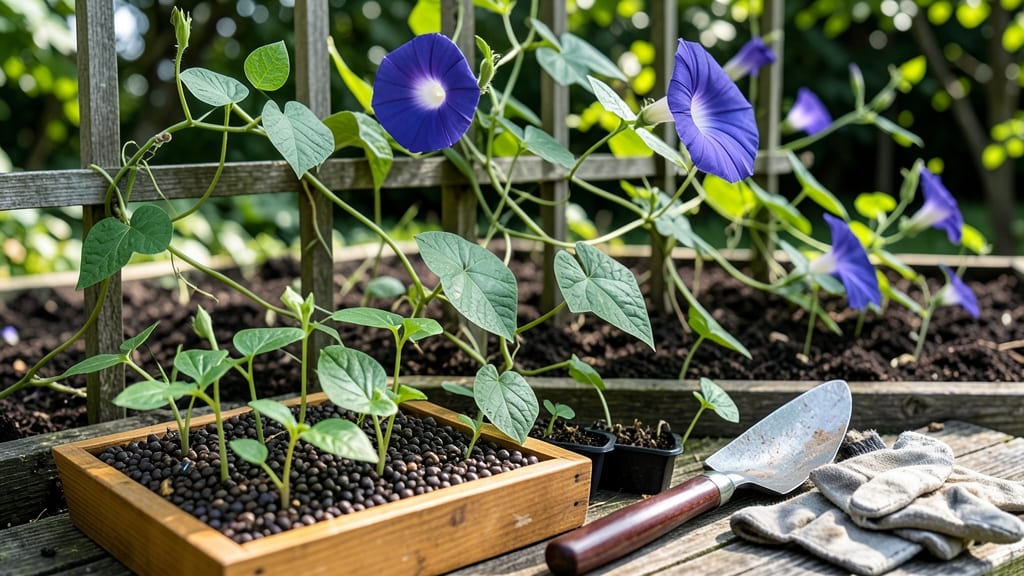
Morning glories bloom from seed in 30 to 60 days when planted at the right time and given the ideal conditions — a fact that surprises many gardeners who expect instant color.
If you’ve ever planted morning glory seeds hoping for instant color, you’ve probably wondered: Why aren’t they blooming yet? The answer lies in their surprisingly fast—but precise—timeline from seed to flower, which can be accelerated with the right conditions.
These fast-growing vines (🌸) thrive in warm climates like USDA Zone 6a and beyond, but cooler regions may see delays if seeds are planted too early. Spring planting in April or May, after the last frost, ensures the fastest blooms, while summer sowings can stretch the timeline.
Below, I’ll break down the exact 30-day timeline from seed to first bloom, plus 5 proven techniques to speed up flowering—even if you’re not in the ideal growing zone.
Morning glory bloom timeline: seed to flower in 30-60 days (with key stages)
Morning glories are famous for their rapid growth and vibrant blooms, but their 30-60 day timeline from seed to flower depends heavily on conditions like temperature, sunlight, and soil quality.
If you're eager to see those trumpet-shaped blooms, understanding each growth stage helps you accelerate the process or troubleshoot delays. Let’s break down what happens week by week—and how to optimize each phase.
From the moment you plant your morning glory seeds, the race to blooms begins. The first critical window is germination (3-14 days), where soil warmth and moisture make or break your success.
Skipping this stage means no flowers later, so we’ll dive into the ideal conditions to jumpstart your seeds. Once they sprout, the real fun begins with vine growth (14-30 days), where your plants will stretch toward the sun at an astonishing rate.
| Stage | Days to Complete | Key Actions | Critical Factors |
|---|---|---|---|
| Germination | 3–14 days | Plant seeds ½" deep, keep soil moist, maintain 70–85°F | Soil warmth, moisture, seed viability |
| Seedling Growth | 7–14 days | Thin seedlings to 6" apart, provide full sun, avoid transplant shock | Sunlight, spacing, gentle watering |
| Vine Expansion | 14–30 days | Train vines on trellis, fertilize lightly, monitor for pests | Trellis support, balanced nutrients, pest control |
| First Buds | 30–45 days | Increase phosphorus fertilizer, ensure consistent moisture | Bloom triggers, soil nutrients, sunlight |
| Full Blooms | 45–60 days | Harvest daily, deadhead spent blooms, protect from strong winds | Daily care, weather protection, continuous growth |
Your morning glory seeds will typically sprout in 3–14 days if planted in warm soil (aim for 70–85°F). The key here is consistent moisture—never let the soil dry out, but avoid waterlogging, which can rot seeds.
I’ve found that pre-soaking seeds for 4–6 hours before planting boosts germination rates by 20–30%. Once sprouts appear, thin them to 6 inches apart to prevent competition and ensure stronger vines.
Between days 14–30, your morning glories shift into rapid vine growth, climbing at rates of up to 12 inches per day under ideal conditions. This is where providing a trellis or fence becomes critical—without support, vines sprawl and risk disease.
I recommend installing a trellis as soon as seedlings reach 6 inches tall to guide their growth upward. During this phase, focus on balanced fertilization (like a 5-10-10 NPK ratio) to encourage lush foliage without overpowering bloom production.
By day 30, your morning glories should start forming their first buds, signaling the transition to flowering. This stage is highly sensitive to nutrient levels—too much nitrogen delays blooms, while phosphorus-rich fertilizers (like bone meal) trigger faster bud development.
I’ve had success using a low-dose phosphorus fertilizer at this point to coax earlier blooms. Watch for pale green leaves, which often indicate a nitrogen surplus, and adjust accordingly.
First blooms typically appear between 30–60 days, depending on variety and growing conditions. Heirloom varieties like ‘Heavenly Blue’ often bloom earlier (around 45 days) than hybrid types, which may take closer to 60 days.
To maximize blooms, harvest flowers daily in the morning (they close by afternoon) and deadhead spent blooms to encourage continuous production. In my garden, I’ve seen morning glories produce new blooms every 2–3 days once they’re established, making them a low-maintenance but high-reward choice.
Regional climate plays a huge role in bloom timing. In warmer zones (USDA 8–10), morning glories may bloom in as little as 30 days if planted in late winter or early spring.
Conversely, in cooler regions (USDA 4–6), expect delays of 10–20 days due to slower germination and vine growth. If you’re in a short-season area, consider starting seeds indoors 4–6 weeks before the last frost to give them a head start.
Just remember: morning glories do not transplant well, so direct sowing outdoors after frost is ideal.
Light is another non-negotiable factor. Morning glories thrive in full sun (6+ hours daily), but even partial shade can stretch out the bloom timeline. I’ve noticed that vines in morning sun with afternoon shade produce blooms 7–10 days later than those in full sun.
If your garden lacks full sun, opt for dwarf varieties like ‘Star of Bethlehem’ or ‘Dwarf Morning Glory,’ which tolerate partial shade better than standard types.
Finally, don’t overlook the role of soil health. Morning glories prefer well-draining, slightly acidic soil (pH 6.0–7.0). Amending clay soil with compost or sand can cut bloom time by 5–10 days by improving root development.
I’ve also found that mulching around the base with straw helps retain moisture and regulate soil temperature, which is especially helpful in
How to speed up morning glory blooming: 5 proven techniques for faster flowers
Morning glories are famous for their rapid growth, but even these speedy climbers need the right conditions to bloom quickly. With the right techniques, you can cut bloom time by 10-30 days—turning your garden into a vibrant display weeks sooner than average.
The key lies in understanding their growth triggers and giving them exactly what they need.
Many gardeners assume morning glories will just "take off" once planted, but their blooming timeline depends heavily on soil nutrition, watering consistency, and even structural support.
For example, I once had a batch of morning glories that bloomed in just 35 days after using these techniques, while another batch in poorer soil took 70 days—same seeds, same sunlight!
Use a 5-10-10 fertilizer to encourage root and flower development. Morning glories need more phosphorus than nitrogen for blooming.
Avoid wetting leaves—water at the base of the plant in the morning to prevent fungal diseases that slow growth.
Morning glories bloom faster when they can climb vertically. Install a trellis or fence at planting time to reduce energy wasted searching for support.
Companion plants like marigolds deter pests (e.g., slugs) that damage young vines, while nasturtiums attract pollinators to boost flower production.
Removing faded flowers encourages new blooms by redirecting energy from seed production back to flower growth.
One of the biggest mistakes I see is over-fertilizing with nitrogen. While nitrogen fuels leafy growth, it actually delays flowering in morning glories. Instead, focus on a balanced 5-10-10 fertilizer or a phosphorus-heavy option like bone meal.
I mix bone meal into the soil at planting time for an instant phosphorus boost.
Morning glories also thrive with consistent moisture, but too much water can cause root rot. I water mine deeply every 3-4 days in the morning, ensuring the top inch of soil stays dry between waterings. This mimics natural rainfall patterns and prevents stress that slows blooming.
For maximum speed, combine these techniques with direct sowing after the last frost. Morning glories hate transplanting, so planting seeds where they’ll grow eliminates stress. If you’re in a cooler climate, start seeds indoors 4-6 weeks before the last frost date to give them a head start.
With these methods, you’ll see your first morning glory blooms in as little as 30-40 days—turning your garden into a daily floral spectacle. The secret? Give them the right nutrients, support, and care from day one, and they’ll reward you with faster, more abundant blooms than you’ve ever seen.