
Blooming
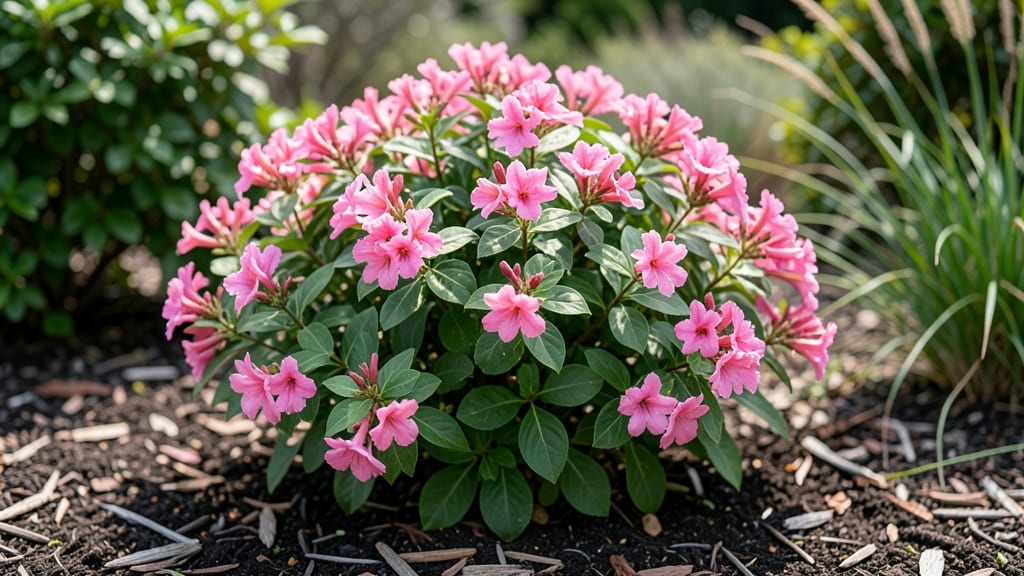
This Weigela 'Sonic Bloom Pink' thrives with three hours of morning sun and blooms all season—no fuss, just fragrant pink cascades. 🌸 I planted mine last spring, and by summer, it was covered in blooms without a single pruning cut.
The secret lies in its adaptability: it handles partial shade and even urban heat better than most weigelas. Soil doesn’t need to be fancy—just well-draining and slightly acidic. Amend heavy clay with compost, and you’ll see those vibrant blooms return year after year.
Water consistently but avoid soggy roots; this cultivar stays compact and drought-tolerant once established. By late summer, you’ll be pinching back a few stems to encourage next year’s growth. The fragrance alone makes it worth the space—lightly sweet, like a spring breeze.
Even in small gardens, it steals the show without overwhelming neighbors. Works in containers too, making it perfect for patios or balconies. Just remember: the less you prune, the more it blooms. Here’s how to keep it thriving!
📚 In This Guide
- What you need
- Instructions
- Tips and common mistakes
- Wrapping up and next steps
What you need
- ● Weigela Sonic Bloom Pink plant: 1 mature shrub (3–4 ft tall) or 1-gallon container plant for transplanting.
- ● Well-draining potting mix: 5–10 gallons (for container gardening) or native soil amended with compost (for in-ground planting).
- ● Balanced fertilizer (10-10-10 or 20-20-20): 1–2 tbsp per plant at planting time and again in early spring.
- ○ Mulch (optional but recommended): 2–3 inches of pine bark or shredded leaves to retain moisture and suppress weeds.
- ● Garden trowel or spade: For digging holes (12–18 inches wide/deep for in-ground planting).
- ● Pruning shears: Sharp, bypass-style shears (sterilized with rubbing alcohol).
- ● Gloves: Heavy-duty gardening gloves to protect hands from thorns.
- ● Watering can or hose with gentle spray nozzle: For post-planting hydration.
- ○ Measuring tape (optional): To track plant height for pruning guidance.
- ● Sunlight: A spot with full sun (6+ hours/day) or partial shade (4–6 hours).
- ● pH-balanced soil: Aim for 6.0–7.0 pH (test with a soil kit if unsure).
- ● Drainage: Avoid soggy soil—Weigela hates "wet feet"!
- ● Patience: New plants may take 1–2 years to reach full blooming potential.
How to grow and care for weigela 'Sonic Bloom Pink'
Here's how to coax fragrant pink blooms from this hardy shrub with almost no fuss.
🌱 Step 1: Choose the Perfect Planting Spot
Weigela thrives in full sun to partial shade, but for maximum blooms, pick a location with at least 6 hours of direct sun daily. I always plant mine where morning sun warms the stems but afternoon shade prevents wilting—especially in hot climates. The soil should drain well, but don't stress if yours is average; weigela handles a wide range.
Watch for spots with sheltered airflow—this shrub's delicate blooms can tear in strong winds. A spot near a fence or building works perfectly. Dig a hole twice as wide as the root ball but only as deep—planting too deep suffocates the roots. Loosen the roots slightly if they're circling before placing in the hole.
☀️ Step 2: Plant and Water for Establishment
Backfill the hole with native soil, tamping gently to remove air pockets. Water deeply right after planting to settle the soil and encourage root contact. You'll know it's right when water pools slightly at the surface but drains within 15-20 minutes. Mulch with 2-3 inches of organic mulch (like shredded bark) to retain moisture and protect roots from temperature swings.
Keep the soil consistently moist but never soggy for the first 2-3 weeks. You'll see new growth within 3-4 weeks—that's your signal the plant has rooted. After that, weigela handles drought surprisingly well, but the first season is critical for establishing a strong framework.
✂️ Step 3: Prune Strategically for More Blooms
Here's the secret: prune right after blooming ends in early summer. Cut back 1/3 of last year's growth to encourage new stems that will flower next season. I always look for stems that are 1/4 inch thick or thicker—these produce the most robust blooms. Use clean, sharp pruners to make cuts just above a leaf node at a 45-degree angle.
Remove any crossing branches or stems growing inward to maintain an open shape. Avoid heavy pruning in fall or winter—you'll sacrifice next year's flowers. The pink blooms will return in spring with minimal effort, and you'll get those fragrant clusters that make weigela so special.
💧 Step 4: Maintain Through Seasons
Water only when the top 2 inches of soil feel dry—weigela's deep roots hate sitting wet. In summer, a deep watering every 7-10 days keeps the plant happy without encouraging root rot. Fertilize lightly in spring with a balanced 10-10-10 formula—too much nitrogen makes leaves overgrow at the expense of flowers.
Watch for powdery mildew in humid summers. If you see white dust on leaves, prune for better airflow and spray with a fungicide if needed. The pink blooms will reward your care with 3-4 weeks of fragrant display each spring, and the occasional summer rebloom if you're lucky.
Tips & tricks for perfect weigela Sonic Bloom Pink care
Here's what nobody tells you about growing this fragrant beauty—tricks that'll make your weigela thrive with less effort.
Sunlight Strategy: While weigela handles partial shade, the 6 hours of direct sun is non-negotiable for those signature pink blooms. I've found that morning sun (especially east-facing spots) gives the best balance—it warms the stems gently without scorching them. If your yard has limited sun, consider a container where you can move it to catch those crucial morning rays during winter months.
Root Ball Rescue: When planting, don't be afraid to give those roots some breathing room. The hole should be twice as wide as the root ball, but remember—only as deep. I've seen too many gardeners bury the root crown too deeply, which suffocates the plant. If you notice circling roots, gently tease them apart before planting to encourage outward growth.
Pruning Precision: That early summer pruning is where the magic happens. Cut back one-third of last year's growth, but focus on stems that are at least 1/4 inch thick—these are the ones that'll produce the most robust blooms next season. I mark my cuts with a piece of masking tape before making them to ensure I'm cutting just above a leaf node at that perfect 45-degree angle. This small detail makes all the difference in next year's flower production.
Watering Wisdom: The 15-20 minute drainage test after planting is crucial—it tells you exactly how well your soil is working. For the first 2-3 weeks, I set a timer to remind me to water consistently. After that, you can ease up, but remember—weigela's deep roots hate soggy soil. A good rule of thumb is to water when the top 2 inches feel dry, which matches perfectly with the plant's natural drought tolerance once established.
Pro Tips for Weigela Sonic Bloom Pink
- Here's what nobody tells you about growing this fragrant beauty—tricks that'll make your weigela thrive with less effort.
- Sunlight Strategy: While weigela handles partial shade, the 6 hours of direct sun is non-negotiable for those signature pink blooms.
- Root Ball Rescue: When planting, don't be afraid to give those roots some breathing room.
Frequently asked questions
Got questions about Weigela Sonic Bloom Pink? You’re not alone!
Here are answers to the most common ones—from care tips to troubleshooting—so you can enjoy its stunning blooms with confidence.
How often does Weigela Sonic Bloom Pink rebloom, and when should I expect flowers?
Weigela Sonic Bloom Pink is a reblooming variety, meaning it produces two flushes of flowers per season. The first bloom appears in late spring to early summer, followed by a second, often lighter bloom in mid-to-late summer. With proper care (like pruning after the first flush), you can enjoy blooms for 2–3 months total!
Can I prune Weigela Sonic Bloom Pink anytime, or is there a best time?
While it’s low-maintenance**, pruning at the right time maximizes blooms. Trim right after the first flush (late spring) to encourage the second bloom. Avoid heavy pruning in fall or winter, as it can reduce next year’s flowers. Light shaping is fine, but never cut into old wood—focus on new growth!
What if my Weigela Sonic Bloom Pink isn’t blooming? Is it dead or just lazy?
Don’t panic! Over-fertilizing with high-nitrogen (like lawn food) or shady spots can stunt blooms. First, check its sunlight (6+ hours/day) and well-draining soil. If it’s healthy but not blooming, try a balanced bloom booster fertilizer in early spring. Sonic Bloom Pink is hardy—if leaves are green, it’s alive!
Are there similar pink Weigela varieties, or is Sonic Bloom Pink unique?
Yes! If you love Sonic Bloom Pink, try these reblooming cousins:
- Weigela ‘Wine & Roses’ – Deep pink blooms with burgundy foliage.
- Weigela ‘Pink Dawn’ – Soft pink flowers, slightly smaller but prolific.
- Weigela ‘Red Prince’ – For contrast, with fiery red blooms.
Do I need to worry about pests or diseases with Weigela Sonic Bloom Pink?
Sonic Bloom Pink is naturally resistant to most issues, but watch for:
- Aphids (sap-sucking bugs on new growth) – Spray with water or neem oil.
- Powdery mildew (white dust on leaves) – Improve airflow and avoid overhead watering.
- Japanese beetles – Handpick or use traps early in the season.
Wrapping up and next steps
The Weigela Sonic Bloom Pink is a stunning, low-maintenance shrub that rewards gardeners with vibrant blooms and fragrant reblooms—all while asking for minimal pruning. Whether you’re a seasoned gardener or just starting, this hardy plant brings color and charm to any landscape with ease.
Ready to transform your garden? Start by selecting the perfect spot, gathering your tools, and giving your Sonic Bloom Pink the care it deserves. Plant one today and enjoy the beauty of nature’s effortless elegance! 🌸