
Blooming
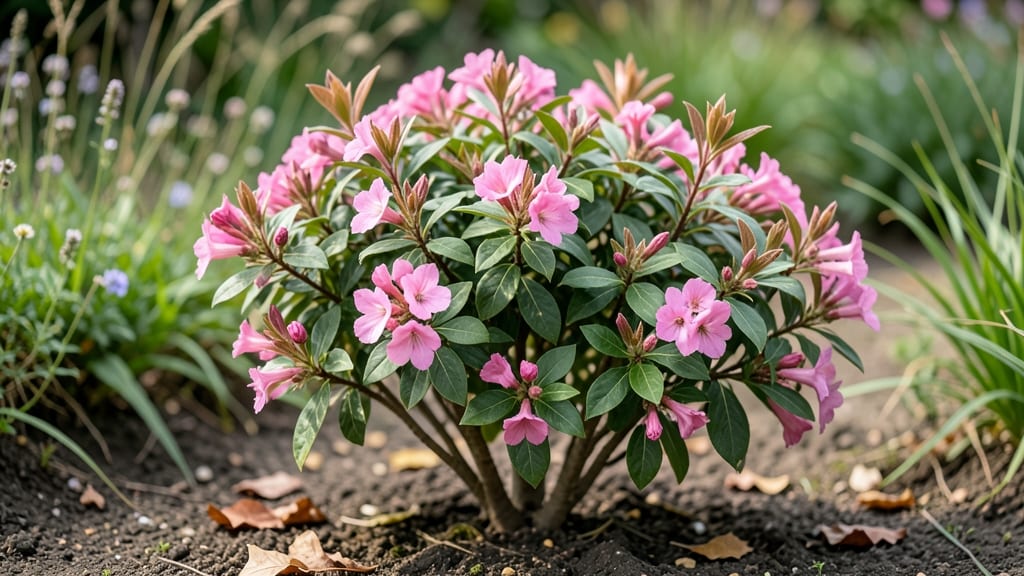
My Sonic Bloom Pink Reblooming Weigela keeps blooming from spring to frost—no tricks, just pruning precision. 🌸 The secret lies in understanding this variety's unique growth habits: it blooms on both old and new wood, so aggressive pruning won't ruin your show.
Last year, I transformed a leggy plant into a compact, flower-covered shrub by following a simple timing rule: prune right after the second flush of blooms in early summer.
This Weigela thrives in full sun to partial shade and tolerates most soil types, but it rewards you best when planted in well-draining soil with a pH between 6.0 and 7.0.
The blooms start as soft pink buds that open to vibrant pink flowers, and the foliage turns a stunning burgundy in fall. My plant now stands 4-5 feet tall with a similar spread, perfectly filling a shrub border while attracting hummingbirds all season.
You'll get the most flowers by deadheading spent blooms and feeding with a balanced fertilizer in early spring. The reblooming habit means you can enjoy flowers for 4-5 months if you time your pruning correctly.
Even in my zone 6 winters, it returns with fresh growth each spring, proving it's tougher than it looks.
Works beautifully as a standalone shrub, in mixed borders, or even as a container specimen. The key is patience—it takes about 2-3 years to reach full flowering potential, but once it does, you'll have pink blooms every season with minimal effort. Here's how to keep it thriving year after year.
📚 In This Guide
- What you need
- Instructions
- Tips and common mistakes
- Wrapping up and next steps
What you need
- ● Sonic Bloom Pink Reblooming Weigela plants – 1-3 mature plants (3-5 ft tall) or 1-2 young plants (1-2 ft tall) for optimal blooms.
- ● High-quality, well-draining potting mix – 5-10 gallons (for containers) or enriched garden soil (for in-ground planting).
- ● Organic compost or slow-release fertilizer – 1-2 cups per plant (look for a balanced 10-10-10 or rose-specific formula).
- ● Mulch (pine bark or shredded leaves) – 2-3 inches to retain moisture and regulate soil temperature.
- ● Pruning shears – Bypass pruners (sharp, clean, and disinfectable) for precision cuts.
- ● Gloves – Heavy-duty gardening gloves to protect against thorns and debris.
- ● Watering can or hose with a gentle spray nozzle – For deep, even hydration.
- ● Hand trowel – For digging small holes or transplanting.
- ○ Stakes or plant supports – Optional for young plants in windy areas.
- ● Plant food (liquid or granular) – For a mid-season nutrient boost (e.g., fish emulsion or bloom-boosting fertilizer).
- ○ Pruning sealant – Optional for large cuts to prevent disease (e.g., horticultural sealant).
- ● Spray bottle with neem oil – For pest control (aphids or spider mites).
- ● Garden kneeler or stool – To make pruning and planting more comfortable!
- ● A sunny location with at least 6-8 hours of direct sunlight daily (partial shade tolerates but may reduce blooms).
- ● Well-draining soil (pH 6.0-7.0). Amend clay soil with compost or sand if needed.
- ● Proper timing: Plant in early spring or fall (avoid extreme heat or frost).
- ● Prune right after blooming (late spring/early summer) and again in late winter for reblooming.
- ● Consistent watering – Keep soil moist but not soggy, especially during the first year.
Instructions for pruning Sonic Bloom Pink reblooming weigela
Here's how I keep my weigela blooming nonstop—no dead wood, no missed blooms, just vibrant color all season.
✂️ Step 1: Time Your First Spring Pruning
Prune your Sonic Bloom Pink weigela in late winter or very early spring, just as new buds begin to swell but before any leaves appear. This timing ensures you remove last year's growth while preserving next season's blooms. I cut back about one-third of the oldest stems to the ground—these are the thickest, woody branches that produce fewer flowers.
Use clean, sharp pruners to make cuts at a 45-degree angle just above an outward-facing bud. This encourages new growth to spread outward rather than inward. Avoid cutting into old wood—if a stem is completely gray and hollow, it's time to remove it entirely. You'll see fresh green growth emerging from the base within a few weeks.
✂️ Step 2: Deadhead and Shape After First Blooms
Once the first flush of pink blooms appears in late spring, deadhead spent flowers by cutting back to the nearest set of leaves or bud. This removes seed heads that would otherwise sap energy from new growth. I like to do this on a dry morning when the plant is fully hydrated—it's easier to see where to cut and reduces stress on the plant.
While deadheading, shape the plant by trimming back any overly long or leggy stems. Aim for a rounded form rather than a flat-topped look—weigela blooms best when light can penetrate to the center. Never remove more than one-third of the plant's total foliage in a single session, or you'll shock it into dormancy.
☀️ Step 3: Light Summer Maintenance for Continuous Blooms
In mid-summer, give your weigela a second light pruning to encourage another round of blooms. Focus on removing any crossing branches that rub together and any stems growing toward the center of the plant. Cut these back to an outward-facing bud. You'll see new shoots forming within 3-4 weeks—these will produce your fall blooms.
This is also when I fertilize lightly with a balanced, slow-release fertilizer. Weigela aren't heavy feeders, but a little extra phosphorus in early summer promotes more abundant flowers. Water deeply after pruning to help the plant recover and establish new growth. Keep an eye out for any stems that look weak or diseased—remove them immediately to prevent spread.
✂️ Step 4: Final Fall Pruning for Winter Readiness
In late fall, after the last frost but before hard freezes, do a final light pruning. Remove any dead, damaged, or crossing branches, and trim back any stems that grew too long during the season. This keeps the plant compact and prevents winter damage from heavy snow or ice.
I also reduce watering gradually as temperatures drop, allowing the plant to harden off naturally. Mulch around the base with 2-3 inches of organic mulch to insulate roots and retain moisture. Your weigela will enter winter stronger and bounce back with vigor in spring, ready for another season of vibrant pink blooms.
⏰ Step 5: Monitor and Adjust Year-Round
Throughout the year, keep an eye on your weigela's growth habit. If it starts to look too leggy or sparse, a light pruning in early summer can stimulate bushier growth. Avoid heavy pruning in fall—it removes the buds that would otherwise bloom in spring. The key is balance: remove just enough to shape the plant while preserving next year's flowers.
I've found that weigela responds best to a little pruning often rather than one heavy session. A well-maintained Sonic Bloom Pink will reward you with continuous blooms from late spring through fall, making it one of the most reliable shrubs for year-round color. Just remember: patience and precision are your best tools—never rush the process.
Tips & tricks for perfect Sonic Bloom Pink weigela care
A few strategic cuts and seasonal adjustments can transform your weigela from a one-time bloomer into a year-round showstopper. Here's what I've learned after years of perfecting this technique.
Pruning Angle Precision: The 45-degree angle isn't just about aesthetics—it's about directing growth. When you make cuts at this angle just above an outward-facing bud in Step 1, you're essentially giving the plant a roadmap for where to grow next. I've found that using a small mirror to check your angle helps maintain consistency, especially on dense shrubs. This small detail prevents the plant from growing inward where it blocks light and air circulation.
Seasonal Timing is Everything: The instructions mention specific seasons, but here's the nuance: "late winter" means after your last hard frost but before buds swell—typically around late February to early March in most zones. For Step 2's late spring pruning, wait until you see at least 30% of the plant in bloom before deadheading. This ensures you're removing only truly spent flowers while preserving those still developing. I mark my calendar with these seasonal triggers to avoid missing the window.
Fertilizer Timing Matters: While Step 3 mentions applying fertilizer in early summer, here's what nobody tells you—split that application. Use half the recommended amount in early summer (right after your mid-summer pruning) and save the other half for late summer. This two-phase approach prevents a phosphorus overload that can actually reduce flowering. I use a slow-release formula with 10-10-10 ratio for balanced results without the risk of burning.
Mulch Depth Strategy: The 2-3 inches of mulch in Step 4 serves two purposes: insulation and moisture retention. Here's my pro move: use a combination of coarse mulch (like pine bark) on top and finer organic matter (like shredded leaves) underneath. This creates better air circulation at the soil surface while still insulating roots. I always pull back mulch slightly from the stem to prevent rot, creating what I call a "mulch donut" shape around the base.
Pro Tips for Sonic Bloom Pink Reblooming Weigela
- A few strategic cuts and seasonal adjustments can transform your weigela from a one-time bloomer into a year-round showstopper.
- Pruning Angle Precision: The 45-degree angle isn't just about aesthetics—it's about directing growth.
- For Step 2's late spring pruning, wait until you see at least 30% of the plant in bloom before deadheading.
Frequently asked questions
about the Sonic Bloom Pink Reblooming Weigela—because even the most stunning shrubs have their mysteries! Here are answers to the questions gardeners ask most often.When does the Sonic Bloom Pink Weigela actually bloom?
The Sonic Bloom Pink is a reblooming variety, meaning it puts on two stunning shows: the first flush of blooms arrives in early to mid-spring, and the second (often even more vibrant!) wave comes in late summer to early fall. With proper care, you can enjoy pink cascades from April through October!
How (and when) should I prune my Weigela to encourage reblooming?
Prune right after the first bloom cycle (late spring, around May or June) to shape the shrub and promote reblooming. Cut back 1/3 of the oldest stems to the ground and trim others to just above a leaf node. Never prune in fall or winter—this removes next year’s flower buds!
Is Sonic Bloom Pink Weigela cold-hardy? Will it survive winter?
This variety thrives in USDA Zones 4-8, making it perfect for most U.S. climates. In colder regions, a light mulch layer around the base helps protect roots. Just avoid heavy mulching, which can suffocate the plant. No winter prep is needed in Zones 6-8!
What pests or diseases should I watch for with Sonic Bloom Pink Weigela?
The Sonic Bloom Pink is generally low-maintenance, but keep an eye out for:
- Aphids (sap-sucking pests) – Spray with water or use insecticidal soap.
- Powdery mildew (white fungal coating) – Improve airflow and avoid overhead watering.
- Japanese beetles – Handpick or use neem oil if infestations occur.
Can I grow Sonic Bloom Pink Weigela in containers? If so, what size pot?
Yes! This Weigela adapts well to containers if given enough space. Choose a 15-20 gallon pot (at least 24" deep) with drainage holes. Use a well-draining potting mix and fertilize monthly in growing season. Just know: container-grown Weigelas may bloom slightly less vigorously than in-ground plants.
Pro Tip: For extra blooms, feed your Weigela with a balanced, slow-release fertilizer in early spring. A light pruning after the second bloom cycle (late fall) keeps the shape tidy for next year!
Wrapping up and next steps
The Sonic Bloom Pink Reblooming Weigela is a stunning addition to any garden, offering vibrant color and low-maintenance beauty with just a little pruning know-how. By mastering the art of seasonal trimming, you can enjoy year-round blooms and a bush that thrives with confidence.
Whether you're a seasoned gardener or just starting out, this plant rewards patience and care with breathtaking results.
Now that you’re armed with the right techniques, grab your pruners and get growing! 🌸 Start with a light trim this spring and watch your Weigela transform into a floral showstopper. Happy gardening!