
Blooming
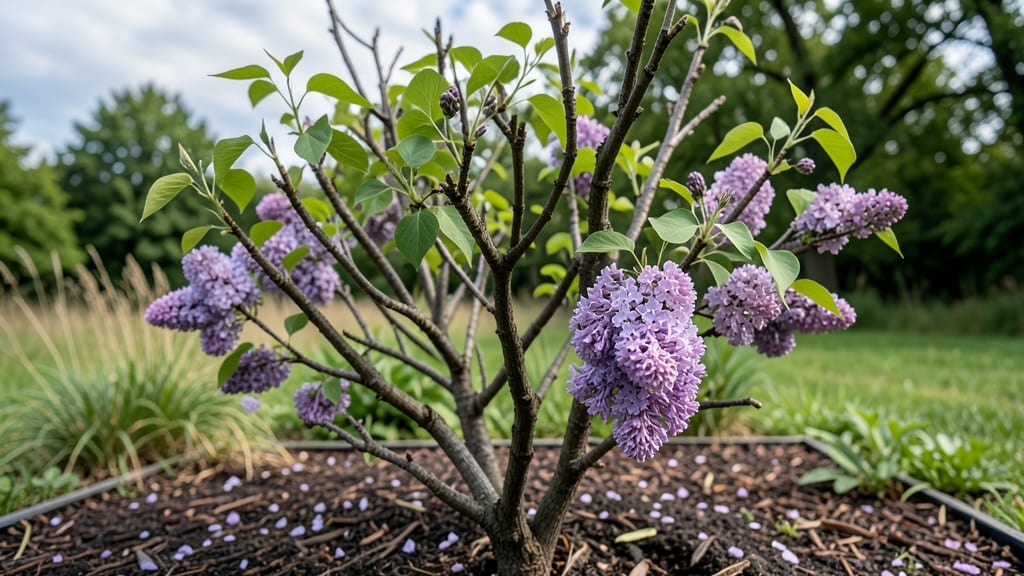
Yes, lilacs bloom on old wood, which means their flowers grow on the previous year's growth rather than new stems. Pruning after blooming helps maintain next year's flowers, while cutting back too soon can remove potential buds.
This unique growth habit explains why lilacs often produce their best blooms on mature stems. 🌸 The flower buds actually form in late summer on the previous year's growth, so any aggressive pruning before this window risks removing next year's blooms entirely.
I've found that waiting until after the blooms fade—typically in late spring or early summer—gives the plant time to set new buds while still keeping the shape you desire.
Understanding this process helps explain why lilacs can live for decades with minimal care. Their ability to flower on old wood makes them incredibly resilient, though it does require patience when shaping the plant.
Many gardeners mistakenly prune too early, thinking they're helping the plant, when they're actually sacrificing future blooms.
💡 In This Article
- Why Lilacs Flower on Old Wood
- Best Lilac Pruning Timing and Techniques
Why lilacs flower on old wood
Lilacs produce their signature blooms on second-year wood, meaning the flower buds form on stems that grew the previous season.
This unique trait stems from their botanical classification as semi-evergreen shrubs, where flower buds develop in late summer (around August-September) on the current year's growth but won't bloom until the following spring.
These buds remain dormant through winter, protected by the woody stems, which is why cutting back too early removes next year's potential flowers.
The magic happens during dormancy when the plant conserves energy. Flower buds require 6-8 weeks of cold temperatures (below 40°F) to properly set, a process called vernalization. If you prune before this period, you're essentially removing the plant's investment in next year's blooms.
For example, a 5-year-old lilac might have multiple layers of stems—each capable of producing flowers—while new growth from the current season won't bloom until it's at least a year old.
This growth pattern explains why lilacs often look woody and overgrown—their dense structure comes from years of layered stems, each with potential bloom sites. The outer branches (new growth) won't flower until they've matured, while the inner stems (old wood) carry the current year's blooms.
This is why aggressive pruning can turn a lush, flowering shrub into a bare skeleton within a few years—you're cutting away the very stems that produce flowers.
Consider the French lilac (Syringa vulgaris), which typically blooms on stems that are 2-3 years old. When you see those fragrant purple spikes in spring, they're coming from buds that formed the previous summer on stems that were already established.
The plant's survival strategy prioritizes flower production over rapid new growth, which is why lilacs thrive with minimal intervention once established.
What most gardeners don't realize is that lilacs actually prefer this old-wood blooming habit—it ensures they produce flowers even in less-than-ideal conditions. The trade-off is that they require patience when shaping the plant.
Unlike annuals or fast-growing shrubs, lilacs reward careful, timed pruning rather than aggressive shaping. This is why professional pruners often say: "Wait until after the flowers fade before you touch those stems."
The science behind this involves auxin hormones, which regulate growth and flowering. In lilacs, these hormones concentrate in the older stems, promoting flower bud formation while suppressing it in new growth.
This hormonal balance is why you'll often see lilacs with heavy blooms on the inside of the shrub (older wood) and sparse or no flowers on the outer growth (current year's stems).