
Blooming
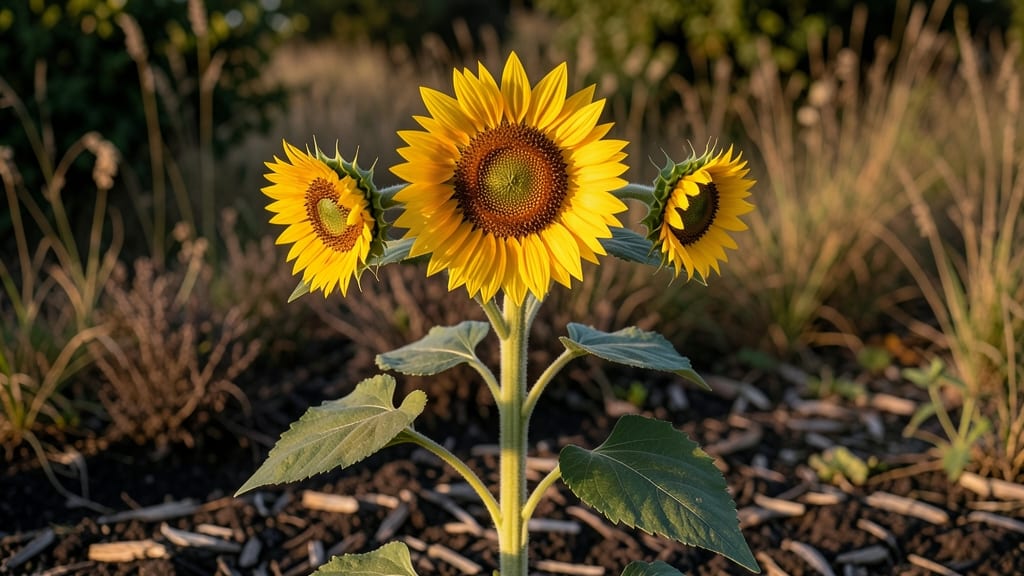
Growing multiple bloom sunflowers means turning one plant into a sunlit spectacle that lasts all season. 🌻 I've learned the simple tricks that transform single-stem giants into bushy, flower-covered powerhouses—no black thumb required. The secret starts with choosing the right varieties and giving them the right conditions from day one.
You'll need well-draining soil, consistent watering, and a spot with at least 6 hours of sunlight daily—though these sunflowers tolerate less than you'd think.
The real magic happens when you prune strategically: cutting back spent blooms encourages new ones to form, and pinching side shoots early creates a fuller plant. My 'Moulin Rouge' and 'Autumn Beauty' varieties produce dozens of blooms per plant when treated right.
By midsummer, your sunflowers will be covered in vibrant yellows, oranges, and reds, with new blooms opening every few days. The stems stay sturdy enough for cutting, and the show continues until frost. Even in partial shade, these sunflowers outperform their single-bloom cousins—proof that less light doesn't mean less color.
Works for garden beds, containers, or even urban balconies. The same principles apply whether you're growing in full sun or stretching your plants' limits. Here's how to get started without the guesswork.
📚 In This Guide
- What you need
- Instructions
- Tips and common mistakes
- Wrapping up and next steps
What you need
- ● Sunflower seeds: Choose multiple-bloom varieties like ‘Moulin Rouge,’ ‘Autumn Beauty,’ or ‘Teddy Bear’ (3–5 seeds per pot or 10–15 seeds for a garden bed).
- ● Containers or garden bed: Pots: 12–18" deep with drainage holes (1–2 seeds per 5–6" pot).
- ● Garden bed: Full sun (6+ hours/day) with well-draining soil.
- ● Potting mix: Lightweight, well-draining blend (e.g., 60% peat/coir, 30% perlite, 10% compost).
- ● Slow-release fertilizer: 5–10–10 NPK ratio (1 tbsp per pot or sprinkle over garden bed).
- ● Watering can or hose: With a gentle spray nozzle for seedlings.
- ○ Seedling heat mat (for indoor starts, optional).
- ● Grow lights (if starting indoors, 12–16 hours/day).
- ● Stakes or trellis (for tall varieties, 3–4 ft tall).
- ● Pruning shears (to deadhead spent blooms and encourage reblooming).
- ● pH test kit (ideal soil pH: 6.0–7.0).
- ● Patience! Sunflowers germinate in 7–14 days and bloom in 60–90 days (varies by variety).
- ● Consistent watering (keep soil evenly moist but not soggy).
- ● Deadheading (snip off faded blooms) to promote reblooming!
Step-by-step guide to growing multiple-bloom sunflowers
Here's how I turn single-stemmed sunflowers into lush, multi-blooming plants with just a few simple techniques.
🌱 Step 1: Select the Right Varieties for Multiple Blooms
Not all sunflowers produce multiple blooms—you need dwarf varieties like 'Autumn Beauty' or 'Teddy Bear,' which naturally branch more than giant types. I avoid tall varieties for this method because their energy goes into stem growth rather than branching. Look for seed packets labeled "multiple bloom" or "prolific"—these are bred specifically for bushier growth.
Start with 4-6 plants to fill a container or small garden bed. The key is selecting seeds with strong genetic potential for branching. I've found that organic, heirloom seeds often produce more vigorous side shoots than hybrid varieties designed for single-stem production.
🪴 Step 2: Plant in Well-Draining Soil with Proper Spacing
Use a lightweight potting mix (not garden soil) for containers, or amend garden beds with 2 inches of compost mixed into the top 6 inches of soil. Sunflowers hate soggy roots, so if your soil drains poorly, add 10% perlite or coarse sand to improve aeration. I plant mine in 10-12 inch diameter pots for guaranteed drainage.
Space plants 12-18 inches apart in garden beds or one per container. Crowding triggers competition for light, which stunts branching. The first few weeks are critical—keep soil consistently moist but never waterlogged. You'll see the first true leaves emerge in 7-10 days, signaling healthy root establishment.
✂️ Step 3: Prune Strategically to Encourage Branching
When plants reach 12-18 inches tall (about 4-6 weeks after sowing), pinch off the main bud at the top of the central stem. This redirects the plant's energy from producing one large flower into developing side shoots. I use clean scissors and make the cut just above a set of leaves where a side branch is already forming.
Watch for new growth emerging from the leaf axils (the angle between stem and leaf). These lateral shoots will become your future blooms. Avoid over-pruning—never remove more than 20% of the plant's foliage at once, or you'll shock the system. You'll see 3-5 new side shoots within 2-3 weeks of the first pinch.
☀️ Step 4: Provide Balanced Light and Nutrition
Sunflowers need 6-8 hours of direct sunlight daily to produce multiple blooms. In containers, rotate pots a quarter turn weekly so plants grow upright instead of leaning toward the light. If you're growing in partial shade, expect fewer blooms—sunflowers compensate for lower light by putting energy into stem growth rather than flowers.
Fertilize lightly with a balanced 10-10-10 formula every 4-6 weeks once plants are established. Too much nitrogen produces lush foliage but delays flowering. I switch to a low-nitrogen, high-phosphorus fertilizer (like 5-10-10) when side shoots appear to encourage bloom production. Watch for yellowing leaves—this signals over-fertilization.
💧 Step 5: Deadhead and Support for Continuous Blooms
As flowers open, remove spent blooms by cutting the stem 1 inch below the flower head. This prevents the plant from setting seed and redirects energy into producing new side shoots. I deadhead in the morning when flowers are fully open but before seeds form. You'll see new buds forming within 7-10 days on the same lateral stems.
Install bamboo stakes or tomato cages when plants reach 3 feet tall to prevent wind damage. Multiple blooms create heavier heads than single-stem varieties, so support is critical. In containers, I tie plants to stakes with soft twine, leaving room for the stems to thicken as they grow. This keeps plants upright and maximizes sunlight exposure for all blooms.
Tips & tricks for perfect multiple bloom sunflowers
These insider tricks will help you coax the most vibrant, prolific blooms from your sunflowers—even when light is limited.
Variety Selection Wisdom: Beyond the recommended 'Autumn Beauty' or 'Teddy Bear,' consider 'Moulin Rouge' for its striking bicolor blooms or 'Evening Sun' for its deep red petals. The key is selecting seeds labeled "prolific" or "branching"—these varieties are specifically bred to produce multiple stems. I've found that heirloom seeds from reputable seed banks often yield the most vigorous side shoots. When choosing, look for seed packets that specify "multiple bloom" potential rather than just "ornamental."
Soil Science for Branching: The lightweight potting mix recommendation isn't just about drainage—it's about creating an airy root zone that encourages lateral root growth, which directly correlates with more side shoots. For garden beds, I take it a step further by mixing in 10% coconut coir with the compost and perlite. This combination improves moisture retention while maintaining aeration, which is crucial during the critical 4-6 week period when you're waiting for that first pinch. The goal is to create an environment where roots can spread horizontally rather than growing deep in search of moisture.
Pruning Precision: When you reach the 12-18 inch mark for pinching, I recommend using a clean pair of nail scissors rather than regular pruners—they give you better control for those delicate cuts. Make your pinch just above a leaf node where you can already see a small bump forming (this is your future side shoot). The most common mistake I see is pinching too high or too low. Too high and you remove potential growth points; too low and you leave a wound that can attract disease. After pinching, I like to spray the cut area with a diluted neem oil solution (1 tsp per quart of water) to prevent infection during the 2-3 week period when new shoots emerge.
Light Optimization: The 6-8 hours of direct sunlight requirement can be tricky in low-light situations, but I've had success with a simple reflective surface trick. Place a sheet of white aluminum foil or a reflective garden panel on the south side of your containers to bounce additional light onto the plants. This can effectively add 1-2 extra hours of useful light without moving the plants. For indoor growers, a south-facing window with supplemental grow lights (LED bulbs work best) for 4-6 hours in the evening can extend the daylight period enough to trigger multiple blooms. Just remember—sunflowers need intensity as much as duration, so position lights within 6-12 inches of the foliage.
Pro Tips for Multiple Bloom Sunflowers
- These insider tricks will help you coax the most vibrant, prolific blooms from your sunflowers—even when light is limited.
- Variety Selection Wisdom: Beyond the recommended 'Autumn Beauty' or 'Teddy Bear,' consider 'Moulin Rouge' for its striking bicolor blooms or 'Evening Sun' for its deep red petals.
- Soil Science for Branching: The lightweight potting mix recommendation isn't just about drainage—it's about creating an airy root zone that encourages lateral root growth, which directly correlates with more side shoots.
Frequently asked questions
Got questions about growing multiple bloom sunflowers? You’re not alone! Here are answers to the most common queries—from light needs to troubleshooting—so you can keep those cheerful blooms coming year-round.
How much light do multiple bloom sunflowers really need?
These sunflowers thrive in bright, indirect light for 6–8 hours daily. A south- or west-facing window is ideal, but they’ll tolerate lower light (3–4 hours) with slower blooming. If leaves stretch or pale, it’s a sign they’re light-hungry—consider a grow light!
Why aren’t my sunflowers reblooming like they should?
Reblooming can stall due to deadheading delays, nutrient exhaustion, or stress. Snip spent blooms below the next bud to encourage new growth. Use a balanced fertilizer (like 10-10-10) every 4–6 weeks, and avoid overwatering—soggy soil = root rot.
Can I grow these indoors year-round, or do they need a winter break?
Yes! With proper care, they’ll bloom indoors all year. Just reduce watering in winter (let soil dry slightly between waterings) and supplement light if days shorten. A cool, draft-free spot (60–75°F) mimics their natural dormancy period, preventing legginess.
Are there low-maintenance alternatives to multiple bloom sunflowers?
If sunflowers feel high-maintenance, try gerbera daisies or zinnia ‘Profusion’—both rebloom easily with deadheading. For zero-fuss options, African violets or peperomia deliver long-lasting color with minimal light and care.
What’s eating my sunflowers’ leaves, and how do I stop it?
Common culprits: aphids (sticky residue), spider mites (tiny webs), or slugs (chewed edges). Spray leaves with neem oil or insecticidal soap for pests. For slugs, set out beer traps or copper barriers—sunflowers are too tender to withstand harsh chemicals.
Wrapping up and next steps
Growing multiple bloom sunflowers is a rewarding way to bring year-round color to your space—even with minimal light! These cheerful plants thrive with just a few essentials: the right soil, a sunny spot (or grow lights), and a little patience.
Whether you’re a seasoned gardener or a beginner, their low-maintenance nature makes them the perfect addition to any home.
Ready to bloom with confidence? Start small—try a single pot or a cluster of sunflowers—and watch your space transform! 🌻 For even more joy, share your progress with fellow plant lovers or experiment with different varieties next season. Happy growing!