
Blooming
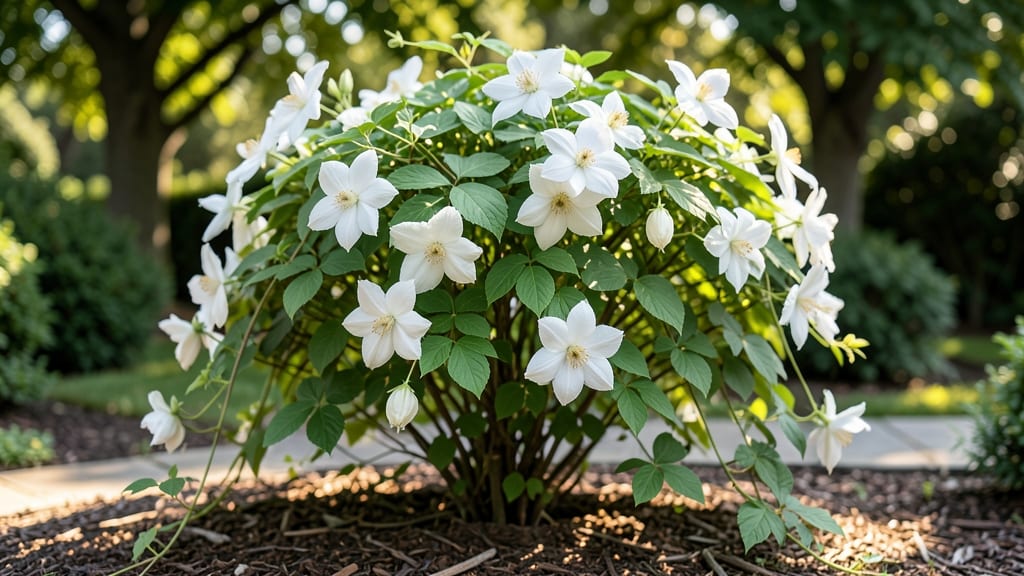
Growing large bloom clematis like 'Jackmanii' or 'Nelly Moser' means summer-long drama in your garden—those 6-inch flowers make every trellis a showstopper. 🌸 I’ve wrestled with leggy vines and sparse blooms, but the right pruning and placement turn them into foolproof performers.
The secret isn’t complicated: it’s about sunlight, timing, and knowing exactly when to cut. These vines crave 6+ hours of sun but need afternoon shade in hot climates—think of them as divas who demand balance.
Plant them near a sturdy trellis or arbor, where their woody stems can climb without snapping. The soil should drain well (amend heavy clay with compost), and water deeply once a week—drought stress leads to weak blooms.
Fertilize in early spring with a balanced formula, then again after the first flush of flowers. Pruning feels intimidating, but it’s the key to nonstop blooms. Group 3 varieties (like 'Jackmanii') bloom on new wood, so cut back hard in late winter—leave 3-4 buds on each stem.
For Group 2 ('Nelly Moser'), prune lightly in early spring to shape the plant. The payoff? Three seasons of flowers with minimal effort. Even my black thumb can’t kill these once they’re established. Yellow leaves? Usually iron deficiency—sprinkle chelated iron on the soil. Weak stems?
They need more support or phosphorus-rich fertilizer. Pair them with dwarf conifers or hostas at the base to hide their gnarly roots, and let them steal the show overhead. Your garden will never look the same.
📚 In This Guide
- What you need
- Instructions
- Tips and common mistakes
- Wrapping up and next steps
What you need
- ● Clematis plant: Choose a large-flowering variety (e.g., 'Jackmanii,' 'Nelly Moser,' or 'Princess Diana'). Select a healthy, well-rooted 3- to 5-gallon container-grown plant or bare-root specimen.
- ● Well-draining soil: Mix 1 part garden soil with 1 part compost and 1 part perlite or coarse sand for optimal aeration.
- ● Support structure: A 5- to 8-foot trellis, arbor, or sturdy fence (clematis vines can grow 10+ feet!). Ensure it’s durable and rust-resistant.
- ● Mulch: 2-3 inches of organic mulch (e.g., wood chips or shredded bark) to retain moisture and suppress weeds.
- ● Fertilizer: Balanced granular fertilizer (10-10-10) for planting.
- ● Slow-release bloom booster (e.g., 5-10-5 or 3-4-6) for ongoing growth.
- ● Garden trowel or spade for planting.
- ● Pruning shears (clean, sharp, and disinfected with rubbing alcohol).
- ● Gloves (gardening or heavy-duty for thorny varieties).
- ● Watering can or hose with a gentle spray nozzle (clematis dislikes soggy roots!).
- ● Measuring tape or ruler for spacing plants 3-5 feet apart.
- ● Stakes or ties (soft plant ties or Velcro strips) to secure vines to supports.
- ● Epsom salt (1 tbsp/month in water) for magnesium boosts (especially for yellowing leaves).
- ● Copper fungicide (preventative for powdery mildew in humid climates).
- ● Drip irrigation system for consistent moisture (clematis loves even watering).
- ● Plant markers to track varieties and pruning groups.
Step-by-Step guide to pruning large bloom clematis for maximum summer flowers
Here's the pruning system I've used for years to transform my clematis into a nonstop summer bloomer.
✂️ Step 1: Identify Your Clematis Group and Prune at the Right Time
First, determine your clematis type—large bloom clematis (Group 1) flower on previous year's growth, so prune immediately after blooming. I always mark my plants with a flag when the first flowers fade; this tells me when to prune. Never cut back before mid-summer unless you see dead or diseased stems.
Grab your pruners and make clean cuts just above a healthy outward-facing bud. The goal is to remove only the spent blooms and any dead stems while preserving next year's flower buds hidden along the stem. I like to step back after pruning to check for balance—uneven cuts can lead to lopsided growth.
✂️ Step 2: Thin Overcrowded Stems for Better Airflow
After the initial post-bloom prune, assess stem density. Large bloom clematis need 3-5 strong stems per plant to thrive. I remove any weak, thin stems at the base—these won't produce quality blooms and compete with stronger growth. Make cuts at a 45-degree angle about ¼ inch above a bud to prevent water from pooling.
Thinning improves airflow, which prevents fungal diseases like powdery mildew. You'll notice healthier foliage and more robust blooms the following season. If your plant has more than 10 stems, reduce it by half—this shock will actually encourage stronger growth.
⏰ Step 3: Perform Late-Summer Pruning to Encourage Fall Blooms
Around mid-August, give your clematis a second light prune to stimulate late-season blooms. Cut back any leggy growth by one-third, focusing on stems that have already flowered. This encourages new buds to form for a second flush of blooms in fall.
Watch for new growth emerging from the base—these are your future blooming stems. I avoid heavy pruning after this point, as it removes potential flower buds for next year. If you see any stems with blackened or shriveled leaves, remove them completely to prevent disease spread.
✂️ Step 4: Winter Pruning for Structure and Next Year's Blooms
In late winter or early spring (before new growth appears), give your clematis its most dramatic prune. For large bloom types, cut back all stems to 12-18 inches above the ground. This dramatic reduction might seem harsh, but it's what stimulates those massive summer blooms.
I always prune on a dry day when temperatures are above 40°F—cold weather stresses the plant. After pruning, apply a 2-3 inch layer of mulch around the base to protect roots. You'll see new shoots emerge within weeks, and these will be your main flowering stems for the season.
☀️ Step 5: Post-Pruning Care for Strong Recovery
After pruning, your clematis needs extra care to recover. Water deeply once a week if rainfall is less than 1 inch, focusing on the root zone. I also add a balanced fertilizer (10-10-10) in early spring to support new growth.
Monitor for new shoots emerging from the base—these are your future blooming stems. Avoid heavy pruning of these new shoots until they've established 4-5 leaves. You'll know your pruning was successful when you see vigorous new growth by early summer, setting up your plant for another spectacular bloom season.
Tips & tricks for pruning large bloom clematis
These insights will help you master the art of pruning for a clematis that bursts with summer blooms.
The Bud Selection Secret: When making cuts in Steps 1 and 2, focus on selecting buds that face outward and upward. These buds will grow into stems that support the heavy blooms. I've learned the hard way that cutting too close to buds can prevent new growth—always leave that ¼-inch clearance. The key is to visualize where you want the plant to grow next season.
Timing is Everything: The mid-August pruning in Step 3 is your chance to coax a second flush of fall blooms. Watch for the first signs of leggy growth—those are your targets. I mark my calendar with reminders because missing this window means fewer fall flowers. The goal is to encourage new buds while preserving next year's potential, so be gentle with your cuts.
Winter Pruning Confidence: That dramatic 12-18 inch cut in Step 4 might seem drastic, but trust the process. I've seen clematis bounce back spectacularly after what appears to be brutal pruning. The trick is to prune on a dry day above 40°F—cold, wet conditions stress the plant. After pruning, the mulch acts like a blanket, protecting roots while encouraging new shoots.
Recovery Care: The post-pruning care in Step 5 is where you'll see the real magic happen. That weekly watering isn't just about hydration—it's about establishing strong roots for next season's blooms. I've found that adding a slow-release fertilizer in early spring gives the plant a steady nutrient supply without overwhelming it. Think of it as giving your clematis a post-surgery recovery boost.
Pro Tips for Large Bloom Clematis
- These insights will help you master the art of pruning for a clematis that bursts with summer blooms.
- The Bud Selection Secret: When making cuts in Steps 1 and 2, focus on selecting buds that face outward and upward.
- Timing is Everything: The mid-August pruning in Step 3 is your chance to coax a second flush of fall blooms.
Frequently asked questions
When is the best time to prune large bloom clematis?
Prune large bloom clematis (Group 1 or 2) right after their first flush of flowers in early spring (March–April). For late-blooming varieties (Group 3), prune in late winter or early spring. Avoid pruning in fall—it can leave stems vulnerable to frost damage. Always use clean, sharp shears to prevent disease!
How much should I cut back my clematis each year?
For large bloom clematis, aim to remove about 1/3 of the oldest stems each year. Cut back to a pair of healthy buds or a strong joint. Never prune more than 1/3 at once—this keeps the plant balanced and encourages new growth. If your plant looks overgrown, thin out congested stems first before heavy pruning.
Why aren’t my clematis flowers opening, just staying in bud?
Bud blast (flowers that refuse to open) is often caused by too much shade, overwatering, or poor air circulation. Ensure your clematis gets at least 6 hours of sunlight daily and water at the base (not overhead). If buds still fail, check for pests like slugs or aphids. A light trim of dead buds can also encourage new blooms!
Can I grow large bloom clematis in containers?
Choose a large container (at least 15 gallons) with drainage holes and use a well-draining potting mix. Large bloom clematis thrive in containers if given morning sun and afternoon shade in hot climates. Fertilize regularly with a balanced bloom booster, and overwinter the pot in a sheltered spot or dig it up to store roots in a cool, dry place.
How do I protect my clematis from harsh winters?
Mulch the base with 3–4 inches of straw or shredded leaves after the first frost. For young plants or tender varieties, wrap the crown with burlap or use a cloche. Avoid heavy mulch against stems—it can cause rot. In Zone 5 or colder, consider planting near a south-facing wall for extra warmth.
Pro Tip: Label your clematis groups! Mixing up Group 1 (early bloomers) with Group 3 (late bloomers) can lead to pruning disasters. A simple stake with the group number saves headaches—and flowers!
Wrapping up and next steps
Growing large bloom clematis is a rewarding journey that brings vibrant color and life to your garden year after year! With the right pruning techniques, support, and care, you’ll enjoy nonstop summer blooms that turn heads. Remember, patience and consistency are key—your clematis will thrive with time and attention.
Ready to transform your garden? Start by selecting the perfect variety for your climate, then dive into pruning and maintenance with confidence. Happy gardening! 🌸🌿