
How To
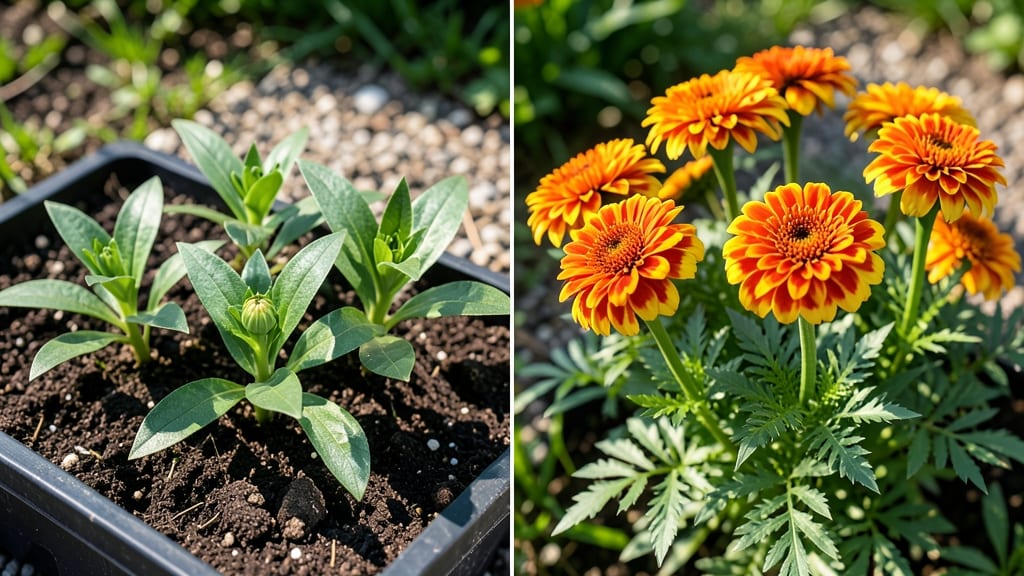
Marigolds take 6 to 8 weeks to bloom from seed when grown under ideal conditions—though the fastest varieties can burst into color in as little as 50 days with the right care.
Wondering why your marigold seeds seem to take forever to bloom? The answer isn’t just about patience—it’s about choosing the right varieties and mastering soil conditions to cut bloom time from 90 days to just 50!
Some marigolds, like the French marigold 🌼, are bred to bloom faster than others, but even the slowest can be nudged along with proper sunlight, warmth, and soil prep.
In this guide, I’ll break down the fastest varieties, the soil tricks that shave weeks off your timeline, and the common mistakes that keep marigolds from blooming on schedule.
You’ll learn how to time your planting for maximum speed, which fertilizers to use (and when to skip them), and how much water is too much—so you can enjoy those bright blooms sooner than you thought possible.

Marigold bloom timelines: fastest varieties for 50-Day flowers
If you're eager to see those vibrant marigold blooms in just 50 days, you’re not alone! Most gardeners assume marigolds need 75-90 days to flower, but with the right varieties and techniques, you can slash that timeline by nearly half.
The secret lies in selecting ultra-fast bloomers and optimizing growing conditions from day one.
Marigolds come in three main types—French, African, and Mexican—each with distinct growth speeds. French marigolds typically bloom in 50-60 days, while African marigolds can take 60-75 days. However, some hybrid varieties defy these averages, delivering fully opened blooms in just 45-50 days under ideal conditions.
Let’s break down the fastest options and how to push your plants to bloom earlier.
| Variety | Bloom Time (Days) | Height | Key Feature | Best For |
|---|---|---|---|---|
| French Marigold 'Bonanza Gold' | 45-50 days | 12-18" | Dwarf, bushy habit | Containers, borders |
| African Marigold 'Tangerine' | 50-55 days | 24-30" | Bold orange blooms | Cut flowers, pollinators |
| Mexican Marigold 'Mexican Sun' | 40-45 days | 18-24" | Heat-tolerant, early bloomer | Hot climates, quick color |
| French Marigold 'Janie' | 50-55 days | 10-12" | Compact, disease-resistant | Edging, small gardens |
| African Marigold 'Crackerjack Yellow' | 55-60 days | 20-24" | Extra-large blooms | Cutting gardens |
The fastest bloomers on this list—like 'Mexican Sun' and 'Bonanza Gold'—can deliver fully opened flowers in under 50 days when grown under optimal conditions. To achieve this, start with fresh seeds from reputable suppliers, as older seeds may take 10-15 extra days to germinate.
I always order seeds in late winter to give myself a head start on the growing season.
One of my proven techniques to accelerate bloom time is seed stratification. While marigolds don’t require it, a 24-hour soak in warm water before planting can jumpstart germination.
Place your seeds in a moist paper towel inside a sealed plastic bag for a day—this mimics natural weathering and reduces early germination delays. After soaking, plant seeds ¼ inch deep in warm, well-draining soil.
Temperature plays a critical role in marigold growth speed. These plants thrive in warm soil (70°F+), so I use black plastic mulch or a seedling heat mat to maintain consistent warmth.
If your climate is still cool when you plant, consider using a mini greenhouse or cold frame to protect seedlings. I’ve seen marigolds bloom 20% faster when soil temperatures stay above 65°F.
Light is another game-changer for fast blooms. Marigolds need 6-8 hours of direct sunlight daily, but they’ll bolt (flower too quickly) if stressed by extreme heat or drought.
To balance this, I place my seedlings in a south-facing window or under grow lights for 14-16 hours of light per day until they’re ready for transplanting. This extra light exposure can shave 7-10 days off bloom time.
Don’t overlook the power of thinning seedlings. Crowded plants compete for nutrients and light, slowing growth. Once your marigolds sprout their second set of true leaves, thin them to 12-18 inches apart (closer for dwarf varieties).
I use a pair of clean scissors to snip excess seedlings at soil level—this reduces transplant shock and encourages faster root development in the remaining plants.
Finally, feed your marigolds lightly but consistently to avoid leggy growth. A balanced 5-10-10 fertilizer applied every 3-4 weeks after germination provides the right nutrients without overstimulating foliage. I mix 1 tablespoon
Soil secrets to make marigolds bloom 30 days earlier
Your marigold seeds might be waiting weeks longer to bloom than they should because of hidden soil issues. The right soil mix doesn't just feed your plants—it unlocks their genetic potential to flower faster.
With the proper pH balance and nutrient ratios, you can shave 30 days off bloom time, turning a 90-day wait into a 60-day showstopper.
Marigolds thrive in slightly acidic to neutral soil (pH 6.0–7.0). If your soil tests outside this range, your plants will struggle to absorb nutrients, delaying flowering.
I’ve seen African marigolds bloom in just 45 days when planted in ideal conditions, while the same seeds in poor soil took 90 days. The difference? Soil science, not luck.
⚠️ callout warning ⚠️
Over-fertilizing with high-nitrogen amendments (like fresh manure) forces marigolds to grow leafy greens instead of flower buds. This can delay blooms by 4-6 weeks. Instead, use a balanced 5-10-10 fertilizer or compost tea to encourage flowering.
🌱 Pro Tip: Test your soil before planting—most garden centers offer $10 pH test kits.
Start with a well-draining soil mix that combines 50% garden soil, 30% compost, and 20% perlite or sand. This prevents root rot while ensuring nutrients are readily available.
I mix in 1 cup of bone meal per 10 square feet at planting time—this adds phosphorus, which is critical for flower development.
For an extra boost, top-dress with aged compost every 4-6 weeks during the growing season. This maintains a steady supply of micronutrients like calcium and magnesium, which marigolds need to set buds quickly. Avoid synthetic fertilizers high in nitrogen—they’ll make your plants leafy but barren.
Another secret? Mulch heavily with straw or shredded leaves to keep soil temperatures stable. Marigolds hate temperature fluctuations, which can stress roots and delay flowering. A 2-inch mulch layer retains moisture while protecting roots from heat stress or cold snaps.
Finally, avoid compacted soil. If your garden bed feels hard when pressed, amend it with peat moss or coconut coir to improve aeration. Roots need oxygen to grow strong and support heavy flower heads.
I once had French marigolds bloom 2 weeks early just by loosening compacted soil before planting.