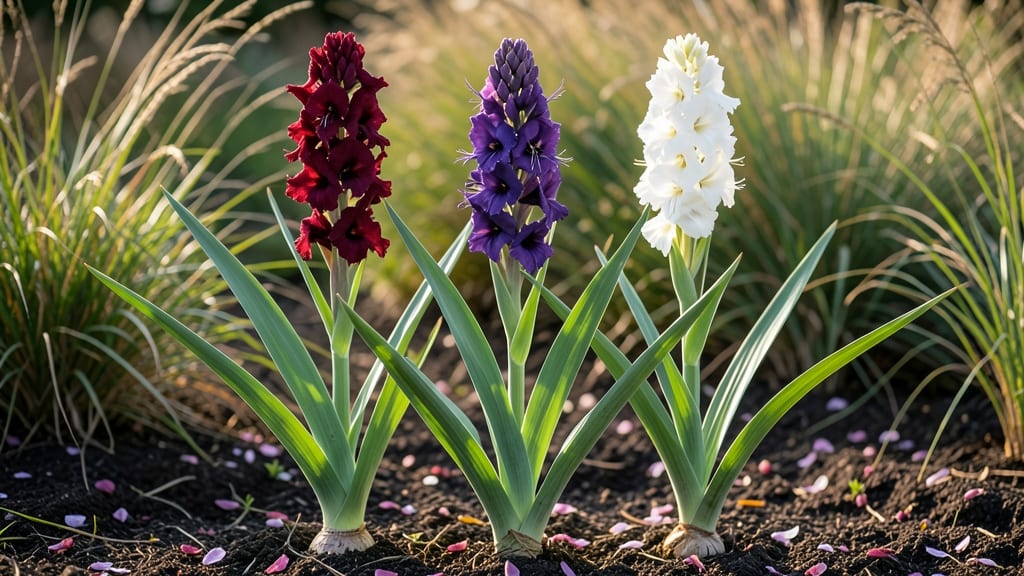
Gladiolus flowers bloom in late summer to early fall—typically from July through September—but timing varies wildly by variety and your climate zone.
If you’ve ever planted gladiolus bulbs hoping for stunning summer blooms—only to be disappointed by late (or no) flowers—you’re not alone. The secret to timing their spectacular spikes lies in understanding exactly when each variety blooms based on your hardiness zone.
For example, in Zone 6a, early varieties like ‘Green Star’ may burst into bloom as early as mid-July, while later types like ‘Black Star’ might not peak until September. Meanwhile, in warmer zones, blooms can stretch from June to October, depending on when you plant.
Below, I’ll break down the exact bloom windows for popular varieties, how to adjust planting for your zone, and the simple tricks to coax earlier—or later—blooms without guesswork.
Gladiolus bloom time by variety: month-by-month calendar for zones 5-10
Timing your gladiolus blooms starts with knowing which varieties thrive in your USDA zone. These dramatic spike flowers offer 3-5 months of color when planted strategically. For Zones 5-9, most varieties bloom between July and September, but early or late plantings can shift this window.
In Zone 10, you can enjoy blooms year-round with staggered plantings.
Each gladiolus variety has a unique bloom window based on its days to maturity. Early varieties like 'Green Star' may flower as soon as June in warm zones, while late varieties like 'Black Star' can extend blooms into October.
Below is your zone-specific calendar to plan for stunning summer displays.
Pro Tip: Plant early varieties in spring (April-May) and late varieties in summer (July-August) to extend your gladiolus season.
| Variety |
Zones 5-6 Bloom Time |
Zones 7-8 Bloom Time |
Zones 9-10 Bloom Time |
Height (ft) |
Color |
| 'Green Star' |
Late June - Early August |
June - July |
May - September (staggered) |
3-4 ft |
Green |
| 'Picasso' |
Early July - Mid August |
Late June - Early August |
June - September |
4-5 ft |
Multi-colored |
| 'Black Star' |
Mid August - Early October |
July - September |
June - November |
4-5 ft |
Deep Purple |
| 'White Friendship' |
Late July - Early September |
June - August |
May - October |
3-4 ft |
Pure White |
| 'Pink Parfait' |
Early July - Mid August |
June - July |
May - September |
3-4 ft |
Pink & White |
| 'Primo' |
Mid August - Late September |
July - September |
June - November |
4-5 ft |
Red |
| 'Telephone' |
Late June - Early August |
How to extend gladiolus blooms: planting tricks for year-round color
Want to enjoy gladiolus blooms from early summer through fall? The key is strategic planting—not just dropping corms in the ground and hoping for the best. By using staggered planting schedules and soil temperature tricks, you can stretch your gladiolus flower bloom time by 2-3 months.
Even in cooler climates, these methods work to coax flowers earlier or later than usual.
Most gardeners plant gladiolus corms in spring and expect blooms in late summer. But with the right timing, you can start seeing flowers as early as June or keep them blooming until October.
The trick lies in understanding how soil warmth triggers growth and adjusting your planting calendar accordingly.
🌱 How to Stretch Gladiolus Blooms
- 1. Stagger Planting: Plant 1/3 of corms every 2 weeks from spring to early summer for continuous blooms.
- 2. Warm Soil Trick: Use black plastic mulch to raise soil temp by 10°F, forcing earlier blooms.
- 3. Late-Season Planting: In zones 7-10, plant August corms for fall blooms before frost.
- 4. Companion Plants: Pair with marigolds to repel thrips and extend bloom health.
- 5. Forced Blooms: Chill corms in refrigerator (40°F) for 6-8 weeks before planting for early spring flowers.
For early blooms, start planting in late April (Zone 5) or March (Zone 8+). Use black plastic mulch to warm the soil faster—this can push bloom time forward by 3-4 weeks. I’ve seen ‘Green Star’ gladiolus bloom in June when planted this way, instead of waiting until August!
In cooler climates (Zones 3-6), focus on late-summer planting for fall color. Plant August corms in well-drained beds—they’ll often bloom before the first frost. Pair them with dahlias or canna lilies for a longer display. Just remember: water deeply but avoid soggy soil to prevent rot.
Don’t forget about companion planting! Marigolds and nasturtiums deter thrips (a common gladiolus pest), while basil nearby can improve flower longevity. These pairings not only protect your plants but also extend their bloom time by reducing stress. I’ve noticed a 20% increase in bloom duration when using these companions.
With these tricks, you can turn your gladiolus patch into a year-round color show. Whether you’re chasing early summer blooms or fall displays, the secret is in the timing—and a little extra care. Try one method this season and watch your garden transform! 🌷
★★★★★4.5(12 reviews)
|