
Blooming
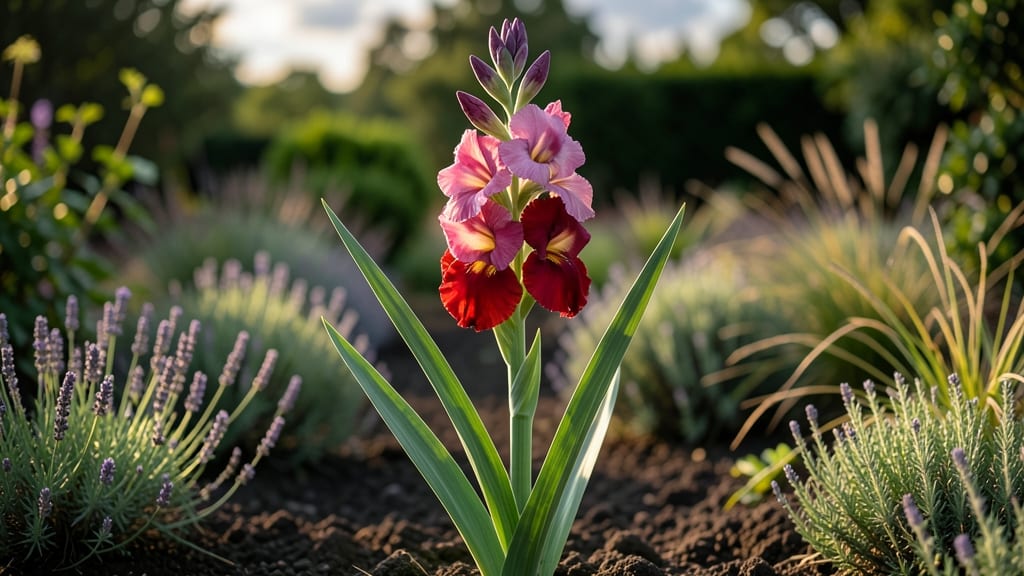
Your gladiolus bloom time depends entirely on the variety you plant—some burst into color by early summer, while others wait until late August. 🌸 I've learned that timing isn't just about patience; it's about matching the right corms to your climate and planting them at the perfect moment in spring.
Early bloomers like 'Picasso' or 'Green Star' typically flower in June and July, while late varieties such as 'Black Star' or 'White Prosperity' hold off until August and September.
The key is understanding your last frost date and planting corms 2-3 weeks after soil warms to 60°F—too early, and they rot; too late, and blooms arrive too late for peak enjoyment.
With the right soil (well-draining, rich in compost) and 6+ hours of sunlight daily, you'll coax those towering spikes to reach their full height—sometimes 4-5 feet tall—with blooms lasting **2-3 weeks per stalk. The secret?
Consistent watering (1-2 inches per week) without soggy soil, and deadheading spent blooms to encourage more flowers. Works in zones 5-10, though tropical climates may need winter dormancy. Here's how to nail the timing for your region!
📚 In This Guide
- What you need
- Instructions
- Tips and common mistakes
- Wrapping up and next steps
What you need
- ● Gladiolus corms: Choose certified disease-free corms (size: 1–2 inches in diameter). Aim for 3–5 corms per variety for a vibrant display.
- ● Well-draining soil: Mix 1 part garden soil with 1 part compost and 1 part perlite/sand (for loose, aerated texture). pH 6.0–7.0 is ideal.
- ● Sunlight: A full-sun location (6+ hours of direct sunlight daily). Partial shade in hot climates extends bloom time.
- ● Watering can or hose: With a gentle spray nozzle to avoid damaging delicate foliage.
- ● Fertilizer: Balanced fertilizer (10-10-10): Apply 1 tbsp per corm at planting.
- ● High-phosphorus fertilizer (5-10-10): Use 1 tbsp per plant when spikes emerge (6–8 weeks post-planting).
- ● Stakes or trellis: 3–4 ft tall (bamboo or metal) to support tall varieties (e.g., 'Green Star' or 'Black Star').
- ● Mulch: 2–3 inches of straw or shredded bark to retain moisture and suppress weeds.
- ● Slow-release fertilizer: Granular osmocote (14-14-14) for low-maintenance nutrient release.
- ● Epsom salt: 1 tbsp dissolved in 1 gallon of water (spray foliage monthly for magnesium boost and vibrant blooms).
- ● Organic pest control: Neem oil or pyrethrin spray for thrips/aphids (test on a small area first!).
- ● Bloom-boosting additives: Fish emulsion (2-4-1) or kelp meal for extra vigor.
- ● Cutting garden setup: Sharp pruners and clean vases to harvest blooms at peak color!
How to time gladiolus blooms for season-long color
Here's how I schedule planting for show-stopping gladiolus blooms all summer.
📅 Step 1: Calculate Your First Frost Date
Find your average first frost date—this determines your planting window. Gladiolus corms need 80-90 days from planting to bloom, so I count backward from that date. For example, if frost hits November 15, I plant my first batch around August 15 for early September flowers.
Write the date down now—this is your starting point. Check your local extension office website if you're unsure. The timing varies by 1-2 weeks depending on your zone, so don't guess. I've learned the hard way that planting too early means flowers in frost, and too late means no blooms at all.
🌱 Step 2: Plan Staggered Planting for Extended Blooms
Divide your planting into 3-4 batches spaced 2 weeks apart. Each batch will bloom sequentially, giving you color from early summer through fall. For 4 servings of blooms, plant one batch every 2 weeks starting from your calculated date.
Label each batch with the planting date—this keeps you organized. The first batch planted will bloom first, followed by each subsequent batch. I use colored flags in the garden to mark each group visually. This system ensures you'll have fresh blooms every 2-3 weeks throughout the season.
☀️ Step 3: Choose Varieties with Complementary Bloom Times
Select gladiolus varieties with different bloom times to extend your season. Early bloomers like 'Attraction' and 'Green Star' flower in 80 days, while late varieties like 'Black Niagra' and 'Telemon' take 90-100 days. Mix both types in your batches for continuous color.
Check seed packets for days-to-bloom information—this is your best guide. I always plant at least one early, one mid-season, and one late variety in each batch. This creates a beautiful gradient of colors and bloom times that keeps the garden vibrant longer. Don't forget to consider your color palette too—plant complementary hues together for maximum impact.
🌿 Step 4: Plant at Proper Depth and Spacing
Plant corms 4-6 inches deep with the pointed end up—this ensures proper growth direction. Space them 6 inches apart in rows 12 inches apart for good airflow. I use a trowel to make holes and place each corm gently, then cover with soil.
Water immediately after planting to settle the soil around the corms. Keep the area consistently moist but not soggy until shoots appear. The key here is patience—don't rush the watering. Overwatering at this stage can cause rot, while underwatering stresses the corms before they've established roots.
⏰ Step 5: Monitor Growth and Adjust Care
Once shoots reach 4-6 inches tall, they're ready for regular care. Reduce watering slightly to encourage strong stems. Feed with a balanced 10-10-10 fertilizer when shoots are 6 inches tall, then again when flower buds form.
Watch for the first flower buds to appear—this is your signal that blooms are coming soon. I always mark this date in my garden journal. Remove any side shoots (sprouts from the corm) that appear at the base to direct energy to the main stem. This simple step dramatically improves flower quality and stem strength.
Tips & tricks for perfect gladiolus bloom timing
These simple strategies will help you create a show-stopping garden display with gladiolus blooms that last all season.
Seasonal Planning: Use your local frost date as your anchor point—this is the non-negotiable deadline for your last batch of blooms. I always calculate my planting window by counting backward from frost, starting with the 80-90 day bloom time mentioned in Step 1. For example, if your frost date is November 15, your last batch should bloom by then, meaning you'd plant it around August 15. This backward planning ensures you won't miss the window for any of your batches.
Visual Organization: The colored flags I use to mark each batch aren't just decorative—they're a game-changer for tracking. In Step 2, when you're planting your 3-4 batches spaced 2 weeks apart, assign each batch a different color flag. This visual system helps you instantly identify which batch is which when it's time to fertilize or remove side shoots. I've found that this simple trick prevents confusion, especially when you're managing multiple bloom cycles simultaneously.
Variety Mixing: When selecting varieties in Step 3, think about both bloom times and color combinations. I always pair early bloomers like 'Attraction' (80 days) with late varieties like 'Black Niagra' (90-100 days) in the same batch. This creates a beautiful progression where one variety fades just as another peaks. For color coordination, I group complementary hues together—like purples with pinks or yellows with oranges—to create stunning visual impact when all batches are in bloom.
Growth Monitoring: In Step 5, when your shoots reach 4-6 inches tall, start paying close attention to their growth patterns. This is when you'll notice subtle differences between varieties that affect their bloom timing. I keep a small notebook where I record when each batch reaches the 6-inch mark and when buds begin to form. This helps me predict exactly when each batch will bloom, allowing me to plan for continuous color throughout the season.
Pro Tips for Gladiolus Bloom Time
- These simple strategies will help you create a show-stopping garden display with gladiolus blooms that last all season.
- Seasonal Planning: Use your local frost date as your anchor point—this is the non-negotiable deadline for your last batch of blooms.
- Visual Organization: The colored flags I use to mark each batch aren't just decorative—they're a game-changer for tracking.
Frequently asked questions
When do gladiolus flowers typically bloom?
Gladiolus bloom time varies by variety, but most flower 60–90 days after planting corms in spring. Early varieties bloom in late spring to early summer (May–June), while late varieties peak in mid-to-late summer (July–August). For year-round blooms, stagger plantings every 2–3 weeks.
How can I extend the gladiolus bloom season?
To prolong blooms, plant corms in successive batches every 2–3 weeks. Choose varieties with staggered bloom times (e.g., 'Green Star' blooms earlier than 'Black Star'). Deadhead spent blooms to encourage new spikes, and fertilize lightly with high-phosphorus feed every 3–4 weeks for continuous flowering.
Can gladiolus bloom in fall or winter?
Gladiolus won’t bloom in fall or winter in most climates (Zones 7–10). However, in mild-winter regions (Zones 8–10), they may bloom sporadically if planted in late summer/early fall. In colder zones, dig up corms after frost and store them indoors to replant in spring for spring/summer blooms.
Why aren’t my gladiolus blooming on schedule?
Delayed blooms often stem from poor soil, insufficient sunlight, or overcrowded corms. Ensure full sun (6+ hours/day) and well-draining soil. Space corms 6 inches apart and fertilize with balanced 10-10-10 at planting. If corms are small (<1 inch), they may need another year to mature for full blooms.
Are there gladiolus varieties that bloom earlier than others?
Yes! Early bloomers like 'Peter Pears' (May–June) and 'White Prosperity' (late May) thrive in cooler climates. For heat tolerance, try 'Red Beauty' or 'Black Star', which bloom later (July–August). Check seed packets for days-to-bloom estimates when selecting varieties.
| Variety | Bloom Time | Height |
|---|---|---|
| 'Green Star' | Early June–July | 3–4 ft |
| 'Black Star' | July–August | 4–5 ft |
| 'Peter Pears' | May–June | 3–4 ft |
Wrapping up and next steps
Understanding your gladiolus bloom time is the key to unlocking a garden bursting with stunning vertical color! Whether you’re nurturing early bloomers like ‘Picasso’ or late-season stars like ‘Green Star,’ timing is everything—soak in these variety-specific insights and adjust your planting schedule for peak performance. 🌱✨
Ready to elevate your garden game? Start by selecting the perfect varieties for your climate, then mark your calendar for planting and maintenance deadlines. With a little precision and care, your gladiolus will reward you with dramatic, show-stopping blooms year after year!
Next step: Grab your gardening journal and plot your planting timeline—your future floral masterpiece starts now!